
Grace and Carl’s Uneasy Family Bond
Just One LookThis thread traces Grace Lawson’s father-daughter-like attachment to Carl Vespa as his care offers protection, his grief turns threatening, and the truth exposes the limits of their alliance.
increasing Bearing strength in each event
 decreasing
Bearing strength in each eventdecreasingA Father Figure at the Hospital
A Father Figure at the Hospital
An unexpected presence
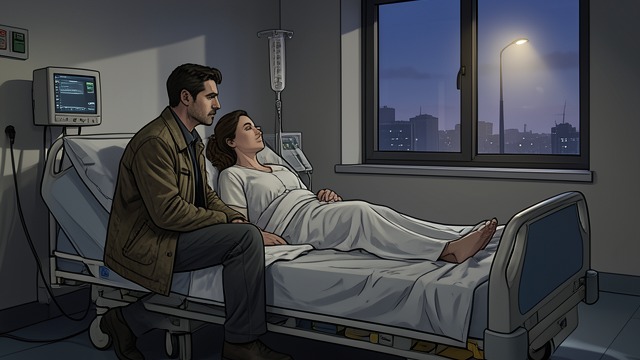
After the Boston Garden stampede, Carl Vespa is the first bereaved parent to establish a lasting connection with Grace Lawson. He sits beside her during her recovery, arranges comforts and attentive care, and speaks to her without demanding memories she cannot provide.
Grace has lost her own parents young, while Carl has lost his son, Ryan Vespa. Their griefs are not the same, but their mutual need for connection gives their relationship a father-daughter-like quality that neither has to name directly.
A bond without ordinary boundaries
Other parents visit Grace because they feel that some trace of their children remains near her. Carl’s attention is more persistent, and Grace accepts it partly because she has no family of her own nearby and partly because he offers steadiness during a frightening recovery.
She also recognizes that her relationship with him may not be entirely healthy. Even so, she feels grateful and protective toward Carl, whose companionship becomes part of the emotional world she carries away from the tragedy.
Calling for Help

Calling for Help
Returning to an old connection
Years after the hospital visits, Grace Lawson calls Carl Vespa when Jack Lawson disappears and she believes he may be in danger. Carl responds immediately and arranges to meet her, treating her request as a responsibility he has been waiting to fulfill.
His willingness to help is rooted in their shared history, not in a formal obligation. Grace turns to him because she remembers the man who stayed beside her when she was injured and disoriented, even though she has long kept him at a distance from her children.
Help with a cost
Carl listens to Grace’s account and takes a close interest in the photograph that preceded Jack’s disappearance. He asks about her marriage and her knowledge of Jack’s past, suggesting that his concern includes more than the immediate search.
Grace senses that Carl’s affection carries the force of his own unresolved grief. She welcomes his help but is wary of the world he inhabits, where protection may mean surveillance or violence rather than the ordinary support she would choose for herself.
The Church and the Wound
The Church and the Wound
An encounter with the past
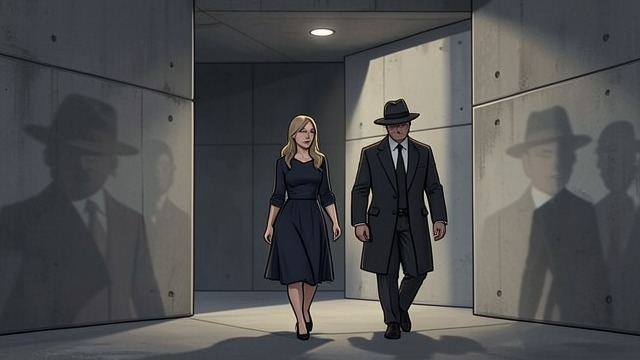
Carl Vespa brings Grace Lawson to God’s House Church, where she recognizes Jimmy X, the former rocker whose concert was the setting of the stampede. The sight overwhelms Grace, who leaves the arena-like church rather than remain inside the sound and crowd imagery it evokes.
Carl’s purpose is partly to confront the old tragedy. He wants an apology from Jimmy, but Grace sees that no apology can return Ryan Vespa or undo the losses carried by the families. She asks to go home, refusing the role of emotional witness Carl has brought her to play.
A limit to intimacy
The scene exposes a difference in how they live with the past. Grace has built a life by containing the event, while Carl’s grief continues to demand attention and some form of moral accounting.
Their bond survives the disagreement, but Grace understands that Carl may ask her to carry more of his grief than she can bear. His protectiveness is still real; so is the pressure hidden inside it.
Protection Becomes Fear
Protection Becomes Fear
A darker manner
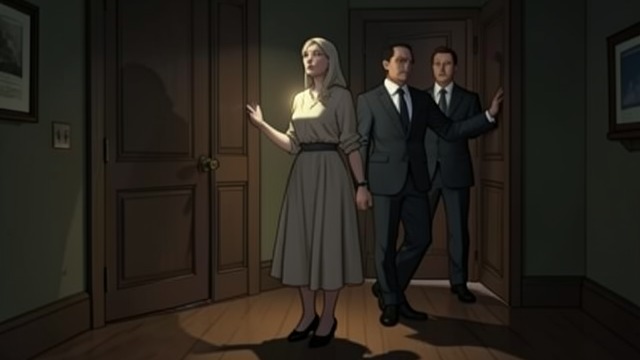
As Grace Lawson’s investigation grows dangerous, Carl Vespa assigns men to watch her home and offers protection for her children. Grace initially accepts the help, especially after an unknown caller threatens Emma, but she later sees a colder and more controlling side of Carl.
At their meeting after the press conference, Carl presses Grace about what she has told Scott Duncan and whether she has withheld information from him. His calm manner and insistence that she not lie make his concern feel less like parental care and more like a demand for access.
Affection with a boundary
Grace tells Carl that he is frightening her. She does not believe he would deliberately harm her, but she recognizes that his grief and appetite for vengeance have made his presence unpredictable.
When he says he will withdraw his men after she collects the children, Grace realizes that she must not mistake long-standing affection for unconditional safety. The bond remains meaningful, but she has to draw a boundary around her family and her own choices.
Care Without Absolution
Care Without Absolution
The truth between them
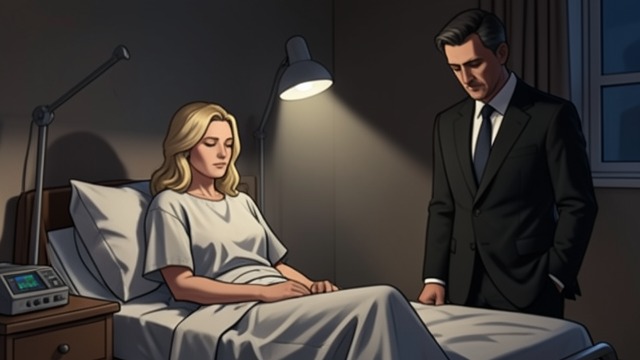
After Jack Lawson dies, Carl Vespa visits Grace Lawson in the hospital and explains how Wade Larue’s account led him to Jimmy X and the truth about the old concert. Grace asks whether Carl killed Jimmy and Wade, recognizing that the man who once comforted her has also pursued vengeance through violence.
Carl does not offer a simple denial or seek her approval. He frames his actions through blame, balance, and the irreversibility of Ryan’s death, while Grace understands that the truth will not make his choices harmless.
A bond that cannot repair everything
The conversation does not erase the tenderness of Carl’s earlier care, nor does that tenderness absolve him. Grace can acknowledge the man who stayed by her hospital bed while confronting the man whose grief has made him dangerous.
Carl eventually leaves quietly, and Grace is left with a relationship whose affection is real but damaged by moral distance. Their connection illustrates that love and gratitude can persist without requiring forgiveness or renewed trust.
The days after Grace survives the Boston Garden stampede
The day Grace Lawson asks Carl for assistance
During their visit to God’s House Church
The evening Carl confronts Grace about her disclosures
The final hospital conversation after Jack’s death
