Charlaine Swain, Freddy's neighbor
Just One LookCharlaine Swain, Freddy's neighbor, is introduced through a private ritual that exposes how thinly her settled suburban life is holding together. On a Tuesday morning, dressed in new lingerie and watching for Freddy Sykes, she confronts not only his absence but a sharper question about her own dwindling sense of vitality. Her attention to Freddy begins in disgust at his peeping, yet gradually becomes a spark she waits for; the same dissatisfaction that makes the ritual troubling also makes it feel like something to feel.
Identity and Introduction
At 10:30 on Tuesday morning, Charlaine has put on a new online purchase: a Regal Lace babydoll with a matching G-string. She raises her bedroom shade and immediately senses that something is wrong. Her children are at school, and she imagines her husband, Mike Swain, at his desk in the city, speaking on the phone and rolling and unrolling his shirtsleeves. In this carefully specified interval of domestic privacy, Freddy Sykes should already be home. His absence unsettles the routine she has come to expect.
The mirror gives her another reason to pause. Charlaine does not often look at herself, and the image offers little reassurance: she still considers herself shapely, aided by the lingerie’s underwired support, but feels that the buxom, curvaceous body she once had has weakened and loosened. She exercises, attending yoga three mornings a week, yet understands that keeping fit cannot stop time. Her question about what has happened to her turns an ordinary moment of dressing into an inventory of loss: the body remains hers, but no longer confirms the self she remembers.
The Tuesday Ritual
Freddy’s watching began as an intrusion that provoked revulsion and rage. By the time of this Tuesday scene, however, Charlaine has started looking forward to the encounter. She waits for his shade to rise and anticipates the beginning of their perverse ritual. She struggles to name what the change means, rejects the word arousal, and settles instead on the idea of a spark—an uncertain but welcome sensation in a life that seems to have gone dim. Her willingness to wait is not presented as simple approval of Freddy’s behavior; it is bound to her need for some interruption in the emotional flatness she feels.
That need is sharpened by the memory of a woman who lived two blocks away, a mother of two who died by stepping in front of the southbound 11:10 A.M. Bergen line at Glen Rock two months earlier. The community had discussed the death for weeks, condemning the woman for leaving her children. Charlaine had joined that judgment, but privately felt a small pang of jealousy and imagined that, for the dead woman, there had to be relief. The contrast reveals the depth of Charlaine’s weariness without suggesting that she acts on the same impulse: she is troubled by the thought and by what it discloses about her own life.
Absence, Domestic Space, and Withdrawal
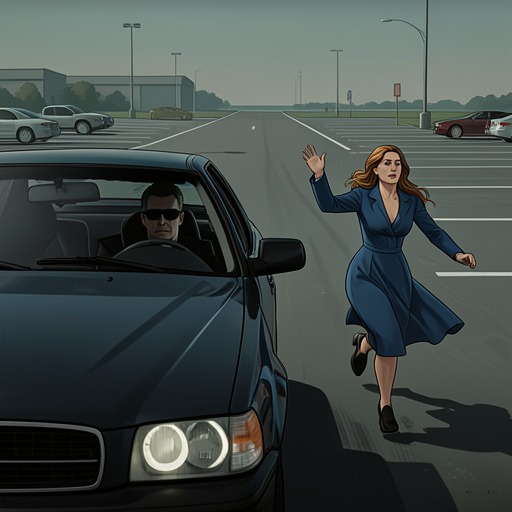
When Freddy’s shade does not rise, Charlaine initially thinks he has lost track of time and expects the familiar ritual to begin. Instead, she hears the slight whir of his electric garage door. She moves closer to the window as a car starts and Freddy’s battered Honda pulls out. Sunlight flashes from its windshield, forcing her to shield her eyes with a cupped hand; when the glare clears, she can see who is driving. The moment interrupts her accustomed view of Freddy at home, though the scene as presented does not identify the driver.
Later, she tells herself to mind her own business, draws the curtains, and changes back into jeans and a sweater. She puts the babydoll carefully in the bottom of her drawer, folding it as if its condition might matter to Freddy, then recognizes the absurdity of that thought. The unhurried care she gives the garment betrays how reluctant she is to dismiss the episode. Her attention moves to a glass of seltzer mixed with a little of her son’s fruit-punch drink and to the new stainless-steel Sub-Zero refrigerator. Its spotless front carries no children’s pictures, family photographs, fingerprints, or magnets. Charlaine remembers that the old yellow Westinghouse had been covered in such things. The remodeled kitchen she once wanted now seems sterile and lifeless; the missing clutter becomes a measure of the color and vitality she feels have drained from home.
Crossing Toward Danger
By the time Charlaine moves toward Freddy’s yard, her action has become less a considered plan than a bodily advance: her feet carry her there without thought or emotion. She recognizes the possibility that she is raising the stakes out of desperation, hungry for drama in her life. Rather than denying the danger, she tests it against the state of her marriage. If Mike found out, she wonders, would he leave her—and would that be so bad? She even considers whether some part of her wants to be caught. These thoughts do not establish a settled intention to pursue Freddy; they show her using risk to probe the emptiness she has been unable to name directly.
Narrative Role
Charlaine’s scenes connect voyeurism with a broader crisis of attention and feeling. At first, the bedroom window is a place from which she waits for Freddy; when the Honda departs, the window makes his absence visible and leaves her with the ordinary interior of her own house. The babydoll, folded away with needless care, and the refrigerator stripped of family traces give physical form to the divide between the life she once expected and the one she now experiences. Her movement toward Freddy’s yard carries that divide into action: seeking a spark becomes a willingness to approach danger, even while she can articulate the risks. The narrative leaves the tension unresolved in these scenes, making Charlaine’s uncertainty—not a simple romantic or erotic motive—the defining feature of her trajectory.