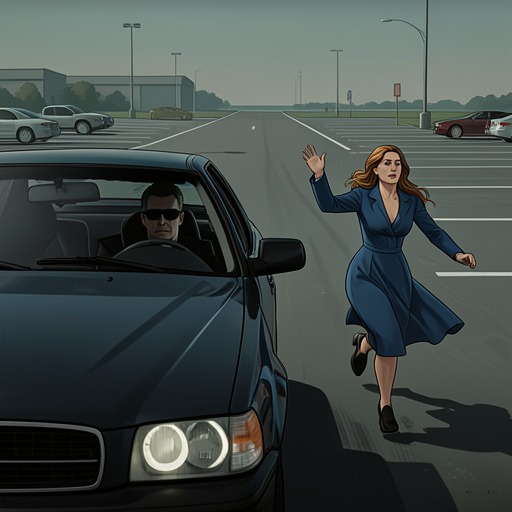
Freddy Sykes is attacked and paralyzed
Just One LookEric Wu’s attack on Freddy Sykes exposes the method behind Wu’s online predation: he cultivated a false relationship, selected someone isolated and nearby, and left his victim alive because captivity could serve his purposes better than immediate death. Freddy’s paralysis was not incidental to the assault. It became part of Wu’s plan for keeping him dependent and concealed.
Selecting a target
Wu used seven online-personals accounts built around invented personas, maintaining contact with an average of six potential dates through each account. At times he managed flirtations with forty or fifty people at once. He approached these exchanges patiently, gathering personal details to decide whom to pursue and whom to abandon. Though he first focused on women, he concluded that men could be less alert to online dangers and therefore easier to exploit. The courtship was a means of assessment, not an end in itself; the account of the attacks makes clear that Wu sought no sexual gratification from his work.
His selection criteria made social isolation a practical vulnerability. A target with children, nearby family, roommates, a demanding job, or many close friends was unsuitable because those ties could bring attention or intervention. Wu wanted someone lonely and secluded, and, for this operation, close to the Lawson household. Freddy fit. He was forty-eight, worked for a storefront tax-filing company in Waldwick, and had no siblings. After caring for his mother, he had inherited her house in Ho-Ho-Kus when she died two years earlier. His online profile described a life with little opportunity for relationships; his home was only three miles from the Lawson residence.
A courtship turned into a pretext
For three weeks, Freddy had been exchanging messages with Al Singer, one of Wu’s fabricated identities: a fifty-six-year-old retired Exxon executive and widower who presented himself as interested in men and women. Singer’s invented history included a twenty-two-year marriage and an interest in European travel, fine dining, and televised sports. Wu used a photograph taken from a YMCA online catalogue, choosing a man who looked plausible rather than unusually attractive. The details were designed to make the persona credible enough for Freddy to trust.
Wu also assessed the conditions around Freddy’s house. Young families lived nearby, but they paid little attention to him, and the house looked like its neighbors. Its attached garage allowed someone to enter or leave by car without being seen. Wu waited ten minutes before ringing the doorbell. When Freddy asked who had sent the delivery, Wu named Mr. Singer. Freddy then opened the door, turning the online fiction into access to his home. Wu struck immediately, went inside, and shut the door behind him.
The assault and its intended result
Wu deliberately caused a severe spinal injury but did not kill Freddy. The resulting damage left Freddy unable to move his legs; his arms were also substantially impaired, although he could still breathe without assistance. Wu gagged him and left him in the bathtub. The tub suited the practical demands of confinement and cleanup, while Freddy’s inability to move made restraints unnecessary. The attack transformed a man who had opened his door expecting a delivery into a living captive with little ability to act independently.
That survival was purposeful. Wu had learned that a living victim could call an employer to explain an absence, provide a bank PIN if Wu wanted money, or answer messages so that others would not become suspicious. A living captive could also delay discovery, unlike a body that would create an immediate problem for the abductor. Freddy’s condition therefore served several functions at once: it restricted his ability to escape, allowed Wu to exploit his cooperation, and helped preserve the appearance that ordinary communication remained possible.
A method built around concealment
The later account of Wu’s movements shows him turning to Beatrice Smith as a backup residence after acknowledging that he had made mistakes. Her circumstances offered a different kind of seclusion: her husband had died, their couple-friends had drifted away, and her only child lived in San Diego. She was considering leaving her large, lonely house in Armonk but felt afraid to move. Wu had learned these details through another invented online persona and approached her home wearing gloves. Unlike the approach to Freddy, a fake delivery would not work at that late hour; Wu believed he could not keep her alive and that she must never be found.
This later plan clarifies the calculation behind Freddy’s attack without making the two cases identical. Freddy’s proximity, lack of close family, inattentive neighbors, and private garage made him a convenient target to keep alive and use. Beatrice’s isolation, by contrast, was considered in relation to a different plan. Across both episodes, the apparent intimacy of online conversation supplied Wu with private information, while ordinary domestic surroundings helped him judge how easily someone could be reached or missed. Freddy’s paralysis marks the moment that deception became physical control.