Gordon MacKenzie
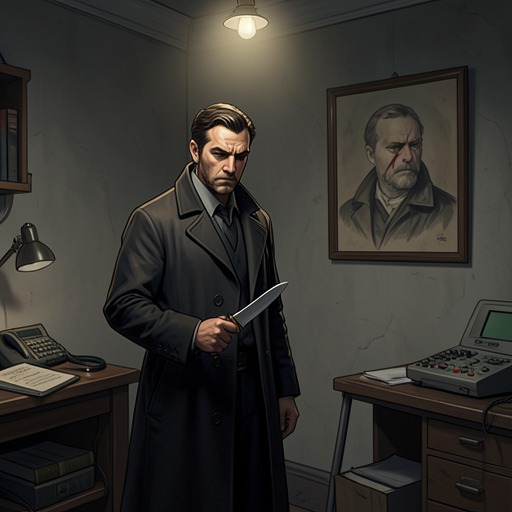
Just One LookGordon MacKenzie is remembered both as a security guard who helped save Grace Lawson during the Boston concert stampede and as the person Jimmy X identified as firing the first shot in the backstage confrontation that left John Lawson dead. His later disclosure to Wade Larue makes MacKenzie a link between the public memory of the rescue and the hidden history of the shooting.
Rescue, Violence, and Disclosure
At a press conference held by Burton and Crimstein, Grace encountered the families of people affected by the stampede, including MacKenzie’s widow. Some people credited MacKenzie with pulling Grace to safety. He had rarely spoken about the incident and reportedly said he could not remember exactly what he had done, describing his actions as a reaction rather than an expression of bravery. Grace gave his widow an especially long embrace and expressed her sympathy for the loss.
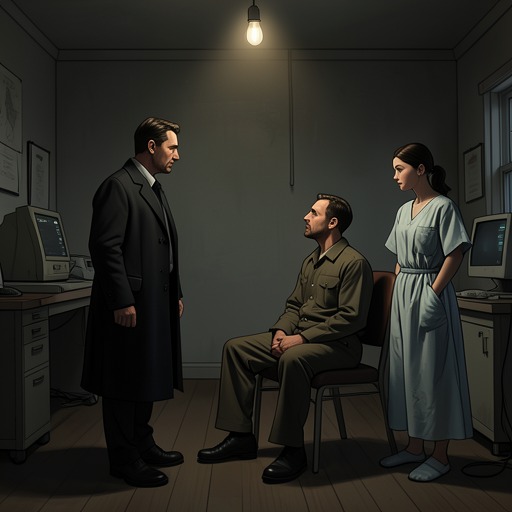
Jimmy X’s account placed MacKenzie at the center of a different moment from the same concert’s troubled history. During the backstage struggle between Jimmy and John Lawson, Jimmy heard the first gunshot and then saw MacKenzie still pointing his gun. Jimmy said MacKenzie had heard the commotion and his call for help. Grace, who had believed Jack Lawson was not present that night, asked whether MacKenzie had fired first; Jimmy confirmed that he had. The recollection shifted the account of the shooting from uncertainty toward a specific identification of the first gunman.
MacKenzie’s role also emerged through his contact with Wade Larue. Larue told Carl Vespa that MacKenzie had visited him in prison, and later told Grace that MacKenzie had visited him in hospital three months earlier. Larue connected that visit with MacKenzie’s terminal cancer and a late desire to face what he had done. The evidence presents the visit as the occasion for MacKenzie to disclose what he knew, while leaving the exact circumstances of the two reported visits distinct.
The Limits of the Record
MacKenzie’s significance emerges through accounts with different degrees of certainty. His own reported explanation of the rescue stressed that he could not recall its exact sequence; Jimmy X, by contrast, identified him in a specific moment during the backstage gunfire. Larue’s account adds that MacKenzie later sought him out, while Vespa interprets the timing through MacKenzie’s terminal cancer as a bid to confront past actions. The novel thus separates what witnesses say they saw from what they infer about motive: MacKenzie’s actions become clearer, but the available accounts do not fully settle what he intended or how he understood them.
Testimony and the Shape of the Record
MacKenzie’s place in the story is assembled through other people’s speech rather than a direct account from him. At the press conference, his widow’s presence connects him to the surviving families and to a rescue he reportedly could not reconstruct in detail; Jimmy X’s memory supplies a specific identification during the backstage gunfire. Larue’s disclosures reach the reader secondhand as well: he tells Carl Vespa that MacKenzie visited him in prison, and later tells Grace about a visit in hospital three months earlier. Keeping those reports distinct matters. Together they make MacKenzie’s actions newly legible, but they do not provide a single, uninterrupted version of his motives or of what he said.
The Sequence After the First Shot
Jimmy X’s recollection distinguishes the initial shot from what followed: he heard two or perhaps three more shots from farther away. In the confusion, Jimmy and MacKenzie briefly looked at one another as the crowd’s noise overtook the sounds around them. These details place MacKenzie within a rapidly unfolding scene, while leaving the later shots’ source and his actions after that moment unresolved in the account.