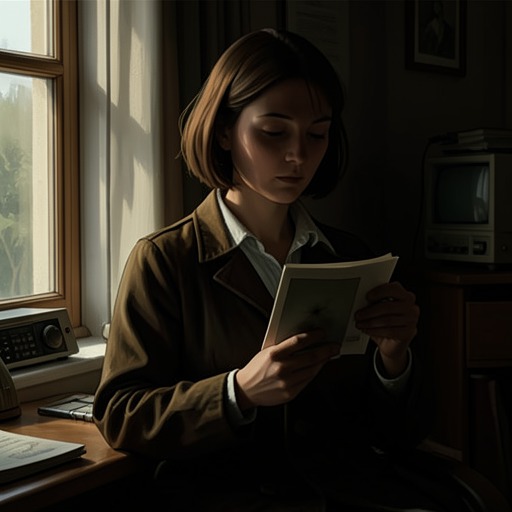
Invisible Ink
Just One LookInvisible Ink is an Allaw song written by Jack Lawson and Shane Alworth whose resemblance to Jimmy X’s Pale Ink helps connect a dispute over music to the violent backstage events surrounding Jack. Jimmy describes the songs as sharing a concern with fragile memory, but not much else; years later, Grace Lawson hears Invisible Ink on a cassette from Geri’s belongings and judges the line between influence and plagiarism impossible to draw cleanly.
Origin and musical context
Jack Lawson and Shane Alworth wrote Invisible Ink for Allaw. Its origins sit within a loose network of bands and friendships that Jimmy recounts to Grace at a hospital. He had been performing with Still Night when both groups appeared on a four-band bill at a gig in Manchester. He and Jack met backstage, where, as Jimmy recalls it, they spent time together getting stoned. Allaw broke up a few months later, as did Still Night, but Jimmy and Jack kept in touch.
The two men approached music differently. Jimmy remembers it as the center of his life: he wanted to make an album like Born to Run and change the musical landscape. He regarded Allaw as fun, with some decent songs but amateur vocals and arrangements, and says Jack did not imagine the band would become famous. When Jimmy later started the Jimmy X Band, he even considered asking Jack to join. That contrast matters to the song’s later history: Jimmy’s account presents him as intensely invested in music, while Jack’s involvement in Allaw belonged to a less grandly ambitious period.
The resemblance to Pale Ink
Jimmy identifies the principal connection between Invisible Ink and Pale Ink as their titles and, more tentatively, their subject. In his account, both songs concern how fragile memory can be. He insists that the resemblance went no further than that shared title element and theme. The evidence therefore supports a connection between the songs, but not a claim that they were identical or that one was simply copied from the other.
The title Invisible Ink gives the memory theme a suggestive form: writing that cannot readily be seen offers an image for what is difficult to retain, recover, or make legible. That reading gains force from the song’s place in the story, where the past is neither fully erased nor plainly available. Its words and musical details are not reproduced in the surviving account; what reaches Grace is Jimmy’s description of the subject and, later, a recording. The song is thus known through partial traces rather than a complete explanation.
Jimmy’s recollection also ties the song dispute to a violent confrontation with Jack backstage. Jimmy says he told Jack that the songs had only limited similarities, but that Jack was already enraged and grew angrier. A girl present with Jack encouraged threats to break Jimmy’s legs, and Jack punched him. Jimmy recalls Jack then threatening him with a knife; Jimmy leapt at him, the knife fell, and they wrestled on the floor. A gunshot followed. Jack stopped moving, and Jimmy saw blood on the floor and security guard Gordon MacKenzie still pointing his gun. The account makes the musical disagreement part of the remembered circumstances of the shooting, without establishing that the dispute alone explains everything that happened.
The recording and Grace’s judgment
Years later, Scott Duncan gives Grace a battered cassette found among Geri’s belongings. It has no proper label, only the faint word ALLAW written in black ink. Grace plays it in the den, where Invisible Ink is the third song. The cassette turns the earlier account into something she can listen to herself: the song is no longer only a disputed memory described by Jimmy, but a recording preserved with Geri’s effects.
Listening does not produce a decisive verdict. Grace hears similarities between Invisible Ink and Pale Ink and considers whether a court would have found Jimmy guilty of plagiarism. Her judgment is cautious: after all those years, she thinks the answer would probably have been no. Songs can sound alike, she reflects, and influence shades into plagiarism along a blurry boundary. She places Pale Ink on that boundary rather than declaring either that it stole from Invisible Ink or that the resemblance was meaningless.
A trace of an unresolved past
Invisible Ink links several kinds of incomplete record: Jimmy’s recollection of a band and a backstage argument, a song about fragile memory, and a barely marked cassette recovered among Geri’s possessions. None alone resolves the history. Jimmy offers his account, but Grace’s hearing supplies a different kind of evidence; the recording confirms that the song existed, not what legal or moral conclusion should follow from its resemblance to Pale Ink.
That unresolved boundary echoes Grace’s broader investigation, in which old objects and recollections revive questions that cannot be answered by a single clue. The cassette preserves a piece of Allaw after the band has disappeared, while its faint label and uncertain implications leave the past only partly readable. Invisible Ink is significant less as a settled case of plagiarism than as a surviving, ambiguous connection among Jack, Shane, Jimmy, and Geri—and as a song whose subject of fragile memory is reflected in the way its own history has to be reconstructed.