Jack Lawson, the missing husband
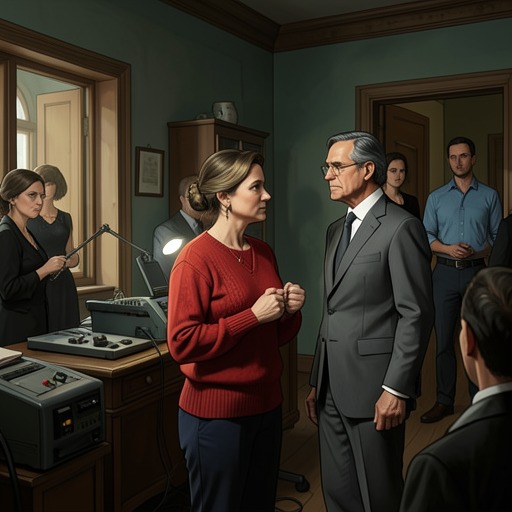
Just One LookJack Lawson, the missing husband, becomes the focus of a mystery when an old photograph appears to connect his present life to a past he has kept private. The image may show him as a young man beside a blonde whose face has been crossed out; when he sees it, he freezes, asks what it is, and soon disappears. For Grace Lawson, Boston Garden stampede survivor, that sequence transforms an unsettling photograph into evidence that Jack may be in danger.
Identity and the photograph
The first question the image raises is whether one of the young people in it is Jack. Grace thinks she recognizes the boy standing in the middle, next to the blonde with the crossed-out face, but the photograph offers no easy confirmation. His head is turning, an adolescent-thin beard obscures part of his face, and the image gives her no more than a profile. She had never known Jack at that age, so recognition has to compete with uncertainty: she wonders whether it is her husband, then asks herself whether she can be sure.
The doubt is sharpened by the distance between the young figure in the picture and the person Grace knows. They met thirteen years earlier on the Côte d’Azur in France. After more than a year of surgery and physical therapy, Grace still had headaches, memory loss, and a limp. Under the continuing publicity surrounding the tragedy that had injured her, she wanted time away; she enrolled at the University of Paris to study art and met Jack while on break, lying in the sun. The photograph therefore reaches back to a time before their meeting, when Jack was already living a life Grace could not verify from her own memories of him.
A guarded past inside a family life
Jack’s reticence predates the photograph. Grace knows that he came from a wealthy family and had a trust fund, but that he wanted nothing to do with either. She also knows he has a sister, a lawyer based in Los Angeles or San Diego, and that his father is still alive and very old. Jack refuses to elaborate on his background. Grace senses something foreboding in that silence and does not press him, leaving the marriage with an area of his history she has chosen not to force open.
That secrecy exists alongside a tender, watchful domestic routine. Jack sometimes cannot sleep and paces the corridors at night, standing in the children’s doorways as if guarding them in their beds. Grace has woken to find the space beside her empty and then found him looking in on them. On such nights he tells her, “You love them so much . . .” The unfinished thought needs no explanation between them. This private expression of care makes the later disappearance harder to interpret as a simple withdrawal from family life.
Jack is usually restless and energetic: he fidgets, his leg shakes when he sits, and he has difficulty staying still. Grace recognizes the same inability to be still in Max Lawson. Against that habitual motion, Jack’s stillness at the kitchen counter is striking. He is fixed on the strange photograph, “still as a stone.” Grace’s question about the blonde standing next to him, the one with the X through her face, gets no answer before his cell phone rings. He identifies the caller as Dan, his research partner at Pentocol Pharmaceuticals, covers the mouthpiece, and heads into the den. The image has brought the past into their home, but the conversation Grace wants to have remains unfinished.
Disappearance and the change in Grace’s understanding
After Jack leaves, Grace tries his cell phone and reaches voicemail. She waits, tries again two hours later, and gets the same result. The children sleep, unaware of what is happening. When Grace can no longer wait, she goes downstairs and searches through the packet of film. The strange photograph has vanished. Its disappearance compounds the mystery: the image that had held Jack motionless is no longer there for her to examine.
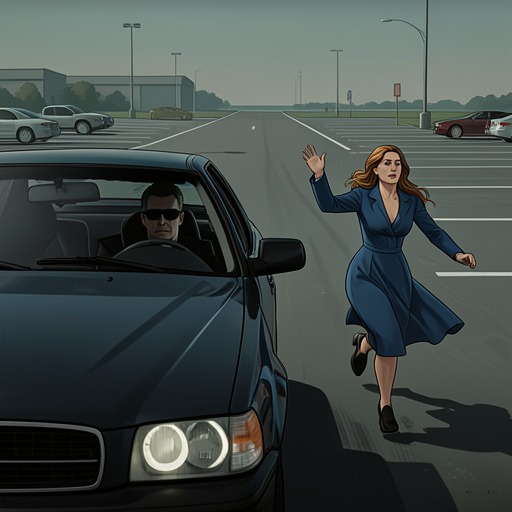
The initial explanation attached to Jack’s absence is that he needs space. Grace rejects that phrase as inconsistent with what she knows of him, but it is a phone call that gives her a firmer reason to reconsider the situation. After speaking with the police, she realizes she has learned something crucial: Jack is in trouble. His disappearance, she concludes, is not an attempt to leave her or a fear of commitment; it was not an accident, and it was not expected or planned. She connects the crisis to the photograph she picked up from the store: Jack saw it and ran out. Her understanding changes from fearing that her husband has chosen to leave to recognizing that something has happened to him.
Relationships and narrative significance
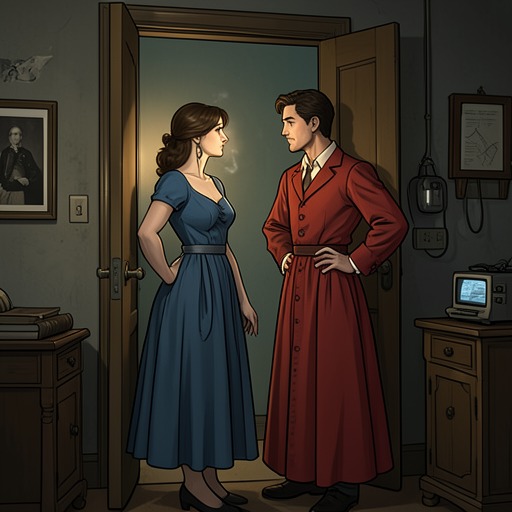
Jack’s relationship with Grace is presented through both intimacy and withheld knowledge. He is a devoted presence in the nighttime care of their children, and Grace has built a life with him since their meeting in France. Yet she has never been able to make him speak openly about his family or earlier life. The photograph turns that long-standing gap into an active danger: what Jack would not explain becomes the very subject around which his disappearance gathers.
Even the name used when the missing-person inquiry begins reflects a gap between public identification and familiar address. The report gives his name as John Lawson and notes that he goes by Jack. The distinction does not itself explain his past, but it places a question about identity beside the photograph’s uncertain face. Jack’s decisive role in this part of the story is thus not simply that he is absent. His reaction, silence, and sudden departure make Grace’s private uncertainty consequential, redirecting her from the possibility of marital abandonment toward an investigation into what the concealed past has put at risk.