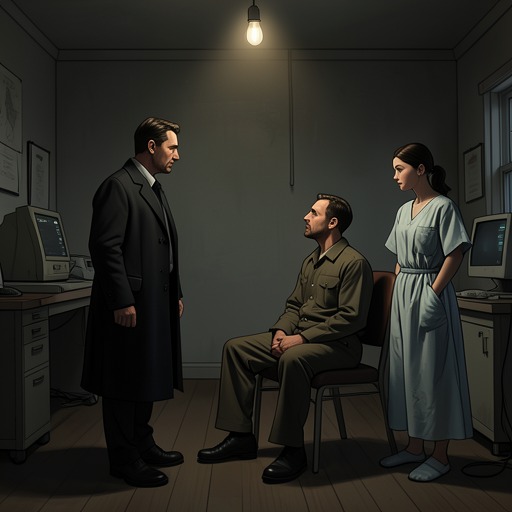
John Lawson confronts Jimmy X backstage over song theft
Just One LookJohn Lawson’s backstage confrontation with Jimmy X began as an apparent reunion and became a physical assault over the claim that Jimmy had stolen a song. The dispute centered on the relationship between Jimmy’s “Pale Ink” and “Invisible Ink,” written by John Lawson and Shane Alworth for Allaw; what might have remained an argument about influence and authorship instead erupted into threats, a knife, and a struggle that ended with gunfire.
Background and Confrontation
Jimmy recalled that he did not know how John Lawson and the others had gained access backstage, because he had not given them passes. At first, he was glad to see John, who approached him as if greeting an old acquaintance. The tone changed abruptly: John began pushing him and accused him of being a thief, insisting that Jimmy had taken his song. The accusation concerned “Pale Ink.” John and Shane Alworth had written “Invisible Ink” for Allaw; Jimmy later described the songs as sharing a theme about the fragility of memory, but said their resemblance otherwise amounted mainly to the similarity between their titles. One of the women with John, a dark-haired girl, encouraged the confrontation and threatened that Jimmy’s legs would be broken. When Jimmy called for help, John punched him in the jaw and attacked him. The dispute over authorship had become a threat to Jimmy’s immediate safety.
The Knife and the Gunfire
The confrontation escalated when another woman, a redhead, urged John to calm down and pleaded with him to let the dispute go. He ignored her, smiled at Jimmy, drew a knife, and threatened to stab him in the heart. Jimmy later explained that the threat jolted him out of his intoxication: he was not going to stand still and be stabbed. He lunged at John, who dropped the knife, and the two wrestled on the floor as the women screamed and tried to pull them apart. Then Jimmy heard a gunshot, followed by two or three more shots from farther away. John stopped moving; blood was on the floor, and Jimmy saw that John had been hit in the back while security guard Gordon MacKenzie still had his gun pointed toward them. The account makes the abrupt turn from a personal accusation to a violent, confused backstage melee unmistakable, while Jimmy’s recollection does not establish that MacKenzie fired the shot that struck John.
The Recording and the Unsettled Copyright Question
Years later, Grace Lawson listened to a beat-up cassette marked in faint black ink with ALLAW. “Invisible Ink” appeared as its third track, giving her a recording against which to reconsider the accusation that had helped turn the backstage encounter violent. The tape did not erase the resemblance: she heard similarities between “Invisible Ink” and Jimmy X’s “Pale Ink.”
Yet hearing both songs did not yield a simple verdict. Grace thought a court would have faced a close call, but that after all those years the likely answer was no: songs could sound alike, and the boundary between influence and plagiarism was narrow. In her judgment, “Pale Ink” sat across that blurred line. The later listening therefore reframed the confrontation without making its violence less real: the claim that had been delivered as certainty remained, on the evidence of the songs, contestable.
The Disclosure’s Effect on Grace
Jimmy’s account reached Grace as a delayed correction to what she had understood about the backstage melee. She had known reports that Jimmy was injured; he now told her that John Lawson had struck him, and that the knife threat and struggle had preceded the gunfire. As he recalled the scene, Jimmy’s face went slack, while Grace shook her head and felt a tremor move down her left side and a flutter in her chest. Her physical response marks the account not as a settled explanation but as a revelation she can scarcely accept. The confrontation’s later significance lies partly in that gap between the public report and Jimmy’s testimony: the songs’ resemblance remained debatable, but the violence and the concealed details of how it began returned to the story through his recollection.