John Lawson—Jimmy X
Just One LookThe relationship between Jack Lawson and Jimmy X began in the music scene and later turned into an accusation of theft, a violent backstage confrontation, and a long-suppressed memory. Its central dispute concerned the resemblance between Jimmy’s hit “Pale Ink” and an earlier song written for Lawson’s band, Allaw.
Meeting in the Music Scene
Jimmy recalled meeting Jack Lawson at a gig in Manchester, where Jimmy was playing with Still Night and Allaw was among four bands on the bill. The two spent time together backstage, and their acquaintance continued after both bands broke up a few months later. When Jimmy formed the Jimmy X Band, he even considered asking Lawson to join.
Their musical priorities were not the same. Jimmy described music as the center of his life and aspired to make an album like Born to Run and change the musical landscape. Lawson, by contrast, treated Allaw as fun rather than a serious route to success; Jimmy remembered the band’s songs as decent but its vocals and arrangements as amateur. That difference later sharpened the meaning of Lawson’s charge: a former acquaintance who had once considered bringing Lawson into his new group came to see him as a thief.
The Song Dispute and Backstage Confrontation
The old friendship fractured when Jack Lawson confronted Jimmy X backstage and accused him of stealing a song. Jimmy recalled that Lawson seemed out of control, pushed him, and made threats; a dark-haired woman with Lawson urged him on and threatened that they would break Jimmy’s legs. Jimmy said the accusation centered on Pale Ink, the song that would become associated with his musical career. The charge was not simply a disagreement between former bandmates: it recast their earlier musical connection as a grievance over authorship.
Jimmy’s account traced the dispute to Invisible Ink, a song Jack Lawson and Shane Alworth had written for Allaw. He acknowledged a shared concern with the fragility of memory, but insisted that the resemblance went no further than the titles’ use of the word ink and the songs’ broad theme. He said he tried to explain this to Lawson, whose anger only increased. When Lawson punched him in the jaw, Jimmy fought back rather than submit; the struggle became physical enough that the women tried to pull them apart.
The encounter ended in gunfire. As Jimmy and Lawson wrestled on the floor, Jimmy heard a shot, followed by two or three more from farther away. Lawson stopped moving, and Jimmy saw blood on the floor and security guard Gordon MacKenzie pointing his gun. The abrupt shift from an argument over a song to a fatal shooting makes the disputed authorship part of a larger, violent history, while Jimmy’s recollection distinguishes Lawson’s attack from the gunfire that followed.
Years later, Grace Lawson heard Allaw’s old recording, with Invisible Ink appearing as its third song. She recognized similarities to Pale Ink but judged the question of plagiarism uncertain: a court’s decision would have been close, and she ultimately thought the case against Jimmy would probably fail. In her assessment, the songs occupied the indistinct border between influence and plagiarism. That later comparison neither confirms Lawson’s accusation nor erases the resemblance; it leaves the relationship suspended between a remembered assault and a musical claim that the surviving evidence cannot settle cleanly.
The Confession and the Public Record
Jimmy’s later account also overturned the brief public version of the backstage fight. Reports had described him as injured in the melee, but he told Grace that he had not been hurt in the way those reports suggested: Jack Lawson struck him in the jaw and attacked him, while Jimmy fought back after Lawson threatened him. His recollection supplied a more intimate sequence than the report could—an accusation, a punch, a struggle, and then gunfire—and placed Jimmy inside the violence as its target and a participant in the fight, not simply as an injured performer. The distinction does not settle the song dispute, but it changes the circumstances through which their relationship is remembered.
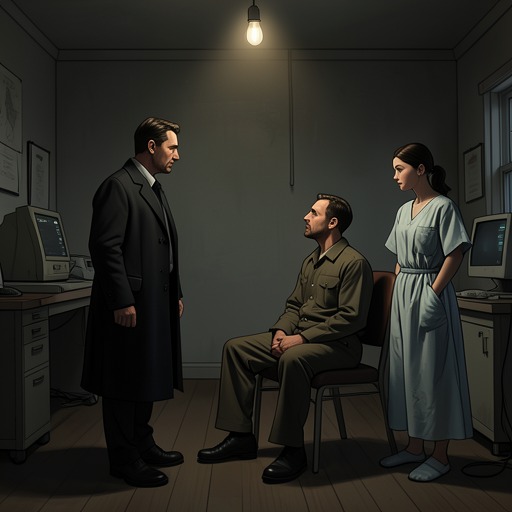
The telling itself became an encounter between the two survivors of that history. Jimmy had come to Grace’s house seeking absolution, and she told him that he could no longer live with himself and that it was time to speak. When he broke down, she did not touch him or offer comfort; she stayed silent while the hospital staff and visitors briefly noticed, then looked away. Jimmy’s sobs subsided, and he continued with the account of how he and Jack had first met and how their connection collapsed backstage. His disclosure turns their relationship from a private grievance preserved in memory into something Grace can examine, while leaving its most disputed question—the boundary between influence and theft—open.
The Limits of the Recovered Record
The relationship remains divided between two kinds of evidence: Jimmy X’s recollection of Jack Lawson’s accusation and violence, and the old Allaw recording that allows Grace Lawson to hear the songs side by side. Neither settles the other. A resemblance between “Pale Ink” and “Invisible Ink” cannot establish that Jimmy stole the song, just as uncertainty about plagiarism cannot undo the backstage assault he described. Their connection is therefore recovered without being reconciled: the recording sharpens the question that damaged their friendship, while leaving its answer—and the boundary between influence and theft—uncertain.