Scott Duncan’s cassette
Just One LookScott Duncan’s cassette is the recording Scott Duncan gives to Grace Lawson at the end of their conversation about Shane Alworth. Rather than settle the uncertain story of Shane’s past, it accompanies Grace’s return to painting after Jack Lawson’s death, linking an unresolved possibility to a concrete act of remembrance.
Transfer and Playback
Scott Duncan removes the cassette from the machine and hands it to Grace Lawson after presenting several possibilities about why Shane Alworth might not have gone backstage: a mysterious woman may have persuaded him to stay away, or he may have found something more important in the concert’s front pit. Scott also suggests that Shane might have made sure he found that important thing again three years later. These remain conjectures, not confirmed explanations. By giving Grace the cassette, Scott leaves her with both the recording and an interpretation she has just rejected.
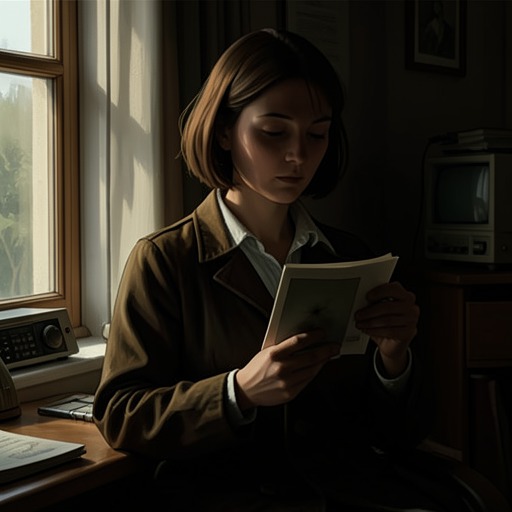
After Scott leaves, Grace goes into her studio, where she has not painted since Jack Lawson’s death. She puts the cassette into her portable player and presses play. The recording thus becomes the accompaniment to a private attempt to make sense of Jack’s identity and of what can remain unknown about someone loved.
Accompaniment to a Return to Painting
Grace begins painting Jack Lawson, insisting in her thoughts on the distinction between Jack, John Lawson, and Shane Alworth. She expects the image to come out muddled, but instead the brush moves freely across the canvas. The cassette’s presence coincides with this unexpected clarity: the uncertain identities surrounding Jack do not prevent Grace from painting him as Jack.
As she works, Grace reflects that no one can know everything about loved ones—or even everything about oneself. The recording does not resolve the identity questions Scott has raised; its importance in this scene lies instead in accompanying Grace as she acts amid uncertainty. Her response is neither a recovered explanation nor a conclusion about the past, but the beginning of a renewed artistic expression.
Repetition and Ordinary Obligations
When the cassette ends, Grace rewinds it and starts it again. She continues painting in an intense, delighted frenzy, tears running down her cheeks without her brushing them away. Replaying the recording extends the moment, while the approaching end of the school day gives it a practical limit.
Grace glances at the clock and remembers that she must collect the children: Emma Lawson has piano, and Max Lawson has traveling-team soccer practice. She takes her purse and locks the studio door behind her. The cassette remains associated with a brief but consequential return to painting, set within the ordinary responsibilities that bring Grace back out of the studio.