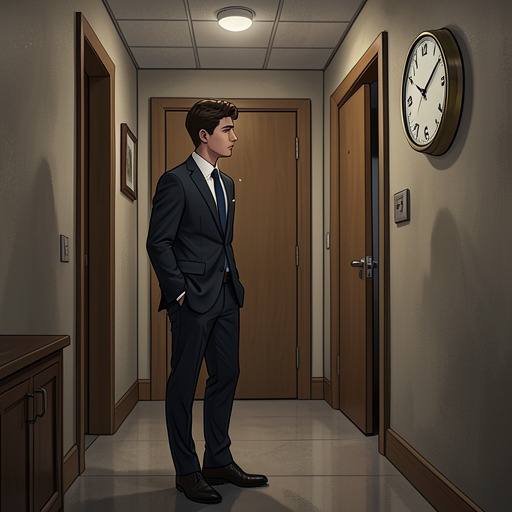
Wilson
Just One NightWilson is the handsome, socially confident younger brother of Bradford Taylor and the romantic partner of Jessie Bryce. Although he appears only intermittently, his relationship problems create the central premise of the story: because Bradford dislikes Jessie and refuses to approve of Wilson’s relationship with her, Wilson participates in a plan that sends Geneva Bryce on a deceptive date. His shallow confidence and comic carelessness provide an important contrast to Bradford’s controlled intensity, while his eventual acceptance of the new couple helps complete the story’s movement from sexual misdirection to marriage.
Identity and Introduction
Wilson is introduced through Jessie Bryce’s complaint that Bradford Taylor hates her and considers her a bimbo. Jessie reports that Wilson has said they cannot continue dating unless his brother gives the relationship his blessing. Rather than confronting Bradford directly, Wilson accepts Jessie’s proposal that Geneva impersonate Jessie’s invented date, Ginny, and behave like a complete ditz so that Jessie will appear sensible by comparison. The scheme depends on Wilson’s cooperation, but it also reveals his willingness to treat an intimate relationship as a performance staged for his brother’s judgment.
Wilson arrives with Geneva and Jessie at the Wayward Inn, where he is presented as Geneva’s date before Bradford appears. He is tall, has thick blond hair, and wears a confident smile; Geneva recognizes him as conventionally handsome, yet also finds him slick and slimy. His first visible response to Geneva is strongly sexual. He looks at her body rather than listening to Jessie’s preparations, and when Jessie presents Geneva, he says, “I’d fuck her.” Jessie treats this as his habitual remark about attractive women, but Geneva notices that his gaze lingers on her chest and doubts that he is merely joking.
Role in the Disguise Plot
Wilson helps sustain the false identity by introducing Geneva to Bradford as Ginny, a name deliberately kept close to Geneva’s own so that the deception will be easier to maintain if they encounter someone she knows. When Bradford asks what Ginny does for a living, Wilson improvises that she is a dancer, prompting Geneva to kick him in the shin. His invention exposes the looseness of the plan: Jessie has prepared a story, but Wilson is not especially attentive to it, and his gaze remains fixed on Geneva rather than on the narrative they are constructing.
Wilson also functions as Geneva’s signal and intermediary during the evening. When he nudges her knee, she remembers that she is supposed to perform the seductively foolish role and stretches the bodice of her dress across her breasts while telling Bradford to hurry back in a deep, husky voice. Afterward Wilson observes that she may be pushing the performance too far. His comment shows that he understands the practical limits of the deception, even though his own behavior has helped make the encounter overtly sexual from the beginning.
At one point Wilson leaves the table to speak with Bradford and find out how the evening is going. As he stands, he hikes up his trousers, revealing that he is half-hard and, unlike Bradford, does not bother to conceal it while walking away. The moment sharply distinguishes the brothers: Wilson’s sexuality is conspicuous, impulsive, and socially unguarded, whereas Bradford’s desire is associated with restraint and control. Wilson disappears from Geneva’s attention as soon as he leaves, because her interest has shifted entirely to Bradford, but his departure allows the brothers to speak privately and helps clear the way for Geneva and Bradford’s one-night pact.
Relationship with Jessie Bryce
Wilson’s relationship with Jessie is the immediate reason Geneva becomes involved. Jessie wants Wilson to continue seeing her, while Wilson wants Bradford’s approval; together they turn Geneva’s impersonation into a tactical solution. Their romance is therefore presented through a comic alliance of manipulation, exaggeration, and family pressure. Jessie manufactures false tears, Wilson helps organize the date, and Geneva is recruited to make Jessie seem normal by comparison.
The scheme does not produce the result Jessie expects. After Geneva spends the night with Bradford, Wilson tells Bradford that he is considering dumping Ginny and starting to see Jessie again. Bradford approves of the idea, and Jessie calls Geneva to thank her for whatever she did to him. Wilson’s conversation with Bradford consequently restores the possibility of Wilson and Jessie’s relationship, even though Geneva’s encounter has transformed the larger romantic arrangement around them.
Four months later, Wilson and Jessie still have not realized that Geneva and Bradford have been practically living together. Their failure to notice the change becomes one of the story’s recurring comic ironies: they initiated the deception and remain close enough to the consequences to be invited into the next stage, yet they overlook the couple’s domestic intimacy. Geneva and Bradford decide not to explain the situation directly and instead invite Wilson and Jessie to the wedding.
Family Contrast and Comic Function
Wilson’s presence establishes Bradford by contrast before Bradford has done much more than enter the room. Wilson is blond, handsome in a conventional sense, physically demonstrative, and eager to display sexual confidence. Bradford resembles him enough to make their kinship visible, but their conduct is markedly different. Wilson carries himself with his chest puffed out and his stomach sucked in, while Bradford appears entirely comfortable in his body. The brothers’ similar faces therefore frame two opposing styles of masculinity: Wilson performs confidence outwardly, whereas Bradford’s authority seems self-contained.
The family connection also gives the plot its initial obstacle. Jessie and Wilson treat Bradford’s opinion as decisive, making the older brother’s approval a condition of their continued dating. Wilson does not simply want Jessie; he wants the relationship recognized by the family hierarchy represented by Bradford. That dependency makes him the practical engine of the setup, but it also leaves him vulnerable to the deception he helps create.
Wilson contributes to the book’s romantic-comic structure through misrecognition and delayed recognition. He accepts Geneva as Ginny, participates in the staged comparison with Jessie, and later speaks with Bradford about resuming his relationship with Jessie, but he and Jessie remain unaware of the deeper pairing that has formed. The joke is completed when the couple who engineered the original performance are invited to a wedding instead of being given an explanation of the four months of cohabitation they failed to detect.
Change and Ending
Wilson does not undergo the kind of dramatic transformation experienced by Geneva Bryce and Bradford Taylor. His principal change is circumstantial: the problem that initially threatens his relationship with Jessie is resolved after Bradford approves of their renewed dating. Wilson’s role shifts from anxious boyfriend seeking permission to an unwitting member of the social circle surrounding Geneva and Bradford’s settled relationship.
His ending is defined by inclusion. Wilson and Jessie are not rejected when Geneva’s impersonation ends; instead, they are incorporated into the couple’s future through the wedding invitation. The domestic joke about pink underwear, which prompts Geneva to recognize that the relationship has moved beyond a few nights of sex, immediately leads to Bradford’s proposal to invite Wilson and Jessie to the wedding. Wilson therefore remains connected to the story’s final promise, even though he does not perceive the relationship’s development until the announcement is made.
Wilson’s significance lies in the chain of consequences he helps set off without understanding its full direction. His need for Bradford’s approval prompts Jessie’s disguise, the disguise places Geneva and Bradford together, and that encounter becomes a lasting partnership. He begins as the man whose date requires a performance to satisfy his brother, but ends as the brother who will be present when that performance has been replaced by a marriage.