
The Power and Price of Abundance
KalevalaThis flow examines the Sampo as a promise of shared plenty that instead produces guarded wealth, violent pursuit, and a transformed sea.
increasing Bearing strength in each event
 decreasing
Bearing strength in each eventdecreasingAn Object That Grinds Plenty
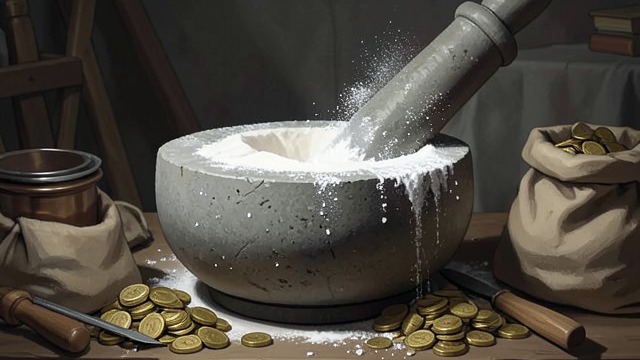
An Object That Grinds Plenty
A machine for sustenance
The Sampo produces flour, salt, and money in repeating measures. Its power is practical: it promises to meet basic needs and generate surplus.
Prosperity takes material form
Rather than depicting wealth as a single hoard, the poem makes abundance an ongoing process. That promise explains why both communities consider the object worth risking their lives to obtain.
Pohyola Guards Its Treasure
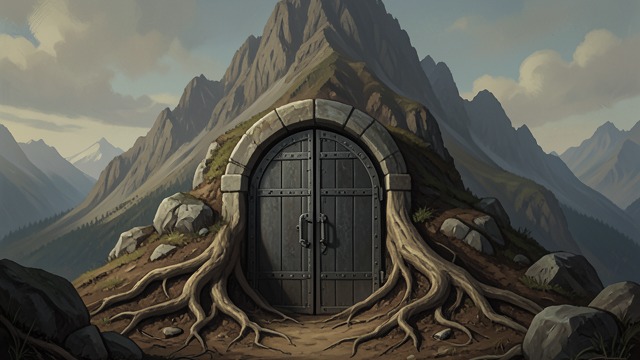
Pohyola Guards Its Treasure
Wealth concentrated
Louhi hides the Sampo behind locks and secures its roots within the mountain. Pohyola’s prosperity rests on an object controlled by its ruler.
Ownership becomes political
The wealth benefits a whole people, yet outsiders have no share in deciding how it is used. The mountain turns prosperity into a contested boundary.
A Share Is Refused
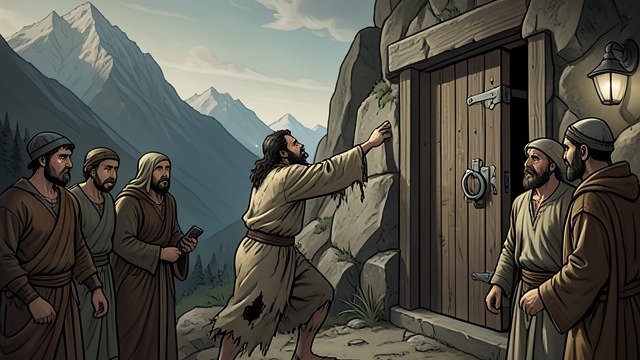
A Share Is Refused
Negotiation fails
Wainamoinen asks Louhi to give his people part of the Sampo. Louhi refuses, insisting that its value belongs to Pohyola.
Conflict follows exclusion
The demand for a share becomes a proposal to seize the treasure by force. The epic does not offer a peaceful system for distributing the abundance it imagines.
A Victory Emptied of Treasure
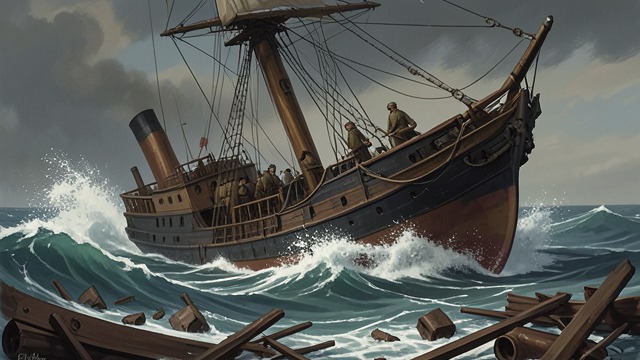
A Victory Emptied of Treasure
The Sampo is lost
Louhi attacks the ship and pulls at the Sampo. The struggle breaks the object, scattering it into the sea.
Neither side possesses it
Pohyola loses its intact source of wealth, while the heroes cannot take home the treasure they sought. The victory becomes an irreversible loss.
The Sea Gains the Fragments
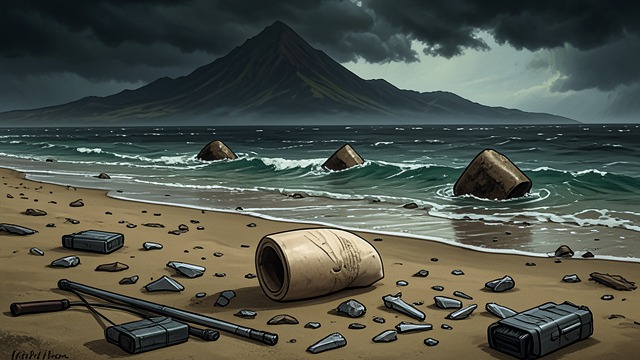
The Sea Gains the Fragments
Value dispersed
Some fragments float to shore and are gathered, while others remain in the deep. The sea itself gains treasure from the collapse.
Prosperity remains partial
Kalevala receives hope and resources, but not the whole Sampo. Pohyola is left poorer, and abundance becomes unevenly distributed rather than restored in its earlier form.
During Ilmarinen’s successful forging
After Louhi locks the Sampo in the mountain
When Wainamoinen asks Louhi to divide the Sampo
During Louhi’s attack on the returning ship
After the Sampo shatters beneath the waves
