
The Investigation’s Escalation
Kay ScarpettaThis flow follows the shift from uncertainty and procedural caution to an emergency hunt for a serial killer.
increasing Bearing strength in each event
 decreasing
Bearing strength in each eventdecreasingNo Charge Yet

No Charge Yet
Legal hesitation
Oscar remains uncharged, and Berger cannot force him to stay. The police have suspicion but lack a legally usable foundation for arrest.
Conflicting priorities
Investigators want biological samples and statements, while Scarpetta insists on patient rights and informed consent. Every delay risks lost evidence.
Suspense through limitation
The case grows dangerous precisely because the authorities cannot act as freely as they believe they should.
The Second Body
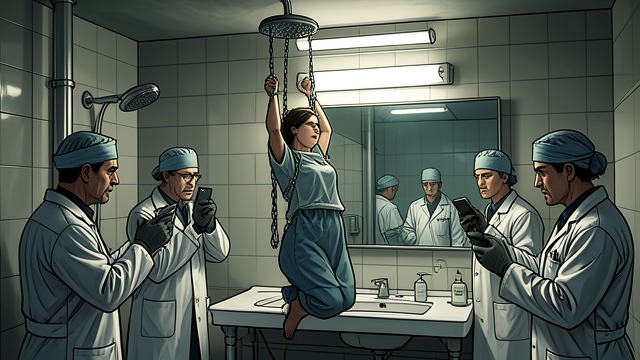
The Second Body
A new victim
Eva Peebles is found hanging in her bathroom, restrained and displayed. The murder occurs while investigators are still debating Terri’s cause of death.
Institutional shock
The second scene proves that the threat is active and that the killer can strike during an investigation. Suspicion shifts from one murder to a campaign.
Oscar blamed
Shoes and fingerprints apparently connect Oscar to the new scene, producing an arrest warrant even as forensic reconstruction continues to challenge his physical ability.
The National Manhunt

The National Manhunt
Public naming
Oscar is labeled a monster and a serial killer across news broadcasts. Police forces, the FBI, and Interpol are alerted to locate him.
The danger of certainty
Public language hardens suspicion into guilt before the evidence is resolved. Oscar’s size becomes a sensational category rather than a human fact.
Countermovement
Benton uses television to ask Oscar to contact the FBI, attempting to make the manhunt safer. The appeal is both rescue strategy and an admission that local institutions may have failed him.
The first hours at Bellevue Hospital
Early morning after Terri’s murder
Before dawn on Wednesday
