
The Consent and Coercion Theme
Kay ScarpettaThis flow contrasts consensual intimacy with Morales’s deliberate conversion of sexual ritual into torture.
increasing Bearing strength in each event
 decreasing
Bearing strength in each eventdecreasingThe Language of Consent

The Language of Consent
Clarifying intimacy
Scarpetta asks Oscar about sexual practices and insists that adult behavior is acceptable only when both parties agree. She distinguishes fantasy, dominance, and pain from coercion.
Oscar’s account
Oscar describes consensual role-play with Terri, but his answers also reveal his need to possess her and his inability to tolerate her boundaries.
The moral boundary
The conversation establishes consent as active, specific, and revocable. It becomes the standard against which both Oscar’s claims and Morales’s violence are measured.
The Broken Ritual
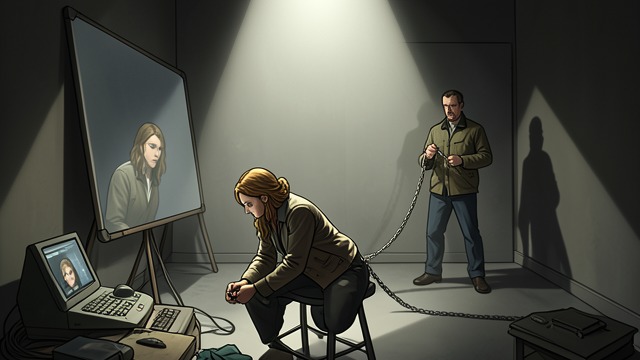
The Broken Ritual
Familiar forms distorted
Morales uses activities Terri may once have accepted—nudity, restraint, lubrication, dominance, and role-play—but removes every element of consent and escape.
Terror as method
He forces Terri to watch herself in the mirror and insists that her previous sexual choices justify what he does. His language converts her past into a weapon against her.
The false defense
The killer’s claim that she enjoyed being bound is not evidence of consent. It is the rhetoric of an offender who wants pleasure to erase responsibility.
The Law of the Body

The Law of the Body
Postmortem testimony
Eva’s restrained body records prolonged fear, oxygen deprivation, and deliberate display. Scarpetta reconstructs suffering without turning it into spectacle.
Repeated signatures
The same chains, straps, nudity, and staged lighting recur. The killer’s erotic system depends on reducing women to surfaces that can be arranged and consumed.
Ethical refusal
Scarpetta refuses the language of accident or mutual play when the injuries show coercion. The body’s evidence reasserts the victim’s reality against the offender’s story.
During Scarpetta’s questioning of Oscar
During the recording of Terri’s murder
During the examination of Eva Peebles
