CNN
Kay ScarpettaCNN is one of the novel’s most visible channels for transforming criminal investigation into public performance. It does not merely transmit information: it amplifies expert authority, circulates sensational interpretations, and helps determine how victims, investigators, and suspects are understood beyond the institutions handling the case.
Broadcast Authority and Forensic Spectacle
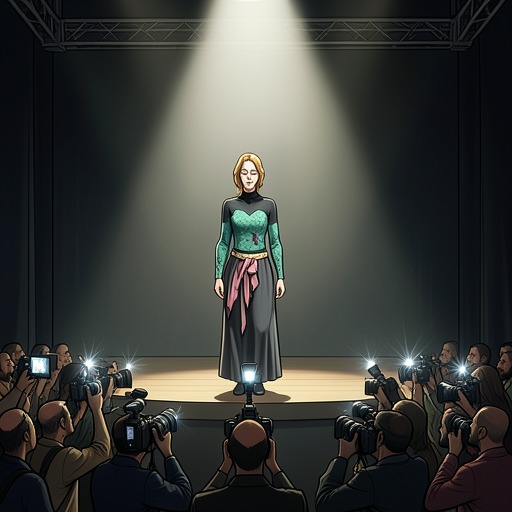
CNN is associated with the public image of Kay Scarpetta as a nationally recognizable forensic expert. The novel contrasts the disciplined material practice of forensic pathology—Scarpetta weighing a lung with a Smart Pen and Smart Notepad, then confronting the limits of technology before dictating her remaining thoughts—with a media culture that treats television forensics as a complete and almost theatrical form of knowledge. In that culture, the public is encouraged to believe that forensic pathologists on television can resolve violence with instant certainty.
The contrast becomes explicit when an online commentator claims that Scarpetta uses CNN to make the public believe she is performing an unselfish service for society. The accusation is not presented as a neutral assessment of her work; it is part of a hostile campaign portraying her as a political and self-promoting figure. CNN therefore becomes a symbol of the unstable passage from expert testimony to celebrity, where professional credibility can be recast either as public service or as narcissistic performance.
A Relay for Sensational Narratives
The novel places CNN within a wider media environment that includes Gotham Gotcha, television news, newspapers, blogs, and public commentary. Gotham Gotcha’s New Year material presents Scarpetta on a large high-definition Samsung plasma screen and frames her courthouse appearance through mockery, sexualized insinuation, and contempt for Pete Marino. The same media logic turns a child’s rape and fatal head injury into lurid material, reducing technical testimony about blunt-force trauma to fragments designed for shock and consumption.
CNN’s presence consequently carries an ambiguity. It can make a forensic account nationally visible, but visibility does not guarantee understanding. The public receives the image of the expert and the emotional force of the crime while the investigative uncertainties, evidentiary qualifications, and institutional procedures remain largely outside the frame. The medium’s authority and its appetite for spectacle operate together rather than as simple opposites.
Media Framing and Moral Panic
As the investigation develops, media language helps reshape the case itself. Reports move from the label “dwarf killer” to “dwarf monster,” while police across the country search for Oscar Bane and reports spread that some little people, particularly young men, are staying home out of fear of aggression or worse. CNN belongs to the broadcast system that makes such framing socially consequential: a suspect is no longer only an investigative subject, and a vulnerable community is no longer merely adjacent to the case. Both are absorbed into a national narrative of danger.
This transformation illustrates how broadcast circulation can produce moral panic. The vocabulary becomes more absolute as the evidence is still being assembled. A complex murder investigation is compressed into a monstrous identity, and the public response begins to affect ordinary behavior among people who share the suspect’s physical difference. CNN thus participates in the novel’s recurring tension between the slow, conditional work of evidence and the rapid emotional certainty demanded by mass media.
The Broadcast Public Sphere
CNN also represents the pressure placed on investigators and experts by an audience that expects immediate explanation. Jaime Berger worries about political correctness, public sensitivity, and headlines concerning dwarfism, while Benton Wesley recognizes that media treatment of the case is not limited to Terri Bridges’s death. The institutions involved must therefore work under two simultaneous demands: preserve evidentiary accuracy and respond to a public sphere already shaped by headlines, commentary, and televised appearances.
The broadcast medium can also be used strategically. Benton appears on television under the identification of a forensic psychologist connected with McLean Hospital and, rather than debating the journalist, states that he has come to make an urgent request for Oscar Bane to contact the FBI. His appeal is a public intervention aimed at a fugitive, but the surrounding commentary immediately turns it into an extraordinary media event: a rare murder investigation in which a renowned profiler publicly pleads with the person widely believed to be the killer. The broadcast gives the investigation reach while simultaneously exposing how quickly an operational appeal becomes spectacle.
Narrative Significance
CNN’s importance lies less in its institutional detail than in the power assigned to the screen. It is a conduit through which facts, accusations, professional identities, and communal fears acquire a wider life. Scarpetta’s technical labor, Berger’s procedural caution, the laboratory’s effort to exclude contamination, and the search for Oscar’s DNA all belong to systems that depend on controlled interpretation. CNN belongs to a different rhythm: selection, repetition, simplification, and immediate public response.
The novel does not treat the medium as wholly false or wholly useless. Television can carry a genuine appeal and place expert knowledge before a large audience. Yet the same circulation can detach testimony from its conditions, turn expertise into celebrity, and intensify prejudice through labels such as “monster.” CNN therefore embodies the book’s central media paradox: the more widely violence is made visible, the greater the danger that the public will consume its image while losing sight of the evidence, uncertainty, and human consequences beneath it.