Mike Morales
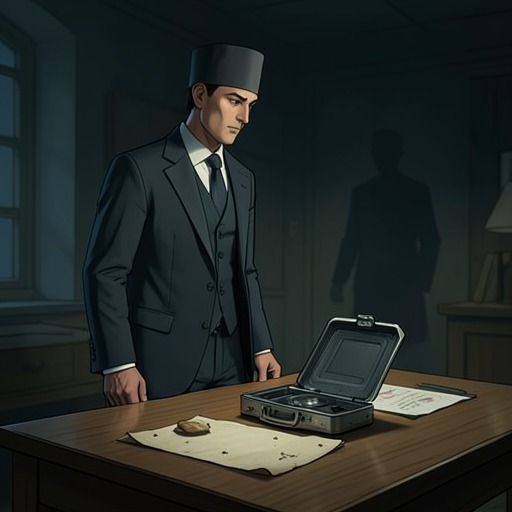
Kay ScarpettaMike Morales is introduced as a detective, but his decisive significance lies in the gap between that public role and the hidden system of identities and crimes attached to him. He moves through the investigation as a police insider, uses the alias Juan Amate in his secret relationship with Terri Bridges, and maintains the online username Forenxxx. The revelation that he is the murderer reorganizes the novel’s earlier clues: anonymous communications, surveillance technology, false suspicion, and apparently disconnected killings become parts of one controlled performance.
Identity and Introduction
Mike Morales first appears as a New York detective who contacts Pete Marino while the investigation into Gotham Gotcha has produced little useful information. His opening manner is deliberately unremarkable: he calls with a slow, lazy voice and describes the matter as a data hunt. Yet his professional access gives him precisely the authority and technical proximity needed to manipulate the investigation from within. When Kay Scarpetta meets him, Benton Wesley identifies him curtly, while Morales behaves with intrusive confidence, entering the room and looking Scarpetta over rather than offering a conventional greeting. His clothing, heavy gold chains, and braids make him appear conspicuous, but the conspicuous surface distracts from the more consequential disguise: the detective identity itself.
Morales’s presence is also connected to the novel’s recurring problem of hidden and performed identities. Terri Bridges works under the username Shrew, a name borrowed from the private language of her marriage, while her personal account is “lunasee.” Oscar Bane uses “carbane,” and Scarpetta’s name is appropriated through the scarpetta-six-twelve account. Against this field of aliases, Morales’s secret identity as Juan Amate is not an isolated deception but the most dangerous version of the same pattern: a person creates multiple points of access and lets each audience see only the role useful to it.
Professional Cover and Methods
Morales’s apparent police work allows him to approach evidence, people, and technology without immediately appearing suspicious. His connection to veterinary practices is especially important. Dr. Elizabeth Stuart recalls a strange veterinary assistant who also helped at a pet shop, gave members of her staff puppies, and once offered her a sickly Chinese dog as a birthday gift. Stuart found the animal disturbing and returned it. This testimony places Morales within a practical network that reaches beyond law enforcement and helps explain how he encountered victims and obtained materials associated with veterinary medicine.
The same professional connection supplies part of Morales’s method. Aqualine ointment, an opened jar taken from work, may have been part of his procedure from his earliest murder onward. In the killings, he bound victims’ wrists, wore latex gloves, and used the same lubricant while inserting his fingers into them. The repeated combination of restraints, gloves, and ointment establishes continuity across crimes that initially seem separate. It also suggests an attempt to confuse investigators through a mixture of DNA profiles rather than merely to leave no trace.
Morales extends this method into digital surveillance. A motion-sensitive camera has been installed on the roof for three weeks, sending an email whenever it records movement. Lucy Farinelli discovers that its destination is connected to a computer about to be hacked, and that Morales’s IP address and access code match those of the scarpetta-six-twelve account. The discovery turns a technical detail into a direct link between the detective and the forged Scarpetta correspondence. Morales is not simply observing the investigation; he is arranging the information environment through which the investigators understand it.
Surveillance, Deception, and Escalation
The rooftop confrontation exposes the dangerous closeness between Morales’s official and criminal identities. Pete Marino climbs a narrow fire-escape ladder while carrying his .40 Glock, believing he may be approaching the serial killer. At the roofline he finds a dark figure lying prone with a revolver. The figure is Morales, who immediately holsters his weapon and angrily asks what Marino is doing there. Marino has mistaken the detective for the killer, an error that is both understandable and revealing: Morales has placed himself in the exact position from which he can watch, record, and potentially control the investigation.
Lucy’s examination of Morales’s personal email account makes the hidden apparatus visible. His username there is Forenxxx, and the account contains video files. One recording, made on New Year’s Eve inside Terri Bridges’s apartment rather than on the roof, provides a direct record of Morales’s involvement. His voice tells Jaime Berger that Oscar will arrive at five and blames Berger for what is about to happen, insisting that she has caused it. The recording supplies the sequence and the manipulative voice, but it does not show his face. Morales’s concealment therefore remains literal as well as psychological: the evidence speaks unmistakably about him while withholding the image that would make prosecution straightforward.
That concealment is part of the novel’s larger management of knowledge. The scarpetta-six-twelve account seems capable of implicating Terri or Oscar, but an unsent email written at 8:19 the previous evening proves that neither could have authored it. The account was active while Terri’s body was already, or probably already, in the morgue. This digital contradiction redirects suspicion toward an outside operator. Morales’s access code and IP address then make the apparent anonymous voice legible as an intrusion by someone inside the police investigation.
Crimes and Exposure
Morales’s history reaches back to Baltimore in the summer of 2003, when he had graduated from the Johns Hopkins medical school. He recorded the murder of Bethany in his bare apartment and later recorded the murder of Rodrick, whose slight young body he dumped near the Bugatti dealership in Greenwich. Rodrick may have appeared on Morales’s radar screen because Morales was working part-time for a veterinarian there; Bethany may likewise have been encountered through another veterinary practice in Baltimore. These earlier crimes establish that Terri’s murder is not an aberration but a continuation of a pattern extending across cities, workplaces, and years.
He treated Bethany and Rodrick as he treated Terri. Their wrists were bound, latex gloves were used, and the same lubricant appeared in the assaults. The recurrence gives the investigators a behavioral and material signature even though Morales has attempted to fragment the evidence. His part-time employment, medical training, police position, and digital expertise combine into a portable criminal method: access to victims, access to substances and tools, knowledge of bodies, and knowledge of how investigators search.
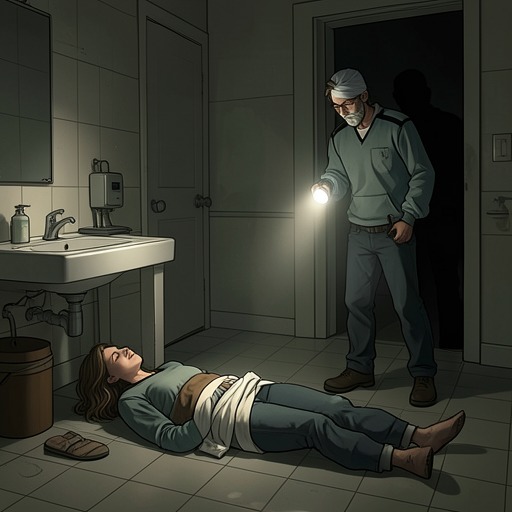
The investigation finally produces physical evidence against Oscar Bane, not Morales. Shoeprints on the toilet lid in Eva Peebles’s bathroom match the shoes Oscar wore when, according to his statement, he found Terri’s body. Oscar’s fingerprints are also found on a glass lamp removed from the ceiling and placed in the bath. An arrest warrant is issued, and the police, aided by Interpol, search for him as the “dwarf monster.” The episode shows how effectively Morales’s construction of evidence redirects institutional violence toward a vulnerable suspect. Oscar’s agitated insistence that he is being treated like a serial killer is initially read through stigma and apparent instability, while the actual killer remains inside the investigative apparatus.
Narrative Role and Ending Position
Morales functions as the novel’s most complete embodiment of identity as an instrument of power. Shrew’s anonymity protects an unseen webmaster; Terri’s use of Scarpetta’s name manufactures authority and defamatory material; Oscar presents himself as a persecuted patient; Morales turns police legitimacy, medical knowledge, aliases, passwords, cameras, and recorded speech into a single architecture of control. His deception is more than a concealed biography: it determines what other characters can know, whom they will trust, and which innocent person will appear guilty.
His exposure also gives earlier oddities a retrospective coherence. The detective who arrives as a data specialist is connected to the anonymous accounts. The man associated with a veterinary practice is connected to Aqualine and to the repeated treatment of victims. The person who seems to be investigating surveillance has himself installed surveillance equipment. The absence of Morales’s face from the videos prevents an easy evidentiary conclusion, but the convergence of voice, access code, IP address, camera, veterinary connections, repeated forensic technique, and prior murders makes his hidden identity the organizing explanation for the case. The character’s power lies in keeping these facts separate; the investigation’s achievement lies in forcing them into one pattern.