The Wild Bunch Challenges the Unbeatables
Kevin the Star StrikerThe Wild Bunch Challenges the Unbeatables is the central action through which the Wild Bunch reclaim their soccer field and redefine what it means to be strong. What begins as a threatening occupation becomes a binding contest: Kevin faces Mickey the Bulldozer, wagers the field on a soccer match, and leads his teammates through humiliation, fear, injury, tactical failure, and a nine-to-nine climax before Roger scores the winning goal. The challenge therefore changes more than the ownership of a playing space. It transfers heroism from the loudest and most physically dominant player to a team capable of trusting one another.
Causes and Background
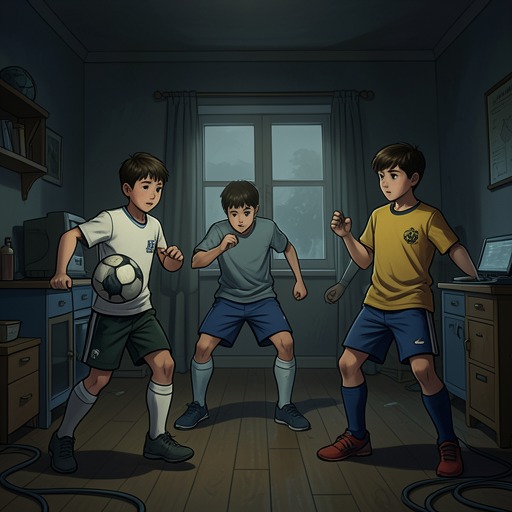
The conflict begins when the Wild Bunch discovers that their familiar soccer field has been taken. The team runs through the wooden gate and finds Diego sitting at the center mark, wheezing and fighting back an asthma attack. The field appears empty until larger boys emerge from all around them. They are described as bigger, stronger, and fatter than the Wild Bunch, and they close in with the confidence of a group accustomed to ruling by fear. Roger, who has warned the others, hides among them in terror.
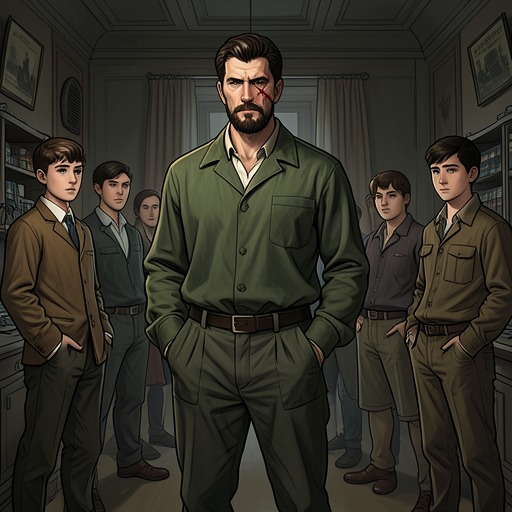
Mickey the Bulldozer gives this occupation its commanding figure. He is compared to Darth Vader, not because he wears a mask but because the image on his shirt and his physical presence make him seem like the villain of the boys’ world. His tiny eyes, heavy cheeks, rattling breath, and reputation as the toughest boy in the school and neighborhood turn his body into a weapon of intimidation. He does not appear alone: like garbage attracting flies, he attracts other bullies, and the group surrounds the Wild Bunch from every side.
The Unbeatables claim the field as their exclusive territory. Mickey announces that it belongs to them and that only they may play there, ordering the Wild Bunch to leave. The declaration converts a public playing space into a possession enforced by numbers, size, and threat. It also creates the precise stake of the later challenge: the match will decide not merely who is better at soccer, but who has the right to return to the field.
The Challenge and Its Terms
Kevin refuses to accept the expulsion. When Mickey throws Kevin’s soccer ball against his chest and demands that the other boys leave, Kevin catches it after the next throw and sends it back. His defiance is physical but also verbal: he gives the Unbeatables two weeks, and not a day more, to pretend that the field is theirs before the Wild Bunch returns for a soccer challenge.
The proposed terms are absolute. If the Unbeatables win, the field will belong to them; if the Wild Bunch wins, Mickey and his gang must leave and allow the original team to claim the field permanently. Kevin pushes the ball into Mickey’s flabby belly, making him burp, while his friends stare at him as if he has risked his life or his sanity. The gesture turns a frightened boy’s resistance into a public commitment that cannot easily be withdrawn.
Kevin’s courage is not the same as fearlessness. When Mickey stares at him as if he wants to kill him and says that he does not even know what fear is, Kevin feels his knees buckle. He understands fear precisely because Mickey denies it. Yet Mickey laughs and accepts the deal, setting the meeting for two weeks later at the field. The Wild Bunch runs away shouting as though victory has already arrived, but the later training reveals that the challenge has only begun: the team must learn how to convert fear into coordinated action.
Fear, Trust, and the Meaning of Strength
The challenge exposes two competing models of masculine authority. Mickey treats strength as physical dominance, mockery, aggression, and the ability to make weaker boys retreat. His language names the Wild Bunch as “midgets” and casts exclusion as a natural right. The Unbeatables’ authority depends on the field’s boundaries and on the assumption that intimidation is enough to settle ownership.
Larry offers the Wild Bunch a different model when the players ask what to do about their fear. He insists that he will coach them only if they trust him completely and if he can trust them completely in return. When Diego asks about fear, Larry answers that fear is their strength. The idea initially confuses the team, but it provides the ethical and tactical foundation for the challenge. Fear becomes useful when it produces attention, honesty, preparation, and reliance on teammates rather than denial.
The difference between the two models becomes visible when Mickey visits the training session and taunts the players about the tricks Larry has taught them. Kevin answers him sharply, refusing to justify the team’s preparation or accept Mickey’s authority over it. Mickey recognizes Kevin as the courageous boy who challenged him, but the exchange shows that the Wild Bunch’s resistance is no longer a single reckless outburst. It now rests on training, shared purpose, and a coach-player relationship built around mutual trust.
The Match and the Reversal
At the match, the Wild Bunch begins with a collective battle cry: “ONE, TWO, THREE WILD!” The opening sequence immediately contrasts their coordinated passing with the Unbeatables’ physical superiority. Kevin, Alex Alexander, Tyler, Danny, and Joey move the ball through a chain of passes, while the Unbeatables hesitate as if their expectations of an easy defeat have momentarily paralyzed them. The attack ends when Octopus catches Kevin’s shot, but the passage establishes that the Wild Bunch can create movement the larger team cannot simply overpower.
The Unbeatables then crush that first attempt at resistance. Mickey scores repeatedly, reaching five goals in seven minutes, while Kevin, Julian Fort Knox, and Tyler lie or sit on the grass with visible injuries and exhaustion. Joey jokes carefully about the match not going as planned, but only the Unbeatables find the joke amusing. When Joey promises that they will see who has the last laugh, Mickey’s laughter disappears and his stare becomes threatening again. The challenge has reached its darkest point: the Wild Bunch is losing both the score and the emotional control of the field.
The turning point comes through persistence and adaptation. Tyler attacks through the middle, Danny sends the ball across the field, and Kevin passes backward with his heel rather than forcing a shot. The pass reaches Alex Alexander, whose powerful strike drives Octopus into the goal with the ball. Julian Fort Knox then stops Kong with a press ball and reappears repeatedly as an all-purpose defender, a sign that his fear has not vanished but has been overcome by action. Joey shoots, Kevin completes his famous flip-over bicycle kick, and the Wild Bunch begins to close the gap.
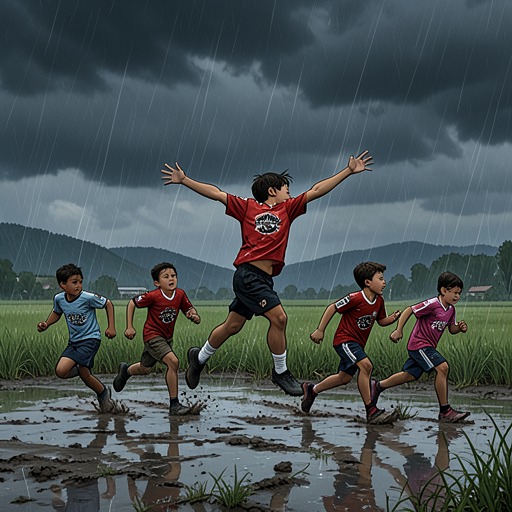
Rain changes the match again. The ground becomes soft and muddy, but the Wild Bunch has trained for twelve days on that kind of surface while the Unbeatables slide around. Kevin scores his third goal for a hat-trick, Danny scores his second, and Joey makes the score seven-seven. Tyler’s long shot is carried by a gust of wind into the goal for number eight. When Diego forgets his asthma and becomes the Tornado again, the Wild Bunch scores number nine and believes it has won.
The belief collapses when Kevin refuses to pass because he wants the tenth goal for himself. Larry removes him and sends Roger onto the field. Mickey scores again, bringing the Unbeatables within one goal, and Roger misses a chance that seems certain to decide the match. The Grim Reaper then ties the score at nine-nine. Kevin finally tells Larry that he will pass the ball, but Larry continues to wait, allowing Roger another opportunity rather than restoring Kevin simply because Kevin is the team’s narrator or earlier challenger.
The final sequence makes Roger’s development the match’s most important reversal. Roger misses again, and Kyle must make a diving save in the lower-left corner, then rise from the ground to steer Kong’s follow-up shot around the post. Roger receives one last chance. Although Kevin urges him not to use his left foot, Roger ignores the instruction, strikes the ball, and sends it into the net. The Wild Bunch wins. The player who had hidden at the gate and feared responsibility becomes the match’s decisive hero.
Consequences and Significance
The victory reverses the opening distribution of power. The Unbeatables had relied on size, insults, enclosure, and Mickey’s individual scoring; the Wild Bunch wins through twelve days of preparation, passing, defensive recovery, sacrifice, and trust in a player who had repeatedly failed. The score’s movement from a crushing deficit to seven-seven, then to nine-nine and finally to victory makes the result a team achievement even though Roger supplies the last kick.
The aftermath emphasizes recognition rather than revenge. The Wild Bunch falls over one another, carries Roger on their shoulders, and runs across the field with him. Kevin remains lying in front of the goal in disbelief that Roger has truly become their hero. Larry approaches and offers his hand with congratulations. The gesture confirms that the challenge has completed the lesson begun when Larry told the team that fear could be strength: victory belongs to the players who learned to depend on one another, not to the boy who appeared most fearless.
The event also establishes the soccer field as a social world governed by contested rules. Mickey tries to make possession a fact by announcing it, while Kevin answers by proposing a fair contest with clear stakes and a fixed return date. Once the conflict enters the structure of a match, domination must confront skill, discipline, and shared rules. The Wild Bunch’s recovery of the field consequently becomes a recovery of its right to define belonging there.
The wider series points beyond this victory. A later account introduces Zoe, a ten-year-old soccer enthusiast who dreams of becoming the first woman to play for the United States men's national soccer team. Her prospective arrival exposes the Wild Bunch’s continuing resistance to girls joining the team, suggesting that the group’s triumph over Mickey does not automatically make it open-minded. The challenge defeats one form of exclusion while leaving another prejudice available for the next story to confront.