
Tom White’s Lawman Formation
Killers of the Flower MoonThis flow traces the experiences that shape Tom White’s belief in evidence, restraint, and the difficult moral obligations of law enforcement.
increasing Bearing strength in each event
 decreasing
Bearing strength in each eventdecreasingA Sheriff’s Son

A Sheriff’s Son
Life Beside the Jail
Thomas B. White grows up in Austin while his father, Robert Emmett White, serves as sheriff. He witnesses prisoners, violence, and the daily responsibilities of custody from childhood.
Law Without Cruelty
His father treats prisoners with restraint and tries to stop lynch mobs. The example gives White an early model of authority that does not depend on humiliation or unlawful violence.
The Hanging He Never Forgets
The Hanging He Never Forgets
An Execution Goes Wrong
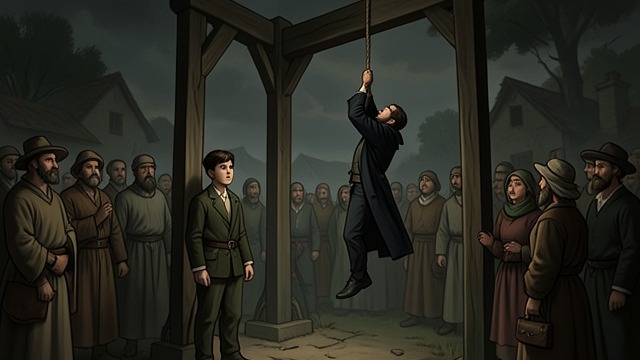
As a boy, White watches his father execute a condemned prisoner. Despite careful preparation, the man continues moving after the drop.
A Lasting Moral Question
The spectacle helps shape White’s opposition to capital punishment and his concern that legal authority can cause irreversible harm. He comes to see self-control as part of a lawman’s duty.
The Rangers and Their Costs

The Rangers and Their Costs
Frontier Policing
White joins the Texas Rangers and learns tracking, field investigation, and the dangers of frontier work. He objects when fellow lawmen treat killing as a substitute for lawful arrest.
Loss and Restraint
The deaths of colleagues and his brother Dudley expose the personal cost of the work. White leaves the Rangers after his friend is killed, choosing family and restraint over vengeance.
An Evidence Man

An Evidence Man
Federal Service
White joins the Bureau of Investigation and works cases that require gathering facts rather than making arrests. He struggles with new scientific methods but trusts careful observation and corroboration.
Institutional Corruption
The Teapot Dome era exposes how law-enforcement authority can be used to obstruct justice. White enters the Osage assignment with a strong sense that evidence must withstand both criminals and compromised institutions.
A Career Beyond the Case
A Career Beyond the Case
Prison Leadership
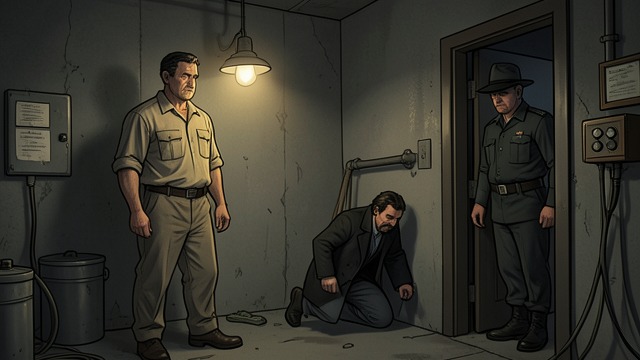
After the Osage convictions, White becomes warden at Leavenworth and later at La Tuna. He tries to maintain order without permitting the mistreatment of prisoners.
Quiet Recognition
White survives a prison escape attempt and continues serving despite serious injuries. He later tries to preserve the Osage case in a manuscript, but his account remains unpublished and his role fades from public memory.
1880s and 1890s
1894
1905 to 1917
1917 to 1925
1926 to 1971
