
A County Built on Complicity
Killers of the Flower MoonThis flow traces how the Osage murders depend not only on hired killers but on a broader network of financial, medical, political, and legal complicity.
increasing Bearing strength in each event
 decreasing
Bearing strength in each eventdecreasingPredators Around the Wealth
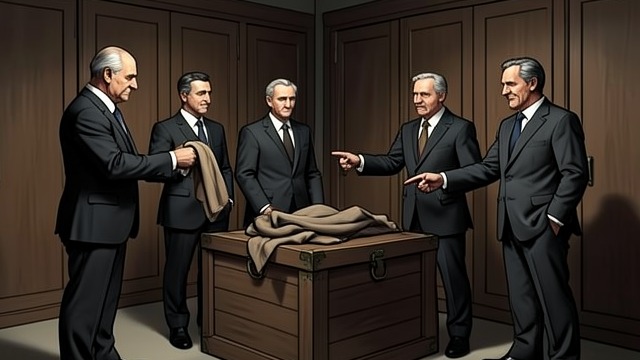
Predators Around the Wealth
Unequal Access
Osage families encounter inflated prices, restrictions, and officials who control their money. Merchants, lawyers, and guardians can profit from the same wealth they claim to protect.
Exploitation as Normal Business
The practices become common enough to be described as Indian business. The phrase captures an economy in which extraction is normalized and victims have little recourse.
Hale’s Political Machine

Hale’s Political Machine
Influence Across Offices
William K. Hale’s support reaches prosecutors, local officials, and business leaders. People who might investigate him may owe him favors or fear what he knows about them.
The Law Bends
The same networks that establish Hale’s public authority make it harder to pursue him. Complicity is not always a direct order; it can also take the form of silence and deliberate inaction.
Professional Roles Under Suspicion
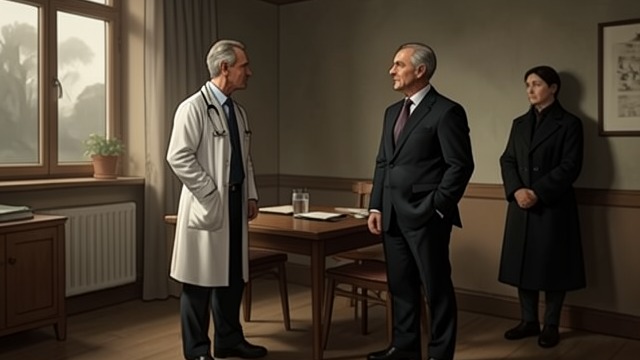
Professional Roles Under Suspicion
Doctors and Guardians
Questions about autopsies, treatment, and missing evidence place local professionals under scrutiny. Guardians and administrators can also benefit from the estates of people who die.
Doubt Without Complete Proof
Investigators suspect that some professionals helped conceal crimes, but cannot prove every allegation. Their uncertainty shows how complicity can remain powerful even when its precise boundaries are unclear.
The Whole County in the Case
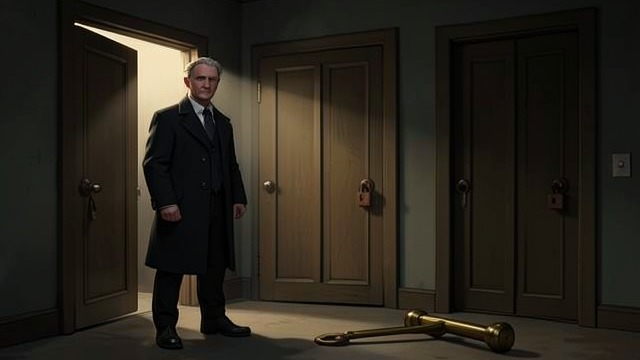
The Whole County in the Case
A Conspiracy Larger Than One Man
Evidence points toward Hale’s control of a network of hired killers and local supporters. His operation requires people to provide false accounts, access, money, and protection.
A Necessary Simplification
The prosecution narrows its case to individuals and crimes it can prove. The legal need for a focused narrative risks obscuring the wider community structure that made the violence possible.
A Scarce Honesty

A Scarce Honesty
A System Remembered
Later accounts connect murders to the banks, guardians, lawmen, doctors, and undertakers who could benefit from or cover up exploitation. The criminal order depended on more than its most visible leader.
A Difficult Moral Conclusion
The evidence does not make every prominent citizen guilty, but it shows how broadly the system enabled harm. The final question is not only who ordered the killings, but how a whole society learned to accept the conditions around them.
Early 1920s
Before and during 1923
1921 to 1926
1925 to 1926
The final archival reckoning
