Bryan Burkhart
Killers of the Flower MoonBryan Burkhart is a pivotal figure in the investigation of Anna Brown’s murder: initially a relative who said he had taken her home, he became the key witness whose changing place in the story exposed both a false alibi and his own participation in her killing. His early prominence rests on proximity—he was Ernest Burkhart’s brother, Mollie Burkhart’s brother-in-law, and the last person locals were known to have seen with Anna before she went missing. That closeness made his account useful to investigators, but also made its contradictions consequential.
Identity and Introduction
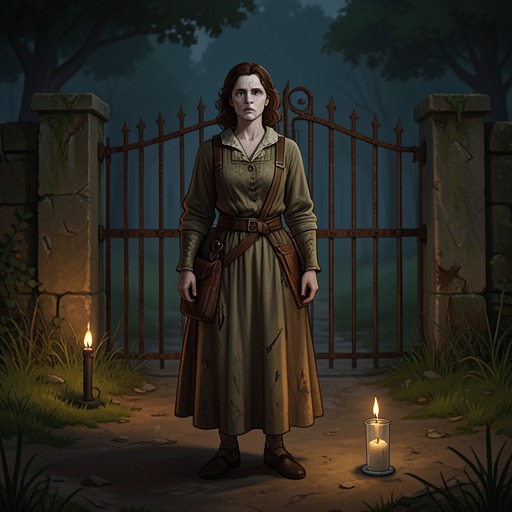
Bryan had moved to Osage County, drawn, like his brother, by the oil boom. He often assisted William K. Hale on Hale’s ranch, placing him within the circle of Ernest’s family and Hale’s local influence. At Mollie’s luncheon, Bryan appeared among the visiting relatives, and Anna, who had sometimes dated him, flirted with him. The scene also gives him a distinctive physical presence: his hair was thinning and slicked back, his yellow-flecked eyes were described as inscrutable, and a lawman characterized him as a roustabout. Later, he was remembered for his uncomfortably steady eyes and cold appearance.
Bryan’s connection to Hale was not simply that of a ranch hand or nephew. Hale had once caught him stealing cattle and filed charges against him, ostensibly to teach him a lesson. The episode gives their association an uneasy edge: Hale could act as an employer and family authority, but also as someone who had exercised the law against Bryan. The evidence does not establish what Bryan made of that relationship; it does show that he remained close enough to Hale to be with him in Fairfax on the night Anna disappeared, according to his original account.
Anna Brown and the Night She Disappeared
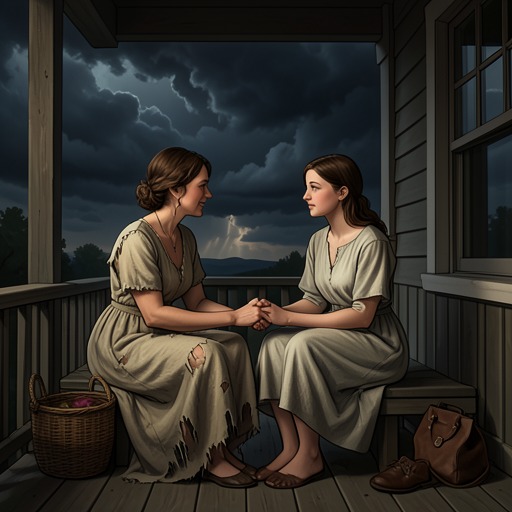
At the luncheon, Anna’s drinking and quarrelling unsettled Mollie and the other guests. When Bryan asked a servant to accompany him to a dance, Anna warned that she would kill him if he fooled around with another woman. The exchange placed their past intimacy and present tension in the open, though it did not, by itself, explain what followed. That evening, Mollie planned to care for her mother while Ernest took the visitors to Fairfax, five miles away, to see the touring musical Bringing Up Father. Bryan, wearing a cowboy hat, offered to drive Anna home.
Mollie first made sure Anna had food and clean clothes, and waited until her sister had sobered enough for a moment of reconciliation. Anna then left. Bryan later maintained that he had taken her straight home and dropped her off between 4:30 and 5:00 p.m., before going to Fairfax with Hale, Ernest, and the visiting relatives for the show. If true, the timing appeared to rule out his involvement in the shooting: there would have been too little time for him to go to the creek, kill Anna, and return to town before the performance.
That account shaped the early search. At the inquest, Anna’s disappearance was already surrounded by local whispers about Bryan, and he received more sustained questioning than Mollie. Mollie had described Anna leaving around sundown and traveling in a car, but the jurors and justice of the peace asked her little. The contrast matters: Bryan’s version had room to become the working explanation, while Mollie’s testimony, despite her effort to answer, was given less attention. The book suggests that prejudice against her as an Osage woman may have contributed to that imbalance.
The Alibi Unravels
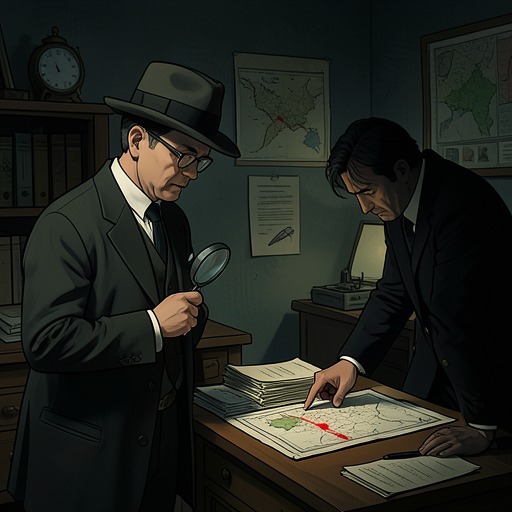
Years later, in July 1925, Tom White returned to Bryan’s account as one of the remaining leads in Anna’s murder. Its apparent strength depended on Bryan having taken Anna home and then gone directly to Fairfax. Agent Burger and another investigator had earlier questioned Bryan’s aunt in Campbell, Texas. She insisted that Bryan had joined the party in Fairfax after dropping Anna off, while also repeating a hostile racial description of Ernest’s marriage. Her statement supported the alibi, but it was not independent proof of what Bryan had done after leaving Anna.
Witnesses supplied a different sequence. A farmer’s wife identified Bryan as the person driving the car with Anna; another witness saw them together and said the car went west through town. Their accounts established the first proven crack in the alibi: Bryan may have taken Anna home initially, but he had gone out with her again. Investigators placed the pair at a nearby speakeasy until about 10 p.m., then at another illegal drinking establishment north of Fairfax, where the owner said they remained until about 1 a.m. Bryan’s uncle was seen with them at the second place. The new timeline did not merely put Bryan near Anna; it displaced the central claim that he had left her safely at home and gone straight to the show.
Testimony and Participation in the Murder
The decisive change came through Ernest’s account. Although Ernest remained guarded about his brother’s role, he identified Kelsie Morrison—the supposed undercover informant who had been helping agents find the unidentified third man—as the person who shot Anna. Morrison had been feeding information back to Hale’s associates while appearing to assist the investigation. Ernest’s disclosure transformed the investigation’s picture of Bryan as well: at Anna’s trial, prosecutors presented testimony that Bryan had gotten her drunk and propped up her body while Morrison shot her in the back of the head.
Prosecutors granted Bryan immunity, believing his testimony necessary to convict Morrison. The arrangement made Bryan both a participant whose account implicated another man and a witness shielded from prosecution in order to secure that conviction. His testimony did not erase his part in the events; it supplied the detail that connected the last person seen with Anna to the shooting. The contrast with his earlier account is stark: the man who had said he left her safely at home eventually testified to helping render her vulnerable and being present at her death.
The Return to the Crime Scene
Bryan also described returning to the scene about a week after the shooting with Mollie and the rest of the family to identify Anna’s decomposing body. For Mollie, that visit had remained a painful memory whose meaning changed when the evidence at trial exposed Bryan’s role. He had been beside her while she confronted her sister’s body, appearing to share the family’s grief while knowing what had happened. An attorney asked whether Bryan had gone out to see the body, and he answered that the family had all gone. The answer, in the courtroom, carried a second meaning: the shared act of identification had concealed a profound difference in what he and Mollie knew.
Bryan’s narrative function is therefore built around reversals in trust and knowledge. He enters the account as a relative with a plausible alibi, becomes a suspect because he was Anna’s last known companion, and then becomes an immunized witness whose testimony reveals his complicity. The details that once seemed to settle the timeline—the cowboy hat, the claimed ride home, the trip to the musical—are reinterpreted as investigators recover the stops and late hours omitted from his first account. His return with Mollie to identify Anna’s body completes that reversal: he stood within the family’s mourning while concealing his place in the crime.