Charles Whitehorn
Killers of the Flower MoonCharles Whitehorn was a thirty-year-old Osage man, remembered as genial and witty and popular among both white residents and members of his own tribe. Married to Hattie Whitehorn, who was part white and part Cheyenne, he left his home in the southwestern part of the reservation for Pawhuska on May 14, 1921, and never returned. His murder, committed amid the disappearance of Anna Brown, became one of the first signs that the violence might extend beyond a single victim.
Disappearance and Discovery
News of Whitehorn’s disappearance spread as Anna Brown was also missing. The two cases unsettled the boomtowns: both victims were wealthy Osage people in their thirties, and two bullets recovered from Whitehorn’s skull appeared to have come from a .32-caliber pistol, the same kind of weapon suspected in Anna’s murder. The Pawhuska Daily Capital announced that two separate murder cases had emerged almost at the same time, while residents wondered whether the apparent similarities pointed to a repeat killer.
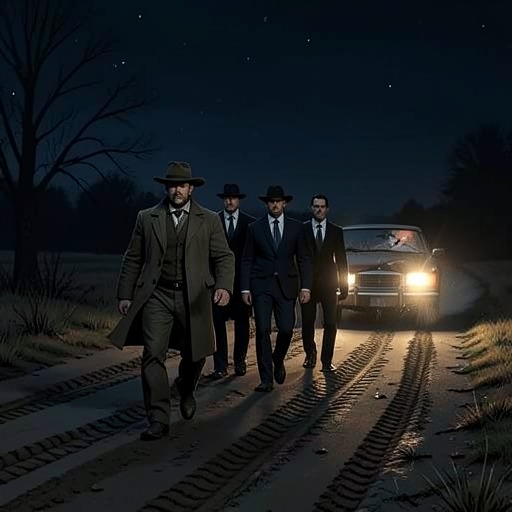
An oil worker found Whitehorn’s badly decomposed body in brush near the base of a derrick on a hill about a mile north of downtown Pawhuska. The drilling machinery shook the ground around the gathering crowd. His face had been shot twice between the eyes; a letter in one pocket, addressed to Whitehorn, provided the means of identifying him. A later account placed his last sighting at about 8 p.m. outside the Constantine Theater and noted that the body was discovered about two weeks afterward. An undertaker believed its position indicated that Whitehorn had fallen where he was found rather than been carried there. The two shots suggested an execution, but the case remained unresolved.
Suspects and the Unsolved Case
The family’s response to Whitehorn’s killing took shape against a broader failure of investigation. In August 1921, with no progress in the three-month-old inquiry into Anna Brown’s murder and no action on suspicions that Lizzie had been poisoned, Mollie’s family offered $2,000 for information leading to the apprehension of those responsible for the crimes. Whitehorn’s family offered $2,500 for the capture of his killers. William K. Hale, who publicly advocated stamping out crime in Osage County, announced a reward of his own. Yet local law enforcement was embroiled in conflict: Oklahoma’s attorney general accused Sheriff Harve M. Freas of willfully failing to enforce the law by allowing bootlegging and gambling, while Freas denied the charges. As the case awaited trial, the dispute further weakened confidence in the authorities, and Hale argued that a private investigator should be hired.
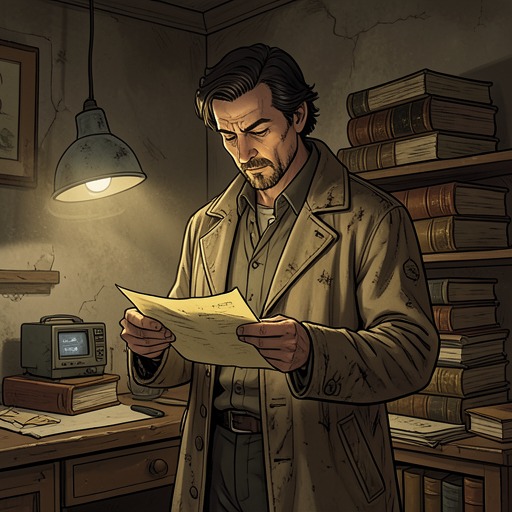
Whitehorn’s estate did hire private detectives, whose surviving reports later offered a detailed but inconclusive account of the suspected plot. The reports recorded that attorney W. W. Vaughan was eager to help secure a prosecution. Vaughan and the detectives did not know that he himself would be murdered within two years. Attorney and guardian A. W. Comstock also assisted their inquiries, passing along information that an unidentified man had been seen lurking on the hill on May 14, the day Whitehorn was last seen alive and the place where his body was later found.
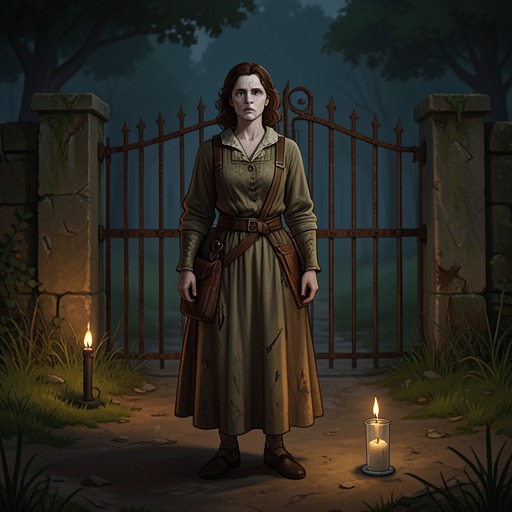
The detectives’ theory centered on Whitehorn’s widow, Hattie Whitehorn; her later husband, LeRoy Smitherman; and Minnie Savage, who ran a boardinghouse in Pawhuska. They suspected that Savage had arranged Hattie’s marriage to Smitherman and that the group, with other possible conspirators, had engineered Whitehorn’s murder to obtain his headright and fortune. Some investigators came to believe Hattie had also been involved; an informant described her as a principal force behind the killing. These were suspicions developed from informants and circumstantial evidence, not a proven account of the crime.
The inquiry produced details that sharpened suspicion without making a prosecution possible. An undercover detective lodged in Savage’s boardinghouse and reportedly could hear telephone conversations. Savage’s sister told investigators she had seen a large, dark-colored gun beneath a pillow while Savage was making a bed, and said Savage had picked it up. Despite the surveillance and reported leads, the private detectives failed to obtain enough evidence to prosecute any suspect; the surviving account leaves open whether they simply fell short or were bought off.
When Bureau of Investigation agents began examining the case in 1923, they likewise concluded that Savage, Smitherman, and Hattie Whitehorn were responsible, and an agent wrote that Hattie had caused her husband’s murder to gain his estate. Hattie denied involvement but warned an agent that she knew about the investigation and understood that a confession could send her to the electric chair. Smitherman had fled to Mexico with Hattie’s car and part of her money. Hattie was then drawn into another predatory relationship: J. J. Faulkner appeared to use information about her alleged role to threaten and extort her, seeking money during her lifetime and control of her property after her death. The case nevertheless remained officially unresolved, leaving the suspicions against Hattie and the others without a judicial conclusion.
Place in the Wider Investigation
Charles Whitehorn’s murder later stood at the edge of a larger inquiry: it bore the apparent marks of a killing arranged by William K. Hale, yet no evidence surfaced tying Hale or his henchmen to the crime. The case took place in May 1921, at the same time as Anna Brown’s slaying and at what was regarded as the beginning of the four-year Reign of Terror. That proximity made Whitehorn’s death consequential to the wider pattern, but it did not resolve who had ordered it.
When federal investigators reviewed the Osage murders, Whitehorn was one of six cases earlier agents had considered most likely to solve. The files eventually encompassed two dozen murders, and their variety complicated any single-case explanation: victims were killed by different means, and bodies appeared across different parts of the state and country. Investigators reasoned that the absence of one repeated method pointed not to a lone killer but to a mastermind employing henchmen. Whitehorn’s case thus belonged to a suspected network, even as its own evidence remained inconclusive.
The later examination of the private detectives’ records brought the case’s lost leads back into view: the man reportedly seen on the hill, the suspected gun, and the accusations directed at Hattie Whitehorn and her associates. These details made the murder appear less like an isolated mystery and more like a possible scheme to seize an Osage estate. But allegations, informant accounts, and circumstantial clues never became a proven account in court. Whitehorn’s place in the history of the killings is therefore defined by a stark disparity: investigators repeatedly treated his death as part of a larger design, while the case itself remained officially unsolved.
A Murder Reconstructed from Fragments
The account of Whitehorn’s death moves between the moment his identity became known and the later attempt to recover what investigators had missed. At the scene, a letter addressed to him turned an unidentified, badly decomposed body into a named victim. Years afterward, the surviving private-detective logs offered another kind of fragmentary evidence: reports whose dramatic, sometimes dubious-sounding language recorded leads but did not establish guilt. Read together, these layers make the case’s central distinction plain: clues could give the killing a plausible shape without supplying proof sufficient to resolve it.