Death of George Bigheart
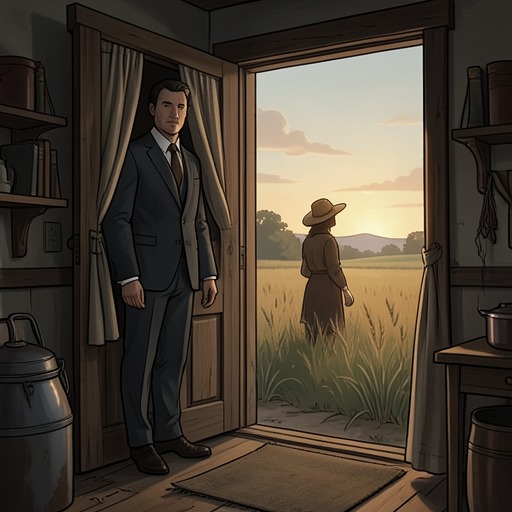
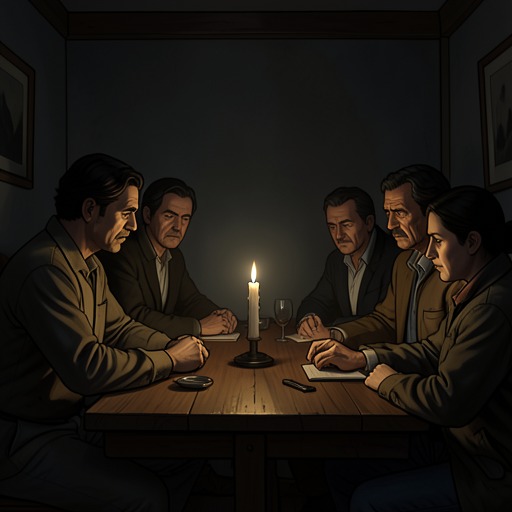
Killers of the Flower MoonGeorge Bigheart’s death, attributed to suspected poisoning in an Oklahoma City hospital, became a point where the murder investigation, control of Osage wealth, and the fate of a crucial legal payment converged. Records connected H. G. Burt and William K. Hale to money associated with Bigheart, but the evidence assembled later remained circumstantial and did not establish who killed him.
Bigheart’s Legal Affairs and the Money at Stake
Before his death, Bigheart sought a certificate of competency that would end his designation as a government ward and let him spend his headright payments as he chose. W. W. Vaughan, his attorney, helped him file the application. Bigheart had planned to pay Vaughan as much as $10,000 for that and other legal work, a sum the book compares to nearly $140,000 today.
The payment did not reach Vaughan as intended. Records reviewed later showed that Burt had collected the money. Vaughan had also acted as Burt’s attorney, and the two men were regarded as close friends, making the apparent diversion both a financial dispute and a betrayal of a professional relationship. Days after the money became a matter of record, Bigheart and Vaughan were dead.
Death and Control of the Estate
Bigheart died after apparent poisoning at a hospital in Oklahoma City. The records do not identify a proven poisoner or establish the precise circumstances of the poisoning. They do show why questions about access to his affairs persisted: his fortune passed to his wife and young daughter, and his daughter’s guardian controlled her money. The guardian was Burt.
Burt’s guardianship was part of a broader pattern in the records examined by the investigator. Government documents showed that Burt had served as guardian to several Osage people, including one who died. A local lawman had also noted that Burt and Hale visited Bigheart shortly before his death. These circumstances placed Burt near both Bigheart and the money connected to him, but proximity and financial access were not proof of murder.
Hale, Burt, and the Investigators’ Suspicions
A trusted informant described Burt and Hale as close associates who had divided money obtained from Bigheart. The report did not make clear exactly what that money included. Separately, the Bureau of Investigation recorded that Hale successfully claimed $6,000 from Bigheart’s estate by presenting a bogus creditor’s note. The investigator considered whether the sum Burt had taken from Vaughan, or other money connected to Bigheart, might also have formed part of the informant’s account.
Other evidence sharpened suspicion without resolving it. The bureau’s files included a report describing Burt as a murderer, and the investigator knew that Burt had become guardian of Bigheart’s daughter and thereby gained access to her inheritance. The records also suggested a possible connection between Bigheart’s death and Vaughan’s subsequent murder: Vaughan may have confided in Burt about his investigation or the location of a hideout containing money and evidence, and Bigheart may have implicated Burt as well as Hale before he died. Those possibilities were presented as conjecture, not established facts.
What the Record Leaves Unresolved
The apparent financial motive had limits. The sums associated with Bigheart were comparatively small beside the headrights involved in the killings of Mollie Burkhart’s family or the $25,000 insurance policy connected to Henry Roan’s murder. The Justice Department did not prosecute Hale for Bigheart’s killing and did not pursue Burt further over it. Nor did the archival search uncover evidence that Hale, Burt, or another white man inherited Bigheart’s fortune; it passed to his wife and daughter, although Burt’s guardianship gave him control over the daughter’s funds.
The resulting account is therefore one of converging clues rather than a solved murder. A competency application, a promised legal fee that Burt collected, Hale’s claim against the estate, Burt’s guardianship, and the reported visits shortly before Bigheart’s death all made the financial and personal connections difficult to dismiss. Yet the evidence did not prove a murder plot or identify the person responsible. Bigheart’s death remains significant in the book because it exposes how legal authority over Osage property could place money within reach of men already under suspicion, while leaving the central question of his killing unanswered.