Dudley White
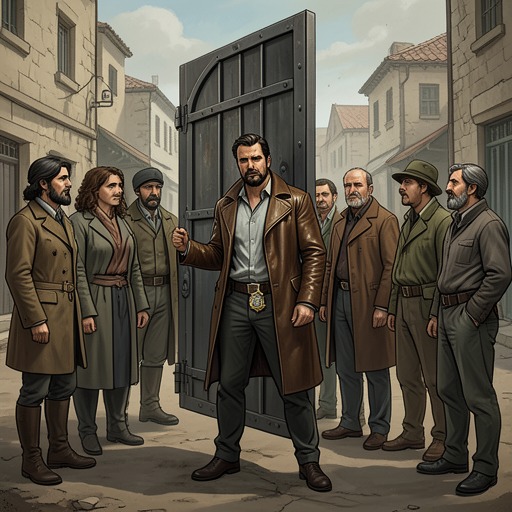
Killers of the Flower MoonDudley White, also identified on his grave as John Dudley White, Sr., was a Texas Ranger killed in the line of duty in the Big Thicket in July 1918. His death ended the life of a married father of three and struck his brother Tom White with particular force: Dudley had seemed invulnerable to him. The ambush and its aftermath give the book’s account of law enforcement a stark personal cost, recorded both in the family’s grief and in the spare inventory of the body returned home.
Identity and Ranger Service
Dudley entered the Texas Rangers in 1905, the same year as his brother Tom. Both were drawn to the Rangers’ powerful reputation, and Dudley and another brother, Doc White, served in separate Ranger companies. Their family’s connection to law enforcement continued in another direction when a further brother later became sheriff of Travis County.
Dudley’s Ranger service placed him in the dangerous work of pursuing wanted men. In July 1918, he and another Ranger went into the Big Thicket, a remote, wooded area of East Texas, to arrest two deserters. The men were believed to be hiding in a clapboard house. A severe drought had left the area dusty and hot, but the suspects were not inside, so the officers waited on the porch.
The Big Thicket Ambush
At three in the morning, gunfire erupted from the darkness. The deserters had ambushed the officers. Dudley’s partner was shot twice; from the porch, bleeding, he watched Dudley stand and fire one of his six-shooters before falling hard against the boards. The partner later recalled that Dudley fell and did not rise again. A bullet struck him near the heart.
The abruptness of the attack overturned the expectation that Dudley could withstand danger. For Tom, who had regarded his brother as nearly invulnerable, the news was overwhelming. Dudley was not only a fellow Ranger but a husband and the father of three children, all younger than eight.
Arrest, Trial, and Burial
The two deserters were captured and prosecuted for murder. Tom’s father attended every day of the trial, and both defendants were convicted. The account gives this legal outcome alongside the family’s loss: the killers were brought to judgment, but the conviction could not restore the brother who had been shot down on the porch.
After the shooting, Dudley’s body was transported home. A Ranger report reduced that journey to a stark list: one wagon sheet, one bed sheet, and one pillow used to ship Ranger White’s body. Tom and his family retrieved Dudley’s possessions, including the soft-nosed, steel-jacketed bullet that had killed him. He was buried in a cemetery near the ranch where he had been born. The grave’s obelisk identified him as John Dudley White, Sr., of the Texas Rangers headquarters company, and recorded that he had been killed in the line of duty on July 12, 1918.
Family Loss and Narrative Significance
Dudley’s death makes the risks of law enforcement more than an occupational backdrop in Tom’s story. It reaches into Tom’s own family and gives concrete weight to the violence that officers faced. The sequence also turns on a sharp contrast: the official language of the report and grave marker is clipped and factual, while the account of the ambush lingers on the partner watching Dudley fall and on Tom’s devastation.
Two weeks after the funeral, cool rain finally came, washing across the prairie. By then, Tom had returned to the Bureau of Investigation. The rain marks the passage of time after the burial, not a resolution of the loss: the family’s grief remains part of the history that Tom carried back to his work.