Fairfax town
Killers of the Flower MoonFairfax town was a neighboring settlement in the Osage Reservation, a place where oil wealth, commercial ambition, and violence converged. Larger than Gray Horse and close to Pawhuska, it appears not as an isolated backdrop but as part of a closely connected boomtown world whose roads, businesses, entertainments, and households were drawn into the upheavals of the 1920s.
Setting and Regional Context
Fairfax town stood beside Gray Horse, one of the reservation’s older settlements. The book describes Fairfax as a town of nearly fifteen hundred people, smaller than Pawhuska, the Osage capital, whose population exceeded six thousand. These settlements had become crowded, restless outposts: cowboys, fortune seekers, bootleggers, medicine men, outlaws, marshals, financiers, and oil magnates shared streets where automobiles sped along paved horse trails. Cafés and opera houses stood amid the transformation of prairie into a commercial landscape.
That modern bustle sat within a longer history of dispossession. The Osage were compelled to cede vast ancestral lands before finding refuge in a smaller territory; later, federal allotment divided land into individual parcels while opening the remainder to settlers. In negotiations completed in 1906, the Osage secured a larger allotment for each tribal member and, crucially, reserved the minerals beneath the land to the tribe. Fairfax town’s growth belonged to this setting: a place shaped by settlement and resource extraction, while the mineral wealth that drove its boom remained subject to a contested system of tribal rights and outside control.
Oil-Boom Town Life
The book’s account of Fairfax town conveys the speed and contrast of the oil boom. Automobiles moved along routes once associated with horses, fuel odors overtook the prairie’s scents, and the reservation’s towns attracted both oil magnates and people seeking their fortunes. Fairfax town was close enough to Gray Horse to share this atmosphere and close enough to Pawhuska to be part of a wider circuit of business and social life.
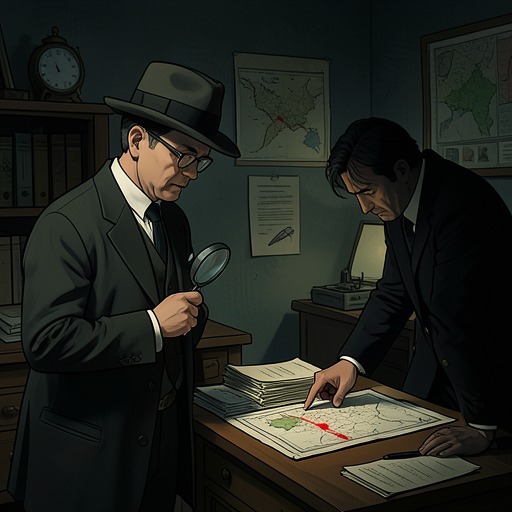
The oil economy also brought conspicuous wealth and sharp inequalities. Osage prosperity drew national attention, while white guardians and administrators often used their positions to exploit the people whose finances they were supposed to protect. Investigators later uncovered inflated purchases, kickbacks, self-dealing, and theft from restricted Osage accounts. The book does not describe Fairfax town as the sole center of that system; rather, it situates the town among the reservation communities transformed by oil and by the structures governing its proceeds.
Social and Narrative Crossroads
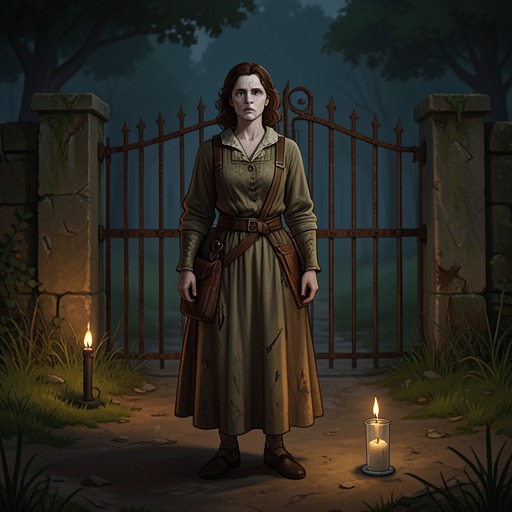
Fairfax town enters the family story through an ordinary evening that becomes charged by what follows. While Mollie Burkhart planned to stay with her mother, Ernest Burkhart took guests five miles northwest to Fairfax town to meet William K. Hale and see a touring musical. Bryan Burkhart offered to drive Anna Brown home. Before Anna left, Mollie washed her clothes, gave her food, and waited until her sister seemed sober and familiar again. They shared a brief reconciliation before saying goodbye. When Anna did not return, that departure became one of the last occasions on which Mollie saw her alive.
The town’s significance also comes from its proximity to discoveries that made the surrounding landscape feel increasingly unsafe. A week before Anna disappeared, Charles Whitehorn had left home for Pawhuska and vanished. His body, identified by a letter in a pocket, was found near a derrick north of downtown Pawhuska. Near Fairfax town, a boy squirrel hunting with his father and a friend instead came upon a dead person in a gulch by Three Mile Creek. The sequence joins the everyday uses of the countryside—travel, hunting, work—to the growing record of unexplained violence.
The Smith-House Bombing and the Boom’s Aftermath
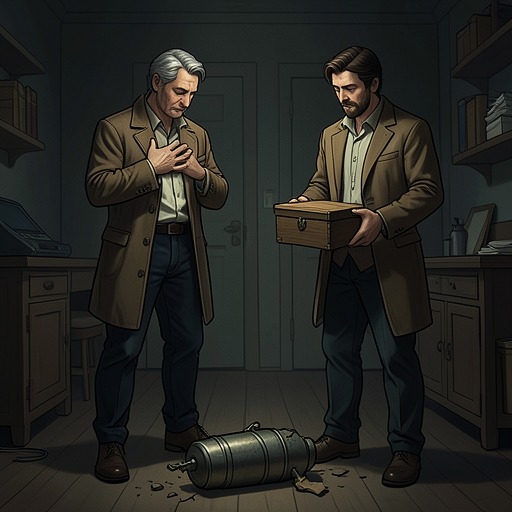
The most devastating scene associated with Fairfax town is the bombing of Bill Smith’s home. Just before three in the morning, an explosion bent trees and signposts, shattered windows, and shook nearby houses. At a Fairfax hotel, a night watchman was showered with glass and thrown to the floor; another guest was hurled backward. Mollie and Ernest Burkhart felt the blast from their home and saw a glow in the distance. Ernest joined residents moving toward the scene, where the house had been reduced to charred debris, twisted metal, and shredded furniture. Even the Studebaker in the garage was demolished. The destruction made clear that the explosion was no accident: someone had planted a bomb beneath the house.
The book’s later account of the region marks a stark change from the boomtown’s brief prosperity. Oil prices fell, headright payments contracted, and many boomtowns began to decline; at Gray Horse, Margie Burkhart recalled that the wells eventually stopped pumping. Fairfax town is part of the earlier network of settlements through which the boom’s wealth and violence moved, while the account of decline shows how temporary that prosperity proved. The place’s narrative force lies in this collision: a lively commercial townscape on land whose mineral wealth brought both opportunity and a machinery of exploitation and murder.