Great Depression
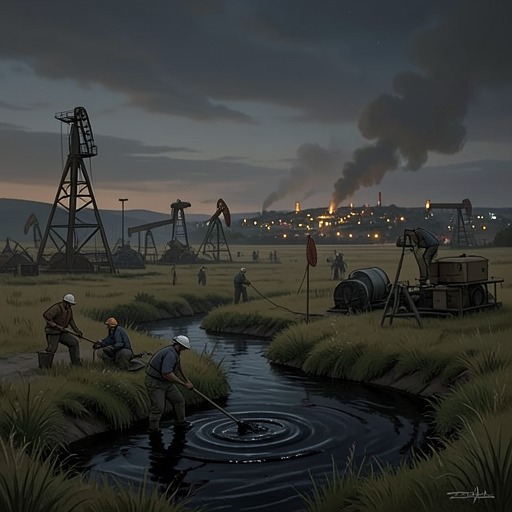
Killers of the Flower MoonThe Great Depression brought a steep contraction to Osage oil wealth already weakened by decades of exploitation. The falling price of oil and declining production cut headright income, while the damage extended beyond household budgets: boomtowns such as Gray Horse dwindled, and the once spectacular oil economy receded into a thinner, less dependable flow of revenue.
The Boom Before the Downturn
The contraction followed an extraordinary expansion. Oil leases in Osage County were auctioned about four times a year, with bidding for a typical 160-acre tract rising sharply as oilmen arrived in Pawhuska in luxurious railcars. The auctions, held outdoors in good weather beneath the Million Dollar Elm, drew Osage spectators as well as businessmen and prominent settlers. Oil income helped transform the prairie community, but the wealth circulating through it was not under the Osage’s sole control: guardians and administrators could direct their wards’ purchases to their own businesses, inflate prices, divert transactions for kickbacks, claim Osage property for themselves, or steal outright. A government study estimated that guardians had taken at least $8 million directly from restricted Osage accounts before 1925.
The boom also depended on a resource whose supply was not limitless. In 1917, a well drilled by Frank Phillips erupted in a towering column of oil; in 1920, a well in the Burbank field produced 680 barrels in its first twenty-four hours. Yet depletion was already a concern before the Depression. A 1929 newspaper report warned that, if the oil map continued to shift, the Osage might have to return to work within five years. That warning placed the later collapse in a longer history of dependence on oil revenues and changing production.
Falling Prices and Shrinking Income
During the boom, a barrel of oil had reached more than three dollars. By 1931, its price had fallen to 65 cents, and an annual headright payment had dropped below $800. The following year, the Literary Digest reported that Osage oil income was rapidly disappearing, describing it as practically all that many people had. The Depression thus turned a collapse in the market price into an immediate reduction in the money distributed through headrights.
The price fall compounded, rather than replaced, earlier losses. Osage fortunes had already been diminished by guardians and thieves, and the gradual depletion of the oil fields further narrowed the revenue available. The distinction matters: the Depression intensified the decline, but the vulnerability had been built through a system in which oil income was concentrated in a limited resource and its distribution was subject to outside control.
Gray Horse and the Long Decline
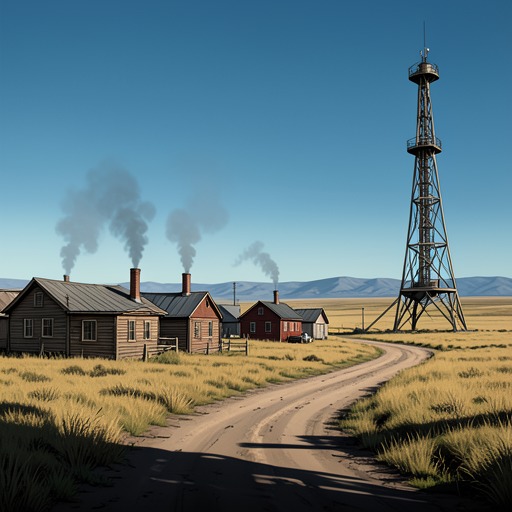
The downturn’s effects were visible in Gray Horse, where Margie Burkhart grew up in a small, spare wooden house rather than a mansion. Over the following decades, many oil boomtowns, including Gray Horse, began to die off. Margie recalled hearing the wells pump when she was young, then hearing them stop. The silence of the wells made the economic reversal tangible: a landscape once animated by oil production no longer sustained the same local activity.
Oil did not disappear from the reservation. More than ten thousand wells remained scattered across it in the period described, but most were low-producing stripper wells, each yielding fewer than fifteen barrels a day. Lease auctions also continued: in Tulsa in 2012, three leases sold for less than $15,000 in total. Margie inherited a little more than half a headright from her father and still received quarterly payments from the mineral trust, usually a few thousand dollars in recent years depending on oil prices. The payment remained meaningful, but not enough to live on.
Aftermath and Significance
The later history offers a measure of adaptation, not a return to the boom. The Osage developed other sources of revenue, including seven casinos that generated funds for tribal government, education, and health-care benefits. After an eleven-year legal battle, the government also agreed in 2011 to settle an Osage lawsuit for $380 million, allowing the tribe to retrieve at least part of the oil funds mismanaged over decades. These later developments belong to the long aftermath of the boom-and-decline economy; they should not be mistaken for effects caused by the Depression alone.
The Great Depression is significant here as an accelerant and a revealing test of the oil economy. When prices collapsed, the consequences reached beyond the oil market because headright income supported lives already exposed to restrictions, guardianship, and theft. The fading payments and quieting wells show how the end of prosperity could arrive both as a sudden financial shock and as a gradual depletion of the resource on which the community had been made to depend.