John Edgar Hoover
Killers of the Flower MoonJohn Edgar Hoover was a bureaucratic reformer whose drive to remake the Bureau of Investigation was bound up with the ambition to control it. He promised stricter standards and a modern national force while concealing the bureau’s political surveillance; when the Osage murder investigation threatened to become a scandal, he turned to experienced agent T. B. White to rescue the case—and protect his own precarious position.
Background and Rise
Hoover was twenty-nine and deputy director when Attorney General Harlan Fiske Stone selected him to serve as acting director while seeking a permanent replacement. He had avoided the stain of the Teapot Dome scandal, but he had overseen the bureau’s intelligence division, which spied on people simply because of their political beliefs. The contradiction was already central to his position: Hoover was presented as a candidate to reform an agency whose abuses he knew from within.
He had never been a detective, been in a shoot-out, or made an arrest. His experience and instincts were those of an insider to federal administration. His deceased father and grandfather had both worked for the government, and Hoover still lived with his mother. He knew the bureaucracy’s gossip, language, tacit bargains, and territorial conflicts. Rather than field experience, his advantage lay in understanding how authority and information moved through an institution.
Reform and Consolidation
Hoover wanted the directorship as a means of building his own bureaucratic empire. To win Stone’s confidence, he concealed the extent of his role in domestic surveillance and promised to disband the intelligence division. At the same time, he enthusiastically pursued reforms that served both Stone’s stated aims and his own plan to remake the bureau. He reviewed personnel files to identify agents he considered incompetent or crooked and raised hiring qualifications, requiring new agents to have legal training or knowledge of accounting.
In December 1924, Stone gave Hoover the permanent directorship. The reforms were not merely administrative housekeeping: they helped create a more centralized and disciplined institution under Hoover’s command. The book sets this modernization against its eventual uses. During nearly five decades as director, Hoover would deploy the bureau to fight crime and also to commit serious abuses of power. The promise of professional standards therefore carries a double meaning: institutional discipline could curb corruption, but it could also enlarge the reach of a director who had hidden the bureau’s surveillance practices to secure control.
T. B. White and the Bureau’s Credibility
Before summoning T. B. White, Hoover had assigned him to investigate corruption at the federal penitentiary in Atlanta. White uncovered bribery and favoritism, and the case helped convict the former warden. Hoover commended him for bringing distinction to the service. That record gave Hoover a proven, experienced agent to call on when the Osage investigation became a threat to the bureau’s credibility.
By the summer of 1925, Hoover asked White to come from Houston to Washington, D.C., for an urgent meeting. White arrived in his cowboy hat, an unmistakable contrast to Hoover’s preference for agents in dark suits, sober neckties, and polished black shoes. Hoover wanted agents to embody a particular professional type: Caucasian, lawyerly, and controlled in appearance. White’s old-style lawman persona did not fit that ideal, but his experience made him valuable. Hoover told him to direct the Osage investigation and ordered him to take command of the Oklahoma City, Oklahoma, field office. White understood that moving would burden his family, but accepted the assignment, telling Hoover he was ambitious enough to want it.
The Osage Investigation and Political Risk
The investigation Hoover inherited had already failed repeatedly. After the Osage Tribal Council requested federal help in 1923, Bureau of Investigation agents spent weeks in the field and then concluded that continued investigation was useless. The Osage had been made to finance part of the federal effort, eventually paying $20,000. Hoover, after becoming director, had decided to return the case to state authorities, hoping to avoid responsibility for the bureau’s failure.
That retreat became difficult to sustain after agents lost track of Blackie Thompson, whom the bureau had helped secure release from prison to work undercover. Thompson robbed a bank and killed a police officer. The state attorney general blamed the bureau for the failed investigation, and the tribe’s advocate, John Palmer, argued that powerful perpetrators had been able to remove capable officers or quiet dishonest ones. Hoover believed the situation was acute and delicate: after Teapot Dome, even the appearance of another public scandal might threaten his career. He had warned special agents that the bureau could not afford one. White’s appointment was therefore not simply a renewed investigative effort; it was Hoover’s response to a crisis in which the agency’s errors, public reputation, and his own authority had become entangled.
Command from a Distance
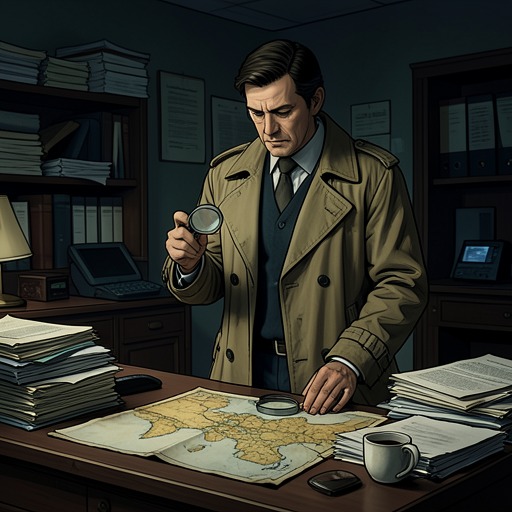
Hoover’s involvement did not mean that he went into the field. He feared germs and had installed a special air-filtration system at home; as the investigation advanced, he sat in his office studying reports, with agents serving as his eyes and ears in a threatening world. He pressed White for updates and once reprimanded him for failing to wire a full account of developments at the end of the day. His attention to the case had waxed and waned, but mounting criticism in Oklahoma had made him increasingly agitated.
Reading the reports, Hoover noticed that Anna Brown and Roan had both been shot in the back of the head. He came to believe that Necia Kenny, a white woman married to an Osage man, might hold a key to the case. Kenny had implicated A. W. Comstock, an attorney who had served as guardian to several Osage and had criticized the bureau. Hoover’s judgment of Comstock was colored by that conflict: he regarded him as malicious and endorsed Kenny’s direction to an agent. The episode shows the limits of Hoover’s command-by-report. He could organize information and direct attention from Washington, but his reading of the evidence was not detached from his institutional resentments.
Hoover’s character is thus defined by the tension between reform and self-protection. He imposed higher standards and built a powerful bureau, yet concealed surveillance to win office; he recognized that the Osage investigation required experienced field leadership, yet had first tried to pass responsibility elsewhere. Sending White to Oklahoma gave the failing case a capable investigator, but it also served Hoover’s urgent need to contain a scandal. His rise and his handling of the investigation alike show how the language of professional service could advance both public authority and personal power.