Kathryn Red Corn
Killers of the Flower MoonKathryn Red Corn is the director of the Osage Nation Museum and a crucial source in the book’s movement between the documented Osage murders and violence that remained outside official records. She gives the narrator access to a letter from William K. Hale, recounts her family’s unresolved suspicion that her grandfather was poisoned, and directs attention to a modern dispute over development on Osage land. Her significance lies not in claiming certainty where the evidence is incomplete, but in insisting that the gaps themselves matter: the known killings may represent only part of a larger history.
Museum director and investigator
Red Corn first appears in the account after a performance depicting Osage history, including the murderous Reign of Terror. The narrator tells her that research points toward the possible involvement of H. G. Burt, a person never publicly linked to the killings. Red Corn shows little surprise and invites the narrator to visit the museum the next morning. Her response opens a new line of inquiry without presenting an unverified conclusion as fact.
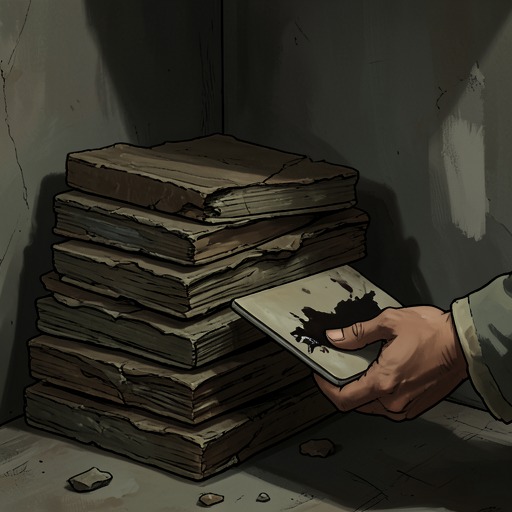
The setting of that follow-up matters. Red Corn is at her desk, surrounded by artifacts, when she hands the narrator a brittle letter dated November 27, 1931. She directs attention to the signature: William K. Hale. The letter had been sent from prison to a member of the tribe, and a descendant had donated it to the museum. Red Corn thus acts as a steward of an object that joins institutional custody, family transmission, and a still-living historical argument.
The letter’s cheerful self-presentation is sharply at odds with its writer’s imprisonment. William K. Hale claimed, “I am in perfect health. I weigh 185 lbs. I haven’t got a grey hair.” He wrote that he hoped to return to Gray Horse and insisted, “I will always be the Osages true Friend.” Red Corn’s reaction—“Can you believe it?”—registers the distance between the letter’s professed friendship and the crimes associated with Hale. The document does not resolve the broader history, but its surviving words expose how a convicted figure could still describe himself in terms of loyalty and belonging.
Her grandfather’s suspected poisoning
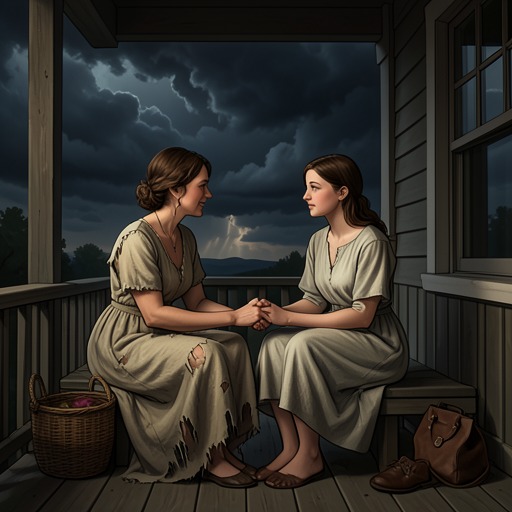
Red Corn had another reason for inviting the narrator to the museum: she wanted to tell a story about her grandfather. After divorcing Red Corn’s grandmother, he married a white woman. In 1931, he began to suspect that his second wife was poisoning him. Red Corn recalled that when relatives visited, he was frightened and warned them, “Don’t eat or drink anything in this house.”
Not long afterward, he died at forty-six. Red Corn said that he had been in good health; his wife left with a substantial amount of money. The family believed he had been poisoned, but there was no investigation. As Red Corn described the lack of scrutiny, she named the undertakers, doctors, and police among those who covered such matters up. Her account is explicitly limited: she knew only fragments passed down by relatives. The book does not establish that her grandfather was murdered, or identify a perpetrator. Instead, it records the family’s suspicion, the warning he gave, the circumstances of his death, and the absence of an official inquiry.
That distinction makes Red Corn’s appeal to the narrator consequential. She hopes he can investigate what the family could not establish, then says, “There were a lot more murders during the Reign of Terror than people know about. A lot more.” Her testimony widens the scope of the investigation while preserving the difference between documented cases and remembered allegations. The story also gives personal form to the historical silences that surround deaths for which no investigation or reliable record survives.
The wind farm and continuing sovereignty
In June 2015, Red Corn urged the narrator to see what was happening west of Pawhuska. Crossing the prairie, he encountered a wind farm whose metallic towers stood 420 feet high and whose development spanned more than eight thousand acres. The project was expected eventually to supply electricity to about forty-five thousand homes in Oklahoma. Red Corn’s invitation directed the account from the history of oil wealth to a newer energy source transforming the same region.
For Red Corn, the turbines raised a question of consent and control over the Osage underground reservation. When the narrator returned, she asked whether he had seen them and said, “This company came in here and put them up without our permission.” The federal government, representing the Osage Nation, had filed suit against Enel. The case concerned whether excavation of limestone and other minerals for the turbine foundations required Osage approval under the 1906 Allotment Act. Enel maintained that it was not mining and did not need a lease. The account presents this as a dispute over the scope of mineral rights and sovereignty; Red Corn’s comments establish her concern, not her personal role in bringing the lawsuit.
Testimony, archives, and narrative significance
Across these episodes, Red Corn connects different kinds of historical evidence without collapsing them into one another. The Hale letter is a surviving document held by a museum; her grandfather’s suspected poisoning is a family account with acknowledged gaps; the wind-farm dispute is a contemporary legal conflict. She helps the narrator move among them while making clear that the past cannot be reconstructed from a single source or treated as complete simply because a case file ends.
Her contribution is also a challenge to the idea that the Reign of Terror can be contained within the murders already investigated and prosecuted. Red Corn does not offer a finished alternative account. She identifies the possibility of more deaths, gives the narrator a specific family case to examine, and points toward evidence and places that demand further attention. In the book’s structure, she is both a custodian of historical material and a guide to unresolved questions: the old letter and the new turbines make different forms of power visible, while her testimony insists that what remains undocumented should not be mistaken for what never happened.