Kelsie Morrison
Killers of the Flower MoonKelsie Morrison occupies a double role in the investigation of the Osage murders: he was a Bureau informant trusted to help identify a killer, and, as the authorities eventually learned, an operative for William K. Hale who helped murder Anna Brown. His usefulness as a witness did not erase his responsibility as a perpetrator. Later allegations connected him to the deaths of William Stepson and Tillie Stepson, the seizure of their estate, and a scheme concerning their children. Morrison’s story shows how the investigation’s own channels of information could be turned against it—and how the violence reached beyond the murders initially brought to public attention.
Informant and Double Agent
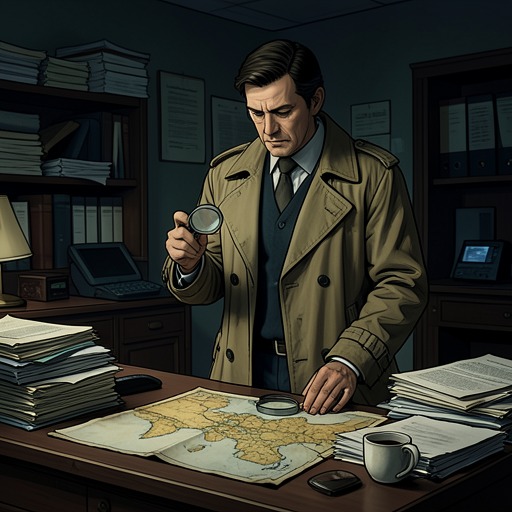
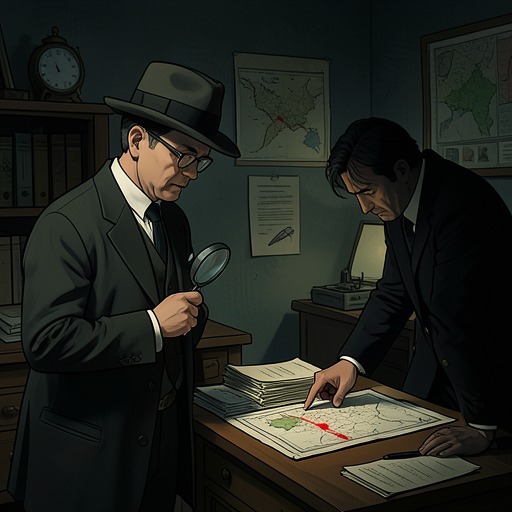
Morrison entered the investigation as an informant whose position gave him access to the Bureau’s efforts to identify the people behind the killings. That access became a liability when two private detectives, one associated with the Burns agency, disclosed to local officials that he was working with the Bureau. They then had him detained on a fabricated robbery charge. Agent Burger called one detective’s conduct “reprehensible” and said it was “certainly hurting our investigation.” He believed obstruction was the detectives’ “sole object” and suspected someone was paying them. After Morrison was released, an agent described him as frightened. In a meeting with the investigators, Morrison pleaded with them to catch the killers before the killers got him; Burger warned him, “Look out for double crossing and traps.”
That danger was real, but Morrison was not only a vulnerable source caught between competing sides. When Ernest Burkhart later revealed what he knew, Morrison emerged as a double agent who had been funneling information back to Hale and the men around him. At first, Morrison served Hale because he considered Hale more powerful than the federal government. Once the Bureau exposed his deception and he understood that the government controlled his fate, he changed sides and acknowledged his role in the conspiracy. The reversal made him valuable to prosecutors, but it also exposed the calculation behind his loyalties: his allegiance followed his estimate of who could protect or punish him.
Anna Brown’s Murder
The investigation’s most consequential revelation about Morrison came when Burkhart identified him as the previously mysterious third man connected to Anna Brown shortly before her death. Burkhart said Morrison had not merely passed information between the conspirators and the agents: he had fired the fatal shot into Brown’s head. Morrison’s later courtroom testimony supplied a fuller account and placed the killing within Hale’s wider plan against Mollie Burkhart’s family.
Testifying for the prosecution at Ernest Burkhart’s trial, Morrison said Hale wanted the entire family eliminated so that Ernest would inherit everything. He described Hale recruiting him to kill Brown and supplying a .380 automatic. Bryan Burkhart acted as his accomplice. After Brown had become too drunk to walk, Morrison and Bryan took her by car to Three Mile Creek; Morrison’s wife, Cole, accompanied them and was told to remain in the car. The two men carried Brown down into a ravine. Bryan helped her sit up on a rock beside the creek, and Morrison described the moments leading to the shooting. The setting and sequence turned the seemingly isolated death into an account of organized action, with an assigned weapon, an accomplice, and a financial purpose.
Morrison’s testimony was a reversal in both the investigation and the courtroom. The man who had been recruited as a source and then exposed as a conduit to Hale became a prosecution witness against the conspiracy. His evidence gave prosecutors an account of Hale’s alleged objective and his own part in Brown’s murder. It did not make him an impartial witness: the narrative emphasizes that he changed sides when the balance of power shifted. His testimony therefore carried both evidentiary force and the mark of his self-interest.
The Stepson Family and the Estate
Morrison’s suspected violence extended beyond Brown’s murder. William Stepson, a steer-roping champion, died of suspected poisoning in 1922. Authorities never prosecuted anyone for his death, but came to believe Morrison was responsible. By then Morrison had divorced his Osage wife; after Stepson died, he married Stepson’s widow, Tillie, and became guardian of her two children. An associate told the Bureau that Morrison had admitted killing Stepson to marry Tillie and gain control of her valuable estate. The account linked marriage, guardianship, and inheritance to a pattern in which intimate and legal relationships could provide access to Osage wealth.
Tillie later grew suspicious of Morrison, particularly after he was overheard speaking about strychnine. She told her lawyer that she wanted to keep Morrison from inheriting her estate and to end his guardianship of her children. Before she could carry out those changes, she died of suspected poisoning in July 1923. Her death was never investigated. Morrison stole much of her fortune; letters he wrote indicated that he planned to sell part of the estate to H. G. Burt, a banker who appeared to be implicated in the killing of W. W. Vaughan. Morrison also reportedly admitted to an associate that he had killed Tillie, asking why the associate did not get an Osage woman and do the same. Marvin Stepson, William and Tillie’s grandson, later stated that Morrison had murdered both his grandparents and left his father an orphan. These claims are presented alongside the crucial limits of the official record: the deaths were suspected, Morrison was not prosecuted for them, and Tillie’s killing received no investigation.
Prison, Threat, and Narrative Legacy
The danger did not end with William and Tillie’s deaths. Their son, three years old at the time, and his nine-year-old half sister became the next children at risk. In 1926, while imprisoned for killing Anna Brown, Morrison sent Hale a note that guards intercepted. He wrote that the children would soon have two or three hundred thousand dollars, said he had adopted them, and asked Hale how he might gain possession or control of their money after his release. He also contemplated taking them out of state, believing authorities could not convict him of kidnapping. The note does not establish that he carried out a plan against the children, but it documents his interest in controlling their inheritance and the fear that he might kill them.
Years later, Marvin Stepson recalled that learning what Morrison had done to his family made him fear what Morrison himself might do. The account places that memory in an Osage courtroom, where Marvin served as a judge and reflected on his grandparents’ deaths and the orphaning of his father. His restrained voice, trailing off as he imagined Morrison entering the room, makes the family’s continuing fear part of the historical record without converting it into a claim that justice had been achieved.
Morrison’s arc is not a simple passage from suspect to witness. The same informant whose exposure endangered the Bureau’s investigation was implicated in Brown’s murder; the same witness who helped prosecutors describe Hale’s plot was himself suspected of exploiting marriage, guardianship, and inheritance. His testimony helped make concealed relationships and motives visible, while the unresolved Stepson deaths and the intercepted note show what testimony and prosecution did not settle. Through Morrison, the investigation’s central problem becomes personal: information could expose a conspiracy, but it could also be manipulated by the people who possessed it, and legal outcomes did not necessarily end the danger to the families left behind.