Lizzie
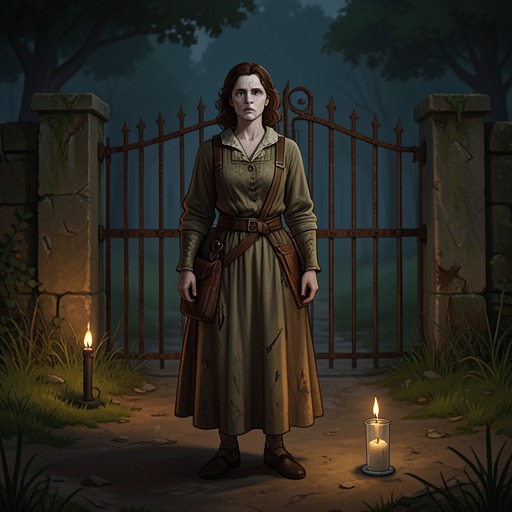
Killers of the Flower MoonLizzie, the mother of Mollie Burkhart and Anna Brown, was at once the center of her family’s care and a keeper of Osage tradition. Her illness and death in 1921 followed Anna Brown’s murder, and the path of her estate helped concentrate family headrights in Mollie Burkhart’s hands. For Mollie, her mother’s death was personal devastation; to those examining the killings, it also raised the possibility that illness had been used to conceal murder.
Family and Care
After Mollie Burkhart’s father died, Lizzie moved into her daughter’s home. Mollie, who had diabetes, was herself the person who cared for the household: despite Lizzie’s fear that her daughter might die young, Mollie looked after her mother as well as her own children. That arrangement was part of the ordinary intimacy the killings would shatter. On the day Anna Brown came to visit, Lizzie had fallen ill and remained in bed. Mollie asked Ernest Burkhart to call Anna and ask her to come help tend to their mother. Anna arrived, but was visibly drunk; what began as a family request for assistance became one of the last scenes in the account before Anna’s death.
Lizzie’s place in the family was also shaped by the special regard she held for her eldest daughter. Anna had a favored status in her mother’s eyes, even though Mollie did much of the caregiving. When Anna’s earring was brought to Lizzie, who was too ill to go to the creek, she recognized it immediately. The object confirmed that Anna was dead. For Lizzie, this was not merely news of a daughter’s death: it was the loss of the child she had most favored, and a rupture in the family at the heart of her remaining life.
Tradition, Grief, and Decline
The narrative places Lizzie’s grief within a spiritual world that endured even as many Osage had left traditional beliefs behind. In Osage understanding, the birth of children was a blessing of Wah’Kon-Tah, the mysterious life force pervading the sun, moon, earth, and stars. Lizzie had held to those beliefs. Anna’s death seemed to her a sign that this force had withdrawn its blessing, leaving the world more disordered. Her health worsened, as if grief itself had become an illness.
After Anna’s murder, Mollie tried to save her mother through both traditional and newer forms of medicine. Osage medicine men chanted at dawn; the Shoun Brothers brought remedies in black bags. Nothing worked. Mollie could not cure Lizzie, but she stayed beside her, feeding her and brushing her long, silvery hair from her face. That quiet care stands in contrast to the official handling of Anna’s death: while investigators failed to preserve basic evidence, Mollie attended to her mother with the patience and tenderness that public institutions did not show the family.
Less than two months after Anna’s murder, Lizzie stopped breathing. Mollie could not revive her. The account describes her spirit as claimed by both Jesus Christ and Wah’Kon-Tah, holding together the Christian and Osage spiritual worlds rather than reducing her death to one or the other. Mollie’s grief is framed through an Osage mourning prayer asking the Great Spirit for pity, comfort, and relief from endless tears. Lizzie’s death thus ends her own decline while deepening the sorrow already surrounding Anna’s murder.
Estate, Guardianship, and the Pattern of Deaths
Lizzie’s death also had material consequences. Anna, divorced and without children, had left nearly all her wealth to her mother. Lizzie, in turn, had willed most of her headright to her surviving daughters, Mollie Burkhart and Rita Smith. When White later traced the sequence of deaths in the family, he saw a possible design: Anna’s death first kept her headright from being divided among multiple heirs; Lizzie then became a consequential link in the transfer of wealth to Mollie and Rita. The eventual concentration of much of the family’s headrights in Mollie’s hands mattered because her husband, Ernest Burkhart, was believed to be controlled by William K. Hale.
That inheritance existed within a system that denied many Osage direct control over their own money. The Office of Indian Affairs classified Lizzie and Anna as incompetent and required a white guardian to authorize their spending, even for ordinary purchases. Scott Mathis, owner of the Big Hill Trading Company, managed their financial affairs. In 1921, Congress tightened the restrictions: Osage people with guardians could withdraw only a limited amount from their trust funds, even when they needed money for schooling or medical care. Mollie was also placed under restrictions, with Ernest as her guardian. The arrangement made family property both a source of wealth and a point of vulnerability, administered through a system imposed on the people whose property it controlled.
Bill Smith, Mollie’s brother-in-law, was among the first to suspect that Lizzie’s death was not natural. Her sickness had remained vague, and no natural cause of death had been identified. As Bill consulted doctors and local investigators, he became convinced that she had been poisoned and that her death was connected to the killings of Anna Brown and Charles Whitehorn—and to the oil wealth beneath Osage land. This was a suspicion, not a proven finding, but it helped turn a sequence of bereavements into a possible conspiracy in the eyes of those seeking an explanation.
A Life Recovered Through Records and Memory
Years later, a handwritten guardian log in the Office of Indian Affairs records showed Mathis listed as guardian for nine Osage people, including Lizzie and Anna. Seven of the nine had died. The record could not establish that every death was criminal, and the book notes that many such cases had never been investigated; still, the repeated notation of death made the scale of the danger difficult to dismiss. Lizzie’s name appeared not only in her family’s account of loss but also within a broader administrative record that exposed how guardianship connected white officials to the lives and property of their Osage wards.
The book’s later return to the Osage community makes clear that Lizzie’s family history is not an episode that can be neatly closed by an old investigation. At the Osage Nation Museum, photographs of Mollie Burkhart, Anna Brown, and other victims made the dead present to a later generation. Community members described the pain of losing mothers, fathers, sisters, brothers, and cousins as enduring. The book also acknowledges that descendants entrusted their stories and encouraged further research. In this telling, Lizzie remains both a particular mother mourned by Mollie and part of a collective history whose losses continue to shape memory.
Lizzie’s significance lies in the convergence of those scales. Her daughter recognized Anna’s earring; Mollie cared for Lizzie through a wasting illness; Bill Smith suspected poison; and the succession of headrights gave her death a place in White’s reconstruction of the alleged plot. The evidence does not establish who caused her death. It does show why her final illness could not be separated from the family’s other losses or from a system that restricted Osage control of their wealth while exposing that wealth to exploitation.