Lizzie Q’s suspicious death
Killers of the Flower MoonLizzie’s suspicious death became a turning point in the emerging pattern of unexplained Osage deaths: her illness had no identified natural cause, and Bill Smith suspected poisoning and a connection to the killings of Anna Brown and Charles Whitehorn. For Mollie Burkhart, Lizzie’s daughter, the loss was first a family bereavement; for Bill, it became a reason to investigate what he believed was a wider conspiracy tied to oil wealth.
Illness and Death
Lizzie had once shared Mollie’s energy and stubborn determination, but her health declined. Each day she seemed more distant and insubstantial, and her illness recalled the wasting sickness that had consumed Minnie. The resemblance sharpened the unease around Lizzie’s condition, though no cause had been established.
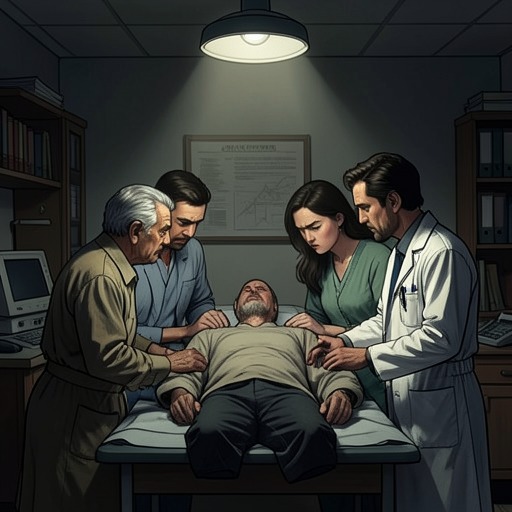
One day in July, less than two months after Anna Brown’s murder, Lizzie stopped breathing. Mollie could not revive her. Her death was understood through both Christian faith and Osage spirituality, with her spirit said to have been claimed by Jesus Christ and Wah’Kon-Tah. Mollie was overwhelmed with grief.
Bill Smith’s Suspicions
Bill Smith, Mollie’s brother-in-law, was among the first to question whether Lizzie’s death was ordinary. He was already frustrated by the authorities’ investigation into the murders and had begun looking into the matter himself. Like Mollie, he was struck by how vague Lizzie’s illness had been: no doctor had identified its cause, and no natural explanation for her death had been uncovered.
As Bill consulted doctors and local investigators, he became convinced that Lizzie had been poisoned. He suspected that her death was connected to the murders of Anna Brown and Charles Whitehorn, and believed all three cases led, somehow, to the oil beneath Osage land. This was his suspicion, not an established finding in the account.
Place in the Investigation
The wider investigation concerned two dozen murders, with wealthy Osage people among those targeted. Anna Brown, Rita Smith, and Lizzie were blood relatives, but investigators had not yet spoken to Lizzie’s surviving daughter, Mollie Burkhart. The files offered little about Mollie beyond noting that she had diabetes and had secluded herself at home. Lizzie’s death therefore sat at the intersection of a family’s losses and an investigation that had not yet gathered the testimony of one of its closest surviving witnesses.