Louis F. Burns
Killers of the Flower MoonLouis F. Burns appears in the book as an eminent Osage historian whose scholarship helps recover a history that official investigations and wider American memory left incomplete. His work gives the murders a community-wide scale: the violence was not only a collection of separate cases, but a source of loss carried through Osage families and remembered across generations.
Historian of Osage Loss
Burns’s starkest observation concerns the reach of the killings associated with Osage headrights: “I don’t know of a single Osage family which didn’t lose at least one family member because of the head rights.” The force of the statement lies in its measure of the violence. Rather than defining the Reign of Terror only through the cases authorities prosecuted, it describes bereavement as something that touched nearly every family. In the book, Burns’s words stand beside evidence that investigators and later scholars suspected the death toll extended far beyond the cases brought to court.
The book also presents Burns as a key interpreter of Osage endurance. Describing what remained after his people’s ordeal, he wrote that they had risen after “only shreds and tatters remained” and “from the ashes of their past.” The image does not suggest that survival erased the damage. It frames renewal as taking place after profound cultural and familial loss.
Memory, Gathering, and Continuity
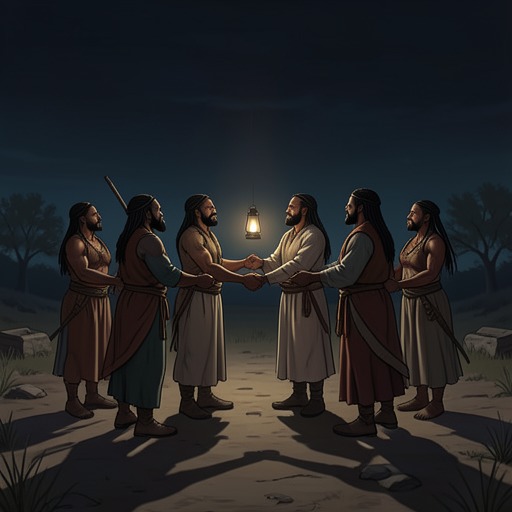
Burns’s writing gives particular weight to what a community can preserve. In an account of the I’n-Lon-Schka ceremonial dances, his words describe the work of carrying both what remains and what has been lost: “What has been possible to salvage has been saved and is dearer to our hearts because it survived. What is gone is treasured because it was what we once were.” He presents gathering as an act of continuity, bringing past and present together while affirming that the Osage remain a living people.
The book places this account in the context of dances held over several June weekends in Hominy, Pawhuska, and Gray Horse. These gatherings preserve traditions and bring relatives and friends together. Burns’s reflection makes their meaning more than ceremonial: what survives is cherished precisely because so much was endangered or lost. The dances become one visible setting for the continuity his writing describes.
Scholarship and the Book’s Account
Burns’s importance is also evident in the research behind the book. The author identifies him, alongside John Joseph Mathews, as one of the seminal Osage writers whose work was indispensable to reconstructing Osage history. Burns is also among the Osage contributors thanked for sharing insight and friendship, placing his presence not only in the book’s citations but among the people whose knowledge helped shape the project.
That role matters in a narrative built from archives as well as family and community knowledge. The book draws on extensive government files, court records, oral histories, and interviews with descendants; Burns’s historical work offers an Osage account through which such records can be understood without reducing the murders to a closed set of prosecutions. His writing keeps the consequences in view: the losses within families, the traditions gathered from what survived, and a people whose history continued beyond the violence.