Mollie Burkhart
Killers of the Flower MoonMollie Burkhart was an Osage woman, mother, and headright holder whose family’s wealth made her a central target of the murders later investigated as the Osage Reign of Terror. The plot drew its force from inheritance: as members of her family died, their headrights flowed toward Mollie, while her husband, Ernest Burkhart, was controlled by his uncle William K. Hale. Mollie survived both the killings around her and an apparent attempt to poison her, but the danger fractured her marriage and drove her into isolation before she rebuilt a life beyond Hale’s reach.
Identity and family life
In 1921, Mollie was thirty-four and lived in Gray Horse, Oklahoma. She was registered on the Osage Roll, which carried not only tribal membership but a share in the wealth generated by oil leases and royalties on Osage land. Quarterly payments that had once amounted to a few dollars had grown to hundreds and then thousands as oil production expanded. Mollie had built a large wooden house near her family’s old lodge, owned several cars, and kept servants, but the book distinguishes her from neighbors who spent more extravagantly. Her material security existed within a system in which Osage wealth attracted outsiders’ attention and was not simply free for its owners to manage.
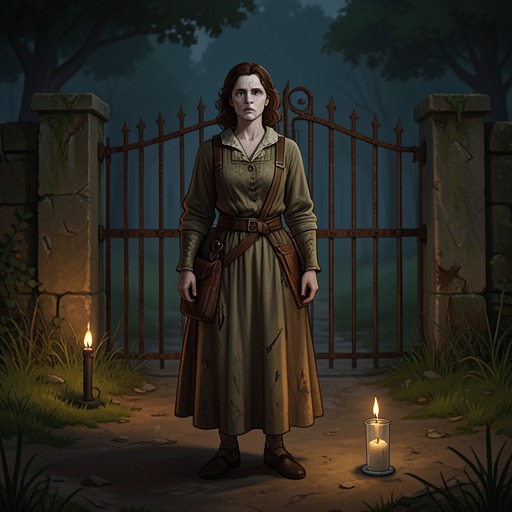
Mollie maintained a strong connection to Osage ways even as the reservation towns changed around her. On May 21, 1921, she rose close to dawn, a habit formed when her father prayed to the sun each morning. She wore an Indian blanket over her shoulders and let her long black hair fall down her back, unlike friends who rejected Osage clothing or adopted flapper hairstyles. Her family also practiced a mixture of Osage and Catholic beliefs. Her marriage to Ernest had required navigating competing expectations: his roughneck friends mocked him for marrying an Osage woman, while Mollie felt responsible for making an arranged Osage marriage as her parents had. In 1917, they exchanged rings and pledged themselves to one another.
By 1921, Mollie and Ernest had two young children: Elizabeth, aged two, and their eight-month-old son James, nicknamed Cowboy. Mollie also cared for her aging mother, Lizzie, who had moved into the house after Mollie’s father died. Lizzie had once worried that Mollie’s diabetes meant she would die young and had asked her other children to look after her. In practice, Mollie cared for the household. When Cowboy suffered earaches, she blew into his ears until he stopped crying; she also organized the house and directed its servants. This ordinary work of care would continue even as the family’s security collapsed.
Losses and the family’s inheritance
Anna Brown, one of Mollie’s three sisters, disappeared in May 1921. Anna sometimes went on drinking and dancing sprees, but she had been gone for three days, longer than usual, and had not returned to Mollie’s stoop. Mollie had been among the last people to see her. On May 21, she had asked Ernest to call Anna because Lizzie was ill and needed help. Anna arrived by taxi in red shoes and a matching Indian blanket, carrying an alligator purse. Her hair was windblown, her words slurred, and her gait unsteady: she was drunk. Three days later, Mollie began to fear that something had happened.
Minnie, another sister, had died nearly three years earlier, aged twenty-seven. Doctors had attributed the death to a wasting illness, but Mollie doubted that explanation because Minnie had been healthy. When Anna’s body was found in a creek, Mollie joined Ernest, her sister Rita Smith, and Rita’s husband, Bill Smith, in the grim procession to identify it. The face was so badly damaged that the sisters relied on Anna’s clothes and the blanket Mollie had washed for her. Bill pried open the mouth with a stick, and the family recognized Anna by her gold fillings. Rita wept; Mollie, usually the composed member of the family, silently confirmed the identification and withdrew with Ernest. The discovery turned her private fear into a family catastrophe.
The danger acquired a further personal dimension when Henry Roan was murdered. Mollie had married Roan in 1902, when she was fifteen, more than a decade before meeting Ernest. Few accounts of the marriage survived; it was likely arranged, and because it followed Osage custom, the couple could separate without a legal divorce. They had gone their own ways without apparent bitterness. His death nevertheless connected the new wave of violence to a brief earlier intimacy in Mollie’s life.
The pattern that emerged from probate records made Mollie’s position especially dangerous. Anna, divorced and without children, had left nearly all her wealth to Lizzie. Lizzie had directed most of her headright to her surviving daughters, Mollie and Rita. Rita and Bill Smith then died in a house bombing. Their wills meant that if they died simultaneously, much of Rita’s headright would pass to Mollie; instead, Bill survived Rita by several days and inherited much of her wealth before it went to one of his relatives. Even so, White concluded that the bulk of the family headrights had been funneled to Mollie, whose wealth Ernest controlled. The inheritance trail made Mollie both the intended destination of the family fortune and the means by which Hale could reach it through his nephew.
Isolation and the poisoning attempt
The killings and their aftermath steadily closed in on Mollie. When a fire swept through Hale’s pastures and killed cattle, even the powerful Hale seemed vulnerable to her. But Mollie’s own response was withdrawal: she shut the doors and windows of her house, stopped entertaining guests, and ceased attending church. People whispered that she feared madness or was already losing her mind under the strain. Her diabetes seemed to worsen, and a note sent to the Office of Indian Affairs described her as being in failing health and not expected to live long. Consumed by fear and illness, she gave her third child, Anna, to a relative to raise.
The documentary record offers little about Mollie during this period. It does not establish what she thought when agents from the Bureau of Investigation arrived, or how she understood the Shoun brothers’ repeated visits and injections of what was said to be insulin. In late 1925, however, Mollie sent a secret message to the local priest saying that her life was in danger. Another report soon reached an Indian Affairs agent: she was not dying of diabetes but being poisoned. The Shoun brothers denied wrongdoing, and investigators could not prove who had poisoned her. After Mollie’s condition improved, authorities questioned her. She was frightened and bewildered, and at times needed an interpreter to help with English. An attorney told her that Ernest had confessed to knowing something about the murders and that Hale had apparently engineered them, including the bombing of Rita’s house. The information brought the conspiracy inside Mollie’s marriage: Ernest had not merely been close to her through the family’s losses but had known the truth while comforting her and while she searched for the killers.
Separation and restoration
After Kelsie Morrison was convicted of Anna’s murder, Mollie could no longer look at Ernest. She soon divorced him, and the mention of his name made her recoil in horror. The end of the marriage marked a sharp break from the relationship begun in 1917, when she had chosen love despite pressure to follow an arranged Osage marriage. The betrayal was not only marital: Ernest had known that people responsible for the violence were close to the family while Mollie trusted him as her husband.
With Hale’s overwhelming presence gone, Mollie began to socialize again and attend church. She eventually fell in love with John Cobb, who was part white and part Creek. Relatives described their love as genuine, and the two married in 1928. A further change came through the courts. Mollie and the Osage had fought the corrupt guardianship system, under which government-appointed guardians controlled Osage property. On April 21, 1931, a court vacated the order that had declared her incompetent and restored her to competency. At forty-four, she could spend her money as she pleased and was recognized as a full-fledged American citizen. The ruling gave legal form to a change in status that had long been denied: Mollie was no longer a ward whose wealth could be managed by others.
Memory and significance
Mollie’s life joins intimate loss to the wider mechanics of the murders. Anna’s death, the deaths of Lizzie, Rita, and Bill in the inheritance pattern, and the attempted poisoning of Mollie were not isolated tragedies in White’s reconstruction; together, they show how headrights could be concentrated through family succession and exploited by those who controlled an heir’s affairs. Yet the evidence does not resolve who poisoned Mollie, and the uncertainty matters: survival did not mean that every crime against her could be conclusively attributed or prosecuted.
The book’s later encounters with Osage memory place Mollie among the family members whose photographs and stories remain present in the community. At the Osage Nation Museum, a photograph showed her happily seated with her sisters; nearby images recalled other victims. Kathryn Red Corn described the pain of speaking about the Reign of Terror as a grief that persisted across generations. Mollie’s story therefore does not end with her restored legal status or remarriage. Her survival stands against a history in which relatives were killed for inherited wealth, while the family image preserved in the museum keeps the people behind the inheritance calculations in view.