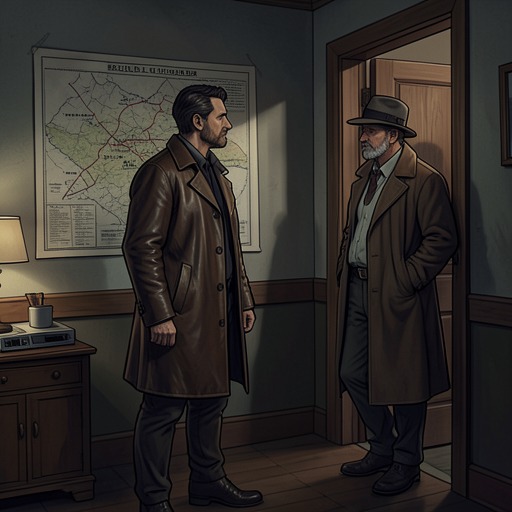
Mollie Burkhart poisoning
Killers of the Flower MoonMollie Burkhart poisoning was disclosed in late 1925, when a secret message from Mollie warned that her life was in danger and a subsequent report said she was being poisoned. The revelation challenged the prevailing explanation for her decline: what had appeared to be worsening diabetes was reported to have another cause. The account establishes the danger and its late disclosure, but does not identify a perpetrator or specify the method.
Withdrawal and Ill Health
After pursuing justice for so long, Mollie withdrew from public life. A fire spread across William K. Hale’s pastures, leaving the land badly damaged; to Mollie, even the figure known as the King of the Osage Hills seemed vulnerable. She shut herself away, stopped receiving guests, and no longer attended church. The narrative presents the murders as having shaken her faith, while residents’ whispers cast her seclusion as either a retreat to avoid losing her sanity or a sign that her mind was already unraveling under strain.
Her diabetes also appeared to be worsening. A person who knew her sent the Office of Indian Affairs a note reporting that she was in failing health and was not expected to live long. Consumed by fear and ill health, Mollie gave her third child, Anna, to a relative to raise. The report of poisoning would later alter the meaning of this period: the illness that observers had attributed to diabetes was now suspected to have been inflicted.
A Sparse Record
The account emphasizes how little authoritative documentation survives about Mollie during these years. It records no reliable description of her feelings when agents from the Bureau of Investigation arrived in town, and gives no account of what she thought of the physicians who repeatedly visited her. Among them were the Shoun Brothers, who administered insulin, then described as a new miracle drug. The Bureau of Investigation was an obscure branch of the Justice Department at the time; it was renamed the Federal Bureau of Investigation in 1935.
This absence of records limits what can be said about Mollie’s experience. The narrative does not supply her private reactions to the agents or the treatment, and does not establish whether the insulin itself was connected to the reported poisoning. Instead, it describes a woman whose documented presence in the record had nearly disappeared while concern about her health continued.
The Warning and the Poisoning Report
In late 1925, Mollie sent a secret message to the local priest saying that her life was in danger. The warning gave a direct expression to a threat that had not appeared in the earlier public account of her illness. Soon afterward, an agent from the Office of Indian Affairs received another report: Mollie was not dying of diabetes; she, too, was being poisoned.
The qualification that she was being poisoned too places her danger within a wider pattern of threats, without identifying who was responsible or establishing the details of the method. Its significance lies in the reversal it creates. A decline that had seemed to be a medical tragedy was recast as a possible continuation of the murders and danger surrounding Mollie. The surviving account leaves the investigation and the source of the poison unresolved.