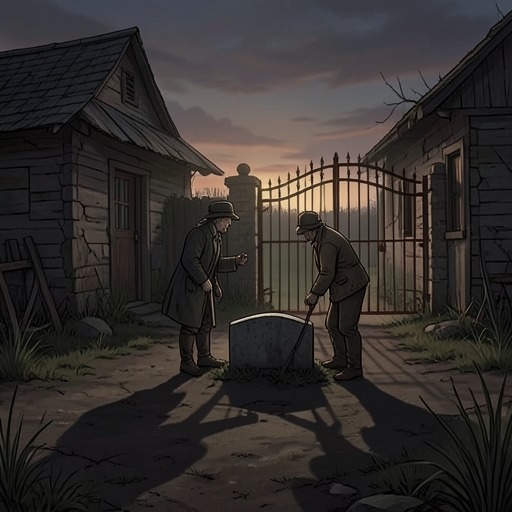
Murder of William Stepson
Killers of the Flower MoonWilliam Stepson’s suspected poisoning in 1922 was more than an isolated death: investigators came to believe that Kelsie Morrison killed him to marry his widow, Tillie, and acquire control of her estate and children. The case’s significance deepens through what followed. Tillie also died of suspected poisoning, Morrison allegedly took much of her fortune, and their children later appeared in a note in which Morrison considered how to gain control of their money. No one was prosecuted for William’s murder, and the story shows how violence against one family could continue through inheritance, guardianship, and the threat to its surviving children.
William Stepson’s Death and the Suspect
William Stepson was remembered as a steer-roping champion. Authorities never brought anyone to trial for his suspected murder, but they came to believe that Morrison was responsible. The account presents that conclusion as an investigative belief rather than a conviction: the absence of prosecution left the killing without a judicial resolution.
By 1922, Morrison had divorced his Osage wife. After William died, Morrison married Tillie, William’s widow, and became guardian of her two children. The sequence placed him in a position to benefit both from his marriage to Tillie and from control over the children’s future. An associate told the Bureau that Morrison had admitted killing William so that he could marry Tillie and take control of her valuable estate. The allegation supplies a specific financial and personal motive, but it remains an attributed admission, not a finding made in court.
Tillie’s Death and the Inheritance
After marrying Morrison, Tillie became suspicious of him, particularly when she overheard him discussing the effects of strychnine. She confided to her lawyer that she wanted to prevent Morrison from inheriting her estate and to end his guardianship of her children. In July 1923, before she could make those changes, Tillie died of suspected poisoning.
Her death was not investigated. Morrison took much of her fortune, while letters he wrote indicated that he planned to sell a portion of the estate he had obtained to H. G. Burt, a banker who appeared to be involved in the killing of W. W. Vaughan. According to another associate, Morrison admitted killing Tillie as well. These accounts extended suspicion from William’s death to a second death in the same family, while the lack of investigation meant that Tillie’s suspected murder, like William’s, did not lead to prosecution.
The Children and the Continuing Threat
The account follows the alleged plot past the deaths of William and Tillie. Their son was three years old when his parents died; his nine-year-old half sister was also at risk. In 1926, while imprisoned for killing Anna Brown, Morrison sent a note to William Hale asking how he might obtain possession or control of the children’s money after his release. Morrison referred to having the children adopted and considered taking them out of the state. Guards intercepted the note, and authorities feared he planned to kill both children.
The note made the threat legible in unusually concrete terms: the children’s future inheritance was not merely a matter of family administration but a possible motive for renewed violence. The child who had been left an orphan and his half sister remained vulnerable because adults who controlled their guardianship and estate could also threaten their lives. The surviving children thus became part of the consequence of the original killing, not an unrelated aftermath.
Unresolved Justice and the Wider Pattern
William’s death was commonly counted among the murders of the Reign of Terror, even though no one was prosecuted for it. The account’s broader discussion shows how difficult it could be to bring cases against powerful suspects: officials considered state courts unsafe for prosecuting Hale, while questions about whether crimes occurred on allotted land or Indian territory complicated jurisdiction. The federal case against Hale and Ramsey for Henry Roan’s murder proceeded on the basis that Roan had been killed on an unsold Osage allotment and was under federal guardianship; a later Supreme Court ruling returned that prosecution to federal district court. This legal context illustrates the uncertainty surrounding prosecutions, but the account does not establish jurisdiction as the reason William’s case went unprosecuted.
The case also unsettles the idea that the killings can be explained by a single mastermind. The book presents the suspected attack on the Stepson family as evidence of a broader culture of killing: Morrison was believed responsible, while the alleged motive centered on marriage, guardianship, and inheritance. William’s death, Tillie’s uninvestigated poisoning, and the threat to the children form a chain of violence whose consequences outlasted the first murder and whose central allegations were never tested in court.