National Archives at Fort Worth
Killers of the Flower MoonThe National Archives at Fort Worth is both a physical repository and a central investigative setting in the book’s account of the Osage murders. In its immense collections, the narrator finds records that link W. W. Vaughan’s death to George Bigheart’s estate and uncover the scale of deaths among Osage people under financial guardianship. Yet the archive does not deliver a complete solution: crucial testimony had disappeared, many deaths had never been classified as homicides, and the evidence against suspected participants remained circumstantial.
Setting and Holdings
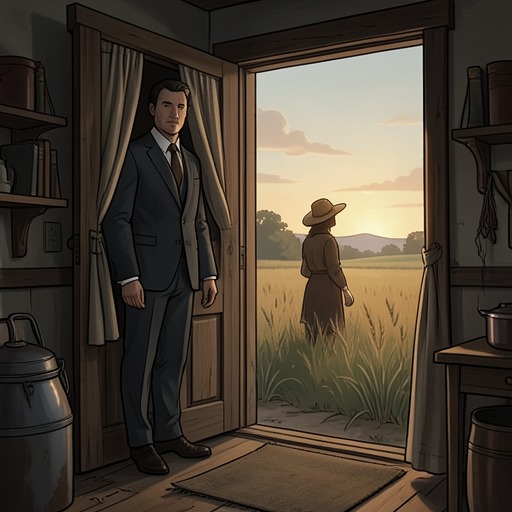
The archive’s southwest branch occupies a warehouse in Fort Worth, Texas, larger than most airport hangars. Its records are stacked in rows fifteen feet high and kept under humidity-controlled conditions. The collection holds more than one hundred thousand cubic feet of material, including transcripts from U.S. District Courts in Oklahoma covering 1907 to 1969, records concerning the 1900 Galveston hurricane, documents on the assassination of John F. Kennedy, materials on slavery and Reconstruction, and reports from Bureau of Indian Affairs field offices.
That range gives the building a scale beyond any single investigation. The archive gathers the records of government actions and historical catastrophes, placing them in an orderly system even when their subjects are disorderly, violent, or unresolved. For the narrator, this administrative order is not proof that the past has been fully recorded. It is a place to search for traces—among court proceedings, agency reports, and financial documents—of what happened to Vaughan.
The physical process of research is repeatedly made visible. An archivist wheels one batch of boxes into a small reading room and removes the previous load; the narrator returns to the same files over successive days. Most of the material is prosaic: expenses, census reports, and oil leases. The modest, repetitive labor of sorting through such records contrasts with the stakes of the inquiry and with the expectation that a single document might resolve the murders.
Records and the Vaughan Inquiry
Court records initially presented Vaughan’s dispute with H. G. Burt as a routine financial case. Beginning in 1923, Vaughan’s widow, Rosa Vaughan, sought $10,000 that she said Burt owed her deceased husband. Burt was a Pawhuska bank president and had been considered Vaughan’s close friend; Vaughan had also acted as one of his attorneys. Examining the dispute more closely, the narrator found that the money was connected to Bigheart, whom Vaughan had represented as well.
Before Bigheart died of suspected poisoning in an Oklahoma City hospital, he had sought a certificate of competency that would remove his government ward status and allow him to spend his headright payments freely. Vaughan helped him apply, and Bigheart had planned to pay Vaughan as much as $10,000 for this and other legal services. Burt somehow collected the money instead. Bigheart and Vaughan both died within days of one another, turning an apparently ordinary debt dispute into a possible clue about their deaths.
The archive also held secret testimony from the 1926 grand jury investigating the Osage murders. Among those who testified were Ernest Burkhart and Dick Gregg, but the testimony contained no reference to Burt appearing as a witness. Elsewhere, the narrator found an agent’s report recording an informant’s claim that Burt and William K. Hale were close associates and had divided money obtained from Bigheart. The report noted that Hale had claimed $6,000 from Bigheart’s estate using a bogus creditor’s note. The documents raised the possibility that the disputed Vaughan money was part of a larger sum, but did not establish that conclusion.
The Limits of Motive and Proof
The financial records did not point to a clear inheritance of Bigheart’s fortune by Hale, Burt, or another white man. His property passed to his wife and young daughter. For days, the narrator searched probate files for a financial motive, then found that the daughter’s guardian was Burt. Government records showed that Burt had also served as guardian to other Osage people, including one who died. A local lawman had noted that Burt and Hale visited Bigheart shortly before his death, and an agent’s report in Bureau of Investigation files described Burt as a murderer.
These findings made Burt a suspect in the deaths of both Bigheart and Vaughan, but they did not amount to direct proof. The sums under discussion were smaller than the valuable headrights involved in the murders of Mollie Burkhart’s family or the $25,000 insurance policy associated with Henry Roan’s death. The narrator suggests that the comparatively limited financial incentive may help explain why the Justice Department did not prosecute Hale for Bigheart’s killing or pursue Burt further. The files show suspicion and possible financial connections, not a resolved prosecution.
A newspaper account found during the search supplied a specific link to Vaughan’s final journey: Burt had boarded the train with him in Oklahoma City and was aboard when Vaughan disappeared from his berth. Another newspaper report said Burt was the person who reported Vaughan missing. In a separate folder, an informant close to Hale told investigators that he thought Burt had carried out Vaughan’s killing. Those accounts strengthened the circumstantial case, but the narrator remains conscious that Burt was dead and could neither answer the allegations nor defend himself.
Guardianship Logs and Archival Silence
A tattered, fabric-covered logbook from the Office of Indian Affairs offered a wider view of the guardianship system. Written by hand, it listed each guardian and the Osage wards under that person’s care; when a ward died, the clerk usually wrote a single word beside the name: “Dead.” The record identified Burt as guardian to Bigheart’s daughter and four other Osage people, with one ward marked deceased.
The same log listed Scott Mathis, owner of the Big Hill Trading Company, as guardian to nine people, including Anna Brown and her mother, Lizzie. Seven of Mathis’s nine listed wards had died, and at least two of those deaths were known murders. Other guardians’ lists showed similarly stark totals: one had eleven wards, eight of whom died; another had thirteen, with more than half recorded as deceased; and one had five wards, all dead. The records could not establish how many deaths were suspicious or identify who was responsible, since most had never been investigated. Their totals nevertheless defied an ordinary death rate and made the omissions themselves consequential.
The archive’s value lies partly in bringing separate records into relation: a civil suit, a grand-jury transcript, an agent’s report, a newspaper account, and a guardianship register each disclose a different portion of the story. But their survival is uneven. In Fairfax, the coroner’s inquest records concerning Anna Brown had mysteriously vanished, and virtually no physical evidence from the crime scenes had been preserved. The archive therefore stands not as a complete storehouse of truth but as a place where surviving fragments can be compared against conspicuous gaps.
Significance in the Narrative
The search at Fort Worth changes the scale of the inquiry. It begins with questions about Vaughan and Bigheart, follows disputed money into guardianship and estate records, and expands into a pattern of deaths across multiple wards. The logbook’s repeated notation of “Dead” compresses individual losses into a bureaucratic mark; the surrounding investigation restores some of their context while acknowledging that many cases remain unknowable from the surviving files.
The book also places archival research beside other forms of absence. At the Osage Nation Museum, a missing section of a 1924 ceremonial panorama had been removed because it showed Hale; in the Fairfax case, testimony itself had disappeared. These are different losses, not interchangeable evidence, but together they underscore the uneven ways the past is preserved, withheld, or remembered. At Fort Worth, records can expose connections that were missed or left unprosecuted. They cannot, by themselves, turn every suspicion into certainty or recover every voice absent from the record.