Osage Nation
Killers of the Flower MoonThe Osage Nation’s history in the book is a struggle over who may control Osage land, resources, money, and memory. Forced from ancestral territory and pressed to assimilate, the Nation negotiated to preserve its mineral rights; oil then brought immense income alongside new forms of exploitation and violence. Its tribal government’s demands for outside investigators, continuing community practices, and later defense of its underground reservation show a people acting not only as victims of policy and crime, but as political agents maintaining collective authority.
Land, removal, and negotiated rights
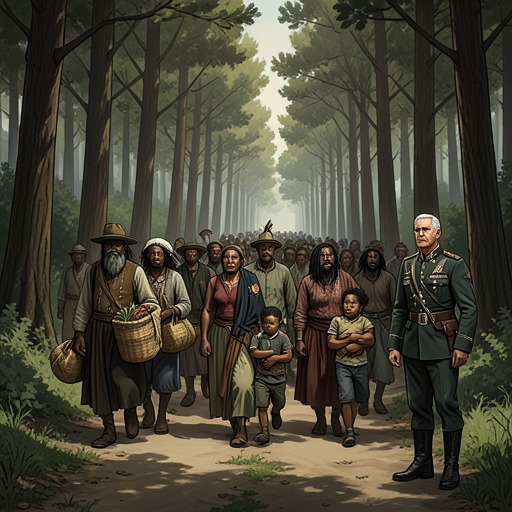
The Osage had laid claim to a vast central territory extending from what is now Missouri and Kansas through Oklahoma and west toward the Rocky Mountains. In the nineteenth century, the United States compelled them to cede much of that land. By 1870, after squatters had occupied Osage lands and some Osage people had been massacred, the Nation agreed to sell its Kansas territory to settlers for $1.25 an acre. It then sought a new home in Indian Territory, choosing land that many white observers dismissed as rocky and unfit for cultivation.
The pressure to surrender land continued after the move. As the federal government prepared to break up Indian Territory and establish Oklahoma, the Osage were the last tribe there to be allotted. James Bigheart delayed allotment long enough to give the Nation leverage in negotiations. Working with John Palmer and other Osage negotiators, the Nation secured a distribution of 657 acres to each member rather than the 160-acre parcels imposed elsewhere. The agreement also reserved the oil, gas, coal, and other minerals beneath the land to the Osage Tribe. That provision preserved a resource estate that could not be seen from the surface, and became the foundation of both the Nation’s oil income and later disputes over its sovereignty.
Oil wealth and the machinery of control
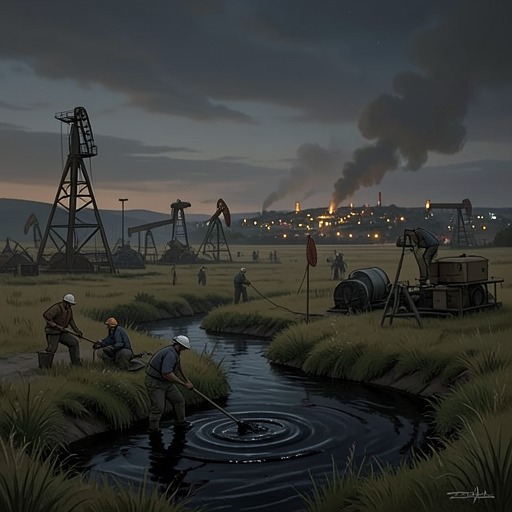
Because membership on the Osage Roll carried a share in the Nation’s mineral income, tribal members began receiving regular payments as oil production expanded. The payments grew from a few dollars to hundreds and then thousands; in 1923, the tribe’s income exceeded $30 million. The Osage were described as the wealthiest people per capita in the world. Public fascination with their prosperity often turned them into spectacle, while obscuring the political choices and retained rights that had made the wealth possible.
Federal control over that income sharply limited the meaning of prosperity. The government deemed many Osage, including Anna Brown and Lizzie, unable to manage their own funds and assigned local white guardians to authorize even ordinary purchases. Decisions about who was considered capable were commonly tied to blood quantum: full-blooded Osage were far more likely to be placed under guardianship than mixed-blood people. John Palmer protested that a person’s proportion of Indigenous ancestry should not determine how much control the government took over that person’s property, but Congress disregarded the plea. In 1921, it added restrictions under which Osage with guardians could withdraw only a few thousand dollars annually from their trust funds, even for education or a sick child’s medical care. Oil income thus existed alongside administrative power that denied many Osage meaningful control over its use.
The policies formed a connected sequence: land cessions were followed by allotment, while the forced-assimilation campaign targeted culture and the guardianship system constrained property rights. In 1894, Mollie Burkhart’s parents were told to send her to the St. Louis School or risk losing their annuity payments. The allotment policy sought to replace communal landholding with private parcels and open the remaining territory to settlers. Later, the financial rules treated Osage adults as incapable of managing the wealth produced by mineral rights the Nation had fought to retain. Control over land and control over its proceeds were different stages of an ongoing struggle, not separate episodes.
Political action amid the murders
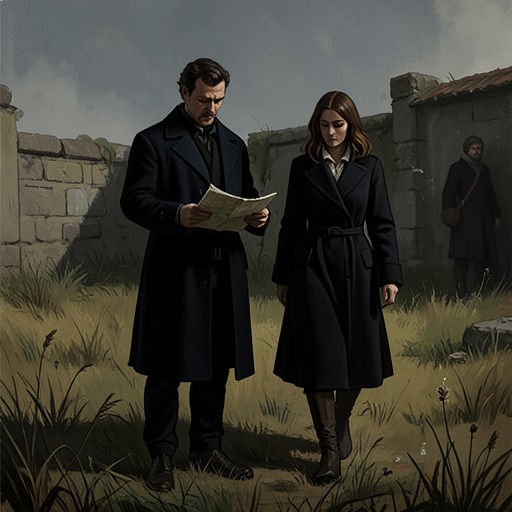
The Osage Nation’s political response to the murders was explicit. After the Smith bombing in 1923, the Tribal Council adopted a formal resolution urging the federal government to send investigators. It stated that criminals had not been apprehended and brought to justice, and called for prompt and strenuous action to protect the lives and property of tribal members. The request reflected the failure of local authorities: inquests had been halted after threats, and the county sheriff acknowledged that he did not want to become involved. The Council sought investigators who would have no ties to county or state officials.
The violence also reached into families whose financial affairs were already governed by outside guardians. At Mollie’s direction, private detectives were hired for Anna’s estate, administered by Scott Mathis, the Big Hill Trading Company owner who had long managed the finances of Anna and Lizzie. The estate’s search for answers therefore took place within a system that had already transferred substantial authority over its money to a white guardian. The book places the murder investigation beside this wider structure of financial dependency without treating the two as identical: one involved the pursuit of killers, the other the government’s continuing power over Osage funds.
Community memory and continuing sovereignty
The Nation’s history is preserved not only in official records but also through family knowledge and community decisions about what can be shown. During a 2012 visit to the Osage Nation Museum, longtime director Kathryn Red Corn showed photographs of allotted Osage members, including victims of the killings. A panoramic photograph of a 1924 ceremony had a section removed. The missing panel showed William K. Hale; the Osage had removed his image not to forget the murders, but because they could not forget them. Red Corn later helped retrieve Anna Brown’s skull and have it buried with her other remains. She also explained the difficulty of speaking about the Reign of Terror: many Osage families had lost close relatives, and the pain endured.
That memory is part of a living community rather than a closed chapter. The Osage hold I’n-Lon-Schka ceremonial dances in Hominy, Pawhuska, and Gray Horse, gathering relatives and friends and sustaining traditions. By 2006, the Nation had ratified a new constitution and maintained an elected government; the book also describes the Osage Nation Court as a place where Osage now administer justice in many criminal cases. These institutions and gatherings register survival without suggesting that the damage has vanished. As Osage historian Louis F. Burns observed, what could be salvaged had been saved, while what was lost remained treasured.
A later dispute over wind power returned the question of mineral rights to the foreground. In 2015, the federal government, representing the Osage Nation, sued Enel over a wind farm whose turbine foundations had involved excavation of limestone and other minerals. The Nation’s position was that the 1906 agreement required its approval for such disturbance of the underground reservation; Enel argued that it was not engaged in mineral development. On July 10, a chief and two dozen Osage gathered beneath the turbines at dawn to pray to Wah’Kon-Tah. The court subsequently sided with Enel, finding that the company had not marketed or sold minerals or otherwise engaged in mineral development and therefore did not need a lease. The ruling left the dispute over the Nation’s underground sovereignty unresolved in practical terms, even as it showed that the mineral reservation negotiated generations earlier remained central to Osage political life.