Pawhuska, capital of the Osage Nation
Killers of the Flower MoonPawhuska, capital of the Osage Nation, is both a seat of Osage life and a crossroads where the book’s histories of dispossession, assimilation, oil wealth, and violence meet. Its streets and oil auctions displayed the extraordinary wealth drawn from the land, while the town’s boarding school and surrounding institutions reflected outside pressure on Osage families and resources. In the present-day account, its museum preserves a community memory that the wider country had largely allowed to disappear.
Reservation Capital and Changing Landscape
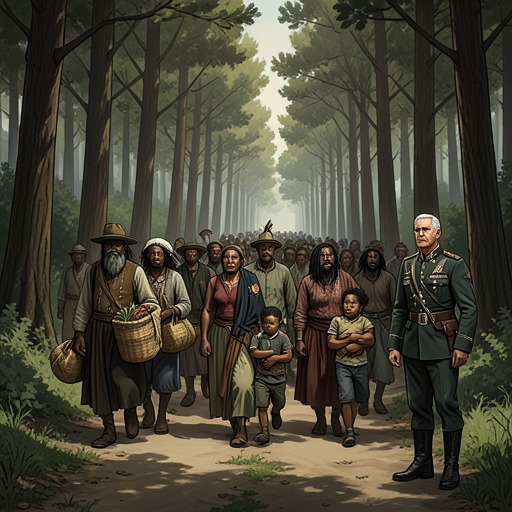
Pawhuska stood within a landscape remade by successive demands for Osage land. After the Osage were compelled to relinquish territory between the Arkansas and Missouri Rivers, they ceded nearly a hundred million acres over the following decades and found refuge in a 50-by-125-mile area in southeastern Kansas. In 1870, following the expulsion of Osage people from their lodges and the plundering of their graves, the tribe agreed to sell its Kansas lands to settlers for $1.25 an acre. Settlers had already taken land by force, and some massacred Osage people. The search for another homeland eventually brought the Osage to the region that became their reservation in Indian Territory.
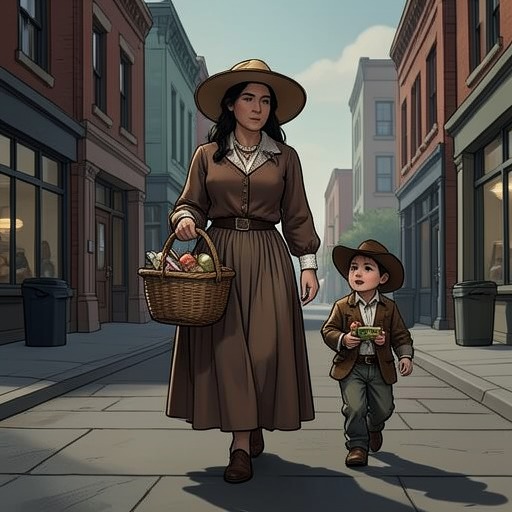
By the period described in the book, Pawhuska was the Osage capital, with more than six thousand residents. Nearby Fairfax had nearly fifteen hundred, while older settlements such as Gray Horse formed part of a wider network of communities. The towns appeared transformed by the oil boom: paved horse trails carried speeding automobiles, and fuel fumes overlaid the prairie’s scent. Cowboys, fortune seekers, bootleggers, medicine men, outlaws, U.S. marshals, financiers from New York, and oil magnates crowded the streets. Cafés, opera houses, and polo grounds marked a commercial world that had risen amid the reservation landscape.
Schooling, Allotment, and Oil
Pawhuska also became a destination for the federal campaign to remake Osage life. In 1894, when Mollie Burkhart was seven, her parents were ordered to enroll her in the St. Louis School, a Catholic boarding institution for girls that had opened in Pawhuska. The journey from Gray Horse took two days by wagon. Her parents faced the threat that the government would withhold annuity payments if they refused to send her. The school thus linked the town to a policy of coerced assimilation, reaching into family life through compulsory education and financial pressure.
In the late 1890s, the government pressed to divide the reservation into individual parcels and open the remainder to settlers. The Osage negotiated to have the land divided among tribal members, increasing each allotment from the proposed 160 acres to 657 acres, and secured a provision reserving oil, gas, coal, and other minerals to the tribe. That agreement shaped Pawhuska’s later fortunes: the oil beneath the reservation could not be seen, but its value drew investors and transformed the town. In 1917, a well on the reservation erupted in a towering column of oil; in 1920, a new well at the Burbank field produced 680 barrels in its first twenty-four hours. These gushers made the mineral wealth vivid, even as the rights to it became a source of conflict and exploitation.
Auctions, Wealth, and Violence
From 1912 onward, auctions for Osage oil leases turned Pawhuska into a gathering place for oilmen and spectators. About four times each year, investors arrived at the train station in luxurious private railcars for sales overseen by the United States Department of the Interior. A single lease often covered a 160-acre tract, and bidding grew so intense that one historian likened the auctions to a Monte Carlo. In good weather, the sales took place outdoors on a hilltop beneath the Million Dollar Elm tree. Members of the Osage community, including Mollie Burkhart and Ernest Burkhart, attended alongside prominent settlers and businessmen whose enterprises had benefited from the boom.
The wealth on display coexisted with mounting danger. The killings of Anna Brown and Charles Whitehorn caused a sensation, and the recovery of two bullets from Whitehorn’s skull, apparently from a .32-caliber pistol like the one suspected in Anna’s murder, fueled speculation that the cases might be connected. As the murders drew attention, oil barons continued to arrive for the auctions. The town’s prosperity and the violence surrounding Osage wealth were not separate stories: the leases drew money and influence into the area, while the control of Osage assets became a matter of criminal and political struggle.
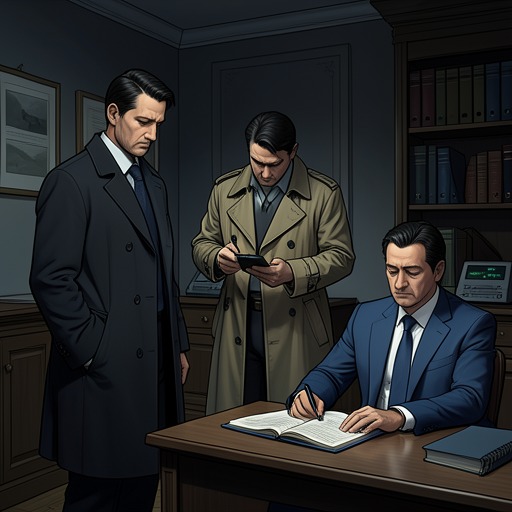
Pawhuska was also home to W. W. Vaughan, a fifty-four-year-old attorney who had worked with private investigators trying to solve the murders. In June 1923, when George Bigheart was hospitalized in Oklahoma City with suspected poisoning, a friend said Bigheart had information about the killings but would speak only to Vaughan. Before setting out, Vaughan told his wife where he had hidden evidence he had gathered and instructed her to give it to the authorities if anything happened to him. His preparations show how the investigation reached into the private lives of people in Pawhuska, where pursuing evidence could carry mortal risk.
Community Memory and the Town Today
The book’s later visit to Pawhuska turns the town into a place of historical encounter. At the Osage Nation Museum, its longtime director, Kathryn Red Corn, showed photographs of the 2,229 allotted Osage members, including relatives and people killed during the Reign of Terror. A 1924 panoramic photograph of an Osage ceremony and prominent white local figures had a section missing. Red Corn explained that the missing panel was too painful to display, then produced a small, blurred print of the removed image: William K. Hale staring at the camera. The Osage had taken his image out of the public display not because they had forgotten the murders, but because they could not forget them.
Pawhuska remained the capital of the Osage Nation in the book’s account. Although many buildings stood abandoned, the town still had schools, a courthouse where Ernest Burkhart had been tried, and restaurants. The Osage Nation ratified a new constitution in 2006, maintained an elected government, and counted twenty thousand members, with around four thousand living in Osage County. Pawhuska’s significance therefore extends beyond its boom-era streets and auction hill: it is an active center of Osage government and a community that holds its own record of violence and survival.