Rosa Vaughan
Killers of the Flower MoonRosa Vaughan, widow of W. W. Vaughan and mother of ten children, was left to support her family after her husband was murdered. Her story also enters the record through her effort to recover money she said belonged to her husband: a claim initially dismissed in state court but later upheld in part on appeal, exposing how the family’s private loss became a prolonged dispute over money and accountability.
Family After the Murder
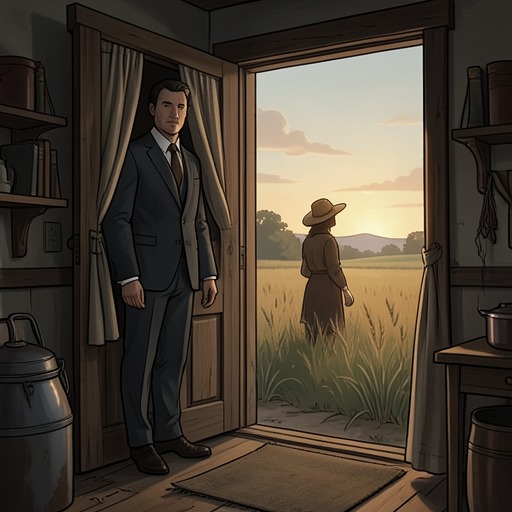
W. W. Vaughan’s death left Rosa with ten children and no income. The family had to leave its two-story house and move into a storage garage. With little money for food, they received help from the Osage community, which banded together to feed them. Some of the children, including Martha Vaughan’s father, went to live with Osage families, where they grew up speaking Osage and learning traditional dances. Martha later recalled that her father felt safe among the Osage.
The Claim Against H. G. Burt
In 1923, Rosa filed suit against H. G. Burt, a Pawhuska banker and a man regarded as a close friend of her husband, who had long served as Burt’s attorney. Rosa’s claim was that Burt owed her deceased husband $10,000. The case appeared at first to concern an ordinary debt, but the disputed money was connected to George Bigheart, another victim of the Reign of Terror. Vaughan had also represented Bigheart, who had sought legal certification that would end his status as a government ward and allow him to spend his headright payments freely. Bigheart had planned to pay Vaughan as much as $10,000 for legal services, but Burt had somehow collected the money. Bigheart and Vaughan both died within days of one another.
Appeal and Recovery
Rosa’s suit was initially dismissed in state court. Burt was represented by one of the same law firms that had represented William K. Hale in the murder trials. The dismissal was later reversed by the Oklahoma Supreme Court, which ordered Burt to pay Rosa $5,000 plus interest. The judgment did not restore the family’s lost home or income, but it gave legal force to part of her claim against a banker who had retained money associated with her husband’s work. Her case therefore registers both the material hardship that followed Vaughan’s death and the difficult, incomplete recovery pursued by his widow.