Smith house bombing
Killers of the Flower MoonThe Smith house bombing was a deliberate nighttime attack in Fairfax that destroyed Bill and Rita Smith’s home, killed Rita Smith and Nettie Brookshire, and left Bill mortally injured. Its violence reached beyond the house: the blast shook the neighborhood, drew a terrified procession of residents to the ruins, and added another family to the widening toll of the Osage Reign of Terror.
The Blast and Its Immediate Scene
Just before three in the morning, a nearby resident heard the explosion. Its force bent trees and signposts and shattered windows. In a Fairfax hotel, a night watchman sitting beside a window was showered with glass and thrown to the floor; a guest in another room was hurled backward. Nearer the Smith home, doors were torn from houses and wooden beams cracked. The blast was so violent that a witness, remembering it years later, could only describe the night as seeming never to stop trembling.
Mollie Burkhart and Ernest Burkhart felt the explosion from their home. Ernest first mistook it for thunder. Mollie went to the window and saw a distant fire glowing in the sky; Ernest joined her, and together they watched the light. He then pulled on his trousers and ran outside. Residents emerged groggy and frightened, carrying lanterns and firing guns into the air as warnings and calls for help. People hurried toward the blast on foot and in cars, repeating that the explosion had struck Bill Smith’s house.
There was almost nothing left to approach. The house had become heaps of charred sticks, twisted metal, and shredded furniture, including furnishings Bill and Rita had bought only days before from the Big Hill Trading Company. Strips of bedding hung from telephone wires; debris floated through the dark, toxic air. The Studebaker Bill had parked in the garage was demolished, too. The wreckage, and the evident force of the blast, made clear that someone had planted a bomb beneath the house and detonated it.
Rescue in the Rubble
Volunteer firemen carried water from nearby wells to fight the flames still consuming the ruins. As the fire rose above the wreckage, searchers looked for Bill and Rita Smith and Nettie Brookshire. One rescuer called for the men to come because a woman was inside. The justice of the peace, Scott Mathis, and the Shoun Brothers joined the search; even before anyone had found remains, two undertakers had arrived with hearses, hovering at the scene like predatory birds.
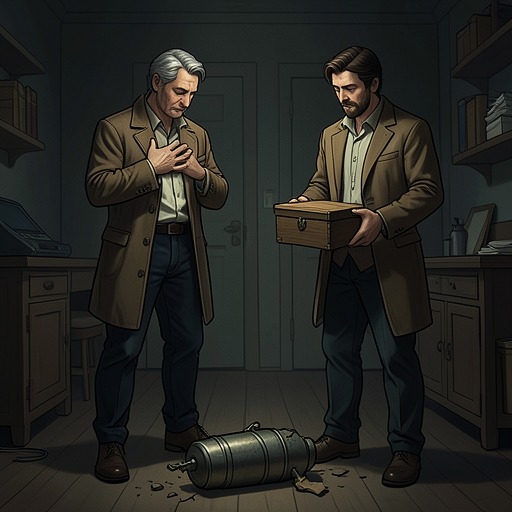
James Shoun knew the house from having owned it and searched where the main bedroom had stood. There he heard a faint call for help, which other searchers soon heard too. Firemen doused the smoldering mound above the voice, and the men clawed away the rubble as the cries grew louder over the wreckage shifting and creaking. Bill Smith emerged alive beside his bed, his face blackened and his legs, back, and hands seared. David Shoun, a doctor, later said he had never seen a man in such agony. James tried to comfort Bill and promised not to let him suffer.
Rita lay beside Bill in her nightgown. Her face appeared unmarred, as if she were still sleeping, but the back of her head had been crushed; she was dead. When Bill understood that Rita was gone, he cried out and repeated the news. Ernest Burkhart, watching in a bathrobe someone had given him, could not turn away and kept muttering about the fire. He consented when the Big Hill Trading Company undertaker asked to remove Rita’s remains, so she could be embalmed before Mollie Burkhart saw her. With Rita dead, Mollie was left as the only surviving sister in her family, though she had once been expected to die first because of her diabetes.
Searchers found no substantial remains of Nettie. The justice of the peace concluded that the young married woman, who had a child, had been blown to pieces; there was not enough to hold an inquest. The rival undertaker nevertheless found enough to claim the burial fee, beating the Big Hill undertaker to the remains. The competition between the two men over that fee offered a grotesque counterpoint to the search for the victims.
The rescuers carried Bill toward an ambulance and took him to Fairfax Hospital. David Shoun injected him several times with morphine. Bill was the bombing’s lone survivor, but he lost consciousness before he could be questioned. Local officers had been away in Oklahoma City for a court case, and an investigator later noted that the bombing had been timed for their absence. After the officers returned, they placed floodlights at both hospital exits and armed guards nearby, fearing the killers might try to finish Bill there.
Bill Smith’s Death and the Public Response
At the hospital, Bill Smith drifted between life and death. In delirium he sometimes suggested that the people who had taken Rita had now come for him, while the friend who visited could make little sense of his muttering. The bombing had left him alive, but not yet able to give an account of what had happened or identify anyone responsible.
Nearly two days after the blast, Bill regained consciousness and asked about Rita, wanting to know where she had been buried. David Shoun believed Bill might be preparing to disclose what he knew about the bombing, and tried to draw out whether he had any idea who had done it. Bill revealed nothing relevant. On March 14, four days after the bombing, he died. His death turned the lone survivor of the attack into another victim of the Osage Reign of Terror, while leaving the question of who had planted the bomb unanswered.
The bombing provoked an editorial in a Fairfax newspaper that condemned the crime as beyond comprehension and demanded that the law leave no stone unturned to find and prosecute those responsible. At the scene, a firefighter had told Ernest Burkhart that the perpetrators deserved to be thrown into the fire and burned. The calls for justice were emphatic, but the hospital vigil had offered no testimony to carry them forward: Bill’s brief return to consciousness brought a question about Rita’s burial, not an account of the killers.
An Investigation Undermined
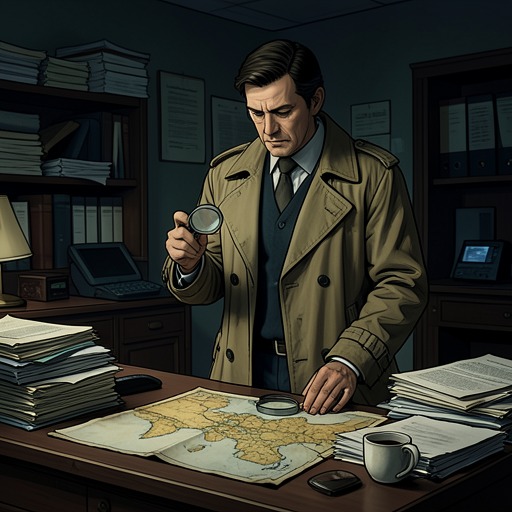
In April 1923, Oklahoma Governor Jack C. Walton sent his top state investigator, Herman Fox Davis, to Osage County. A lawyer and former private detective with the William J. Burns International Detective Agency, Davis arrived with a carefully groomed appearance, puffing cigars as smoke veiled his bright eyes. His polished, theatrical manner struck one law-enforcement official as that of a detective from a dime novel. For many Osage, however, the need was urgent and practical: they suspected local authorities of colluding with the killers and hoped an investigator from outside the county might cut through its corruption and solve the mounting cases.
That hope quickly faltered. Within days Davis was seen associating with notorious local criminals; another investigator caught him taking a bribe from the head of a gambling syndicate in return for allowing its illicit businesses to operate. The state’s special investigator in the murder cases was himself corrupt. The bombing had already shown how vulnerable the victims were when local officers were absent; Davis’s exposure added a further obstacle to the demand for justice, placing the promised outside intervention inside the same compromised landscape.