Thomas B. White
Killers of the Flower MoonThomas B. White was a former Texas Ranger whose frontier experience made him an unlikely but consequential choice to lead the Bureau of Investigation’s effort to solve the Osage murders. Summoned by John Edgar Hoover in 1925, he inherited years of failed inquiries, frightened witnesses, and a disorderly mass of records. His task was not simply to find a plausible account of the killings, but to establish one that could withstand scrutiny in court.
Identity and Background
White had served in the Texas Rangers near the turn of the century and spent much of his life riding across the southwestern frontier in pursuit of fugitives, murderers, and robbers. Six feet four, sinewy and notably composed, he carried the bearing of an older kind of lawman even in a stiff suit. A former colleague remembered the imposing Stetson, measured stride, and direct manner, while also recalling a kindly quality in White’s steel-gray eyes. The image held its own contrast: formidable in appearance, but not eager to use violence.
He joined the Bureau of Investigation in 1917. White had hoped to enlist and fight in World War I, but a recent operation prevented him from doing so; becoming a special agent offered another way to serve his country. It also brought him into an institution that was still small and unevenly equipped. Created in 1908 to fill a gap in federal law enforcement, the Bureau had only a few hundred agents and a scattering of field offices when White joined. Its jurisdiction was limited, and its investigators handled an eclectic range of cases, from antitrust and banking violations to stolen cars shipped across state lines, federal prison escapes, and crimes on Indian reservations.
White entered an organization that was changing as well as expanding. Its agents were supposed to gather facts, not make arrests, and they were not authorized to carry guns. White had seen lawmen killed and knew that death was no abstraction of professional glory. On dangerous assignments, however, he sometimes carried a six-shooter despite the rules. This quiet defiance sat alongside a strong reluctance to shoot: although he had experienced gunfights, he took pride in never having killed anyone and was wary of the thin boundary he perceived between a good man and a bad one.
An Old Lawman in a Modern Bureau
White’s frontier identity made him both useful and increasingly out of step. He belonged to a diminishing group of experienced western lawmen, and he understood that his kind might become a relic even before he reached forty. He had joined the Bureau partly because the old frontier world was disappearing; now the institution itself was pressing toward a new professional ideal. Hoover expected agents to wear dark suits, sober ties, and polished black shoes, and wanted them to project a specifically Caucasian, lawyerly, professional type. White continued to wear his large cowboy hat with an air of defiance.
He had no formal law-enforcement training and struggled with newer scientific methods, including the interpretation of fingerprint patterns. His strengths lay elsewhere: he could notice underlying patterns and turn scattered information into a coherent investigative account. The difference between White and the emerging Bureau was not simply clothing or technique. Hoover’s directives emphasized standardization; White’s experience had been formed by personal judgment, danger, and long acquaintance with violent people and places.
White’s younger brother, Doc White, was also a former Texas Ranger and Bureau agent. More hard-drinking and brasher than Thomas, Doc carried both a bone-handled revolver and a knife in his boot. Inside the Bureau, the brothers belonged to the small contingent of frontier agents known as the Cowboys. Their shared background made the group suited to assignments that demanded more than paperwork, though Thomas and Doc avoided serving on the same cases after their Ranger years. They did not want their family to risk losing both brothers in one operation.
Hoover’s Assignment
In the summer of 1925, White was heading the Bureau’s Houston field office when Hoover urgently summoned him to Washington, D.C. White said goodbye to his wife and two young sons, packed quickly, and traveled by train, recalling his earlier life as a railroad detective moving from station to station after criminals. He arrived without knowing the purpose of the summons. In Hoover’s office, the tall Texan in his cowboy hat stood over the diminutive director, who told him the matter concerned the Osage murders.
By then the Bureau’s earlier efforts had badly faltered. After the Osage Tribal Council sought help from the Justice Department in 1923, William J. Burns had sent an agent to investigate. That agent spent several weeks in Osage County before declaring further work useless; subsequent investigators also failed. The Osage had been made to help finance the investigation, eventually paying $20,000. Hoover had considered returning the case to state authorities, but the Bureau’s position had become dangerous: agents had persuaded Oklahoma’s governor to release the convicted bank robber Blackie Thompson so he could work undercover among oil-field criminals. Bureau reports expressed optimism about the evidence he might gather, but the arrangement put the agency’s conduct under scrutiny.
Hoover feared that even a hint of misconduct, coming so soon after the Teapot Dome scandal, could damage his position. He had warned agents that the Bureau could not afford a public scandal. White understood that he was being asked to solve the murders and, in doing so, help protect Hoover’s leadership. Hoover ordered him to take command of the Oklahoma City field office. The move would burden White’s family, and failure carried professional consequences: earlier agents had been sent to distant posts or expelled from the Bureau. White also knew that some people who had tried to catch the killers had themselves been killed. He accepted the assignment, acknowledging both ambition and willingness to take it on.
Reconstructing the Murders
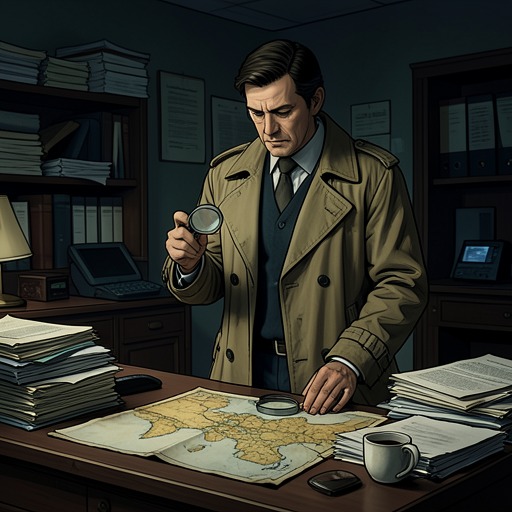
After taking over the Oklahoma City office in July 1925, White reviewed the Bureau’s accumulated files. More than four years had passed since Anna Brown and Charles Whitehorn were killed, and the records lacked an organizing chronology. White confronted them as fragments of history rather than a finished story, searching for a design beneath the disordered reports.
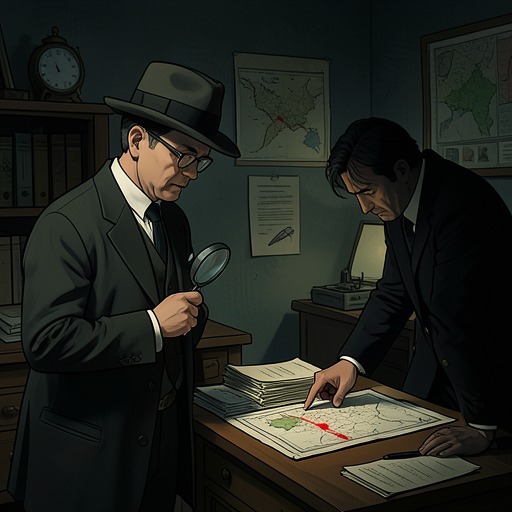
The documented violence was stark. In the bombing of the Smiths’ house, Rita Smith, her husband Bill Smith, and their servant Nettie Brookshire died; an agent reported that pieces of the victims’ bodies were found on a house 300 feet away. Earlier investigators had concentrated on six cases they considered most likely to be solved: the bombing deaths and the shootings of Anna Brown, Henry Roan, and Charles Whitehorn. White tried to see connections across the larger group of roughly two dozen murders rather than treating each case as an isolated episode.
Some patterns seemed significant, but they did not amount to proof. Wealthy Osage people were being targeted, and Anna Brown, Rita Smith, and their mother, Lizzie, were related. The existing files had not even included an interview with Lizzie’s surviving daughter, Mollie Burkhart. They mentioned that Mollie had diabetes and was secluded in her home, but offered little account of her life or what she had witnessed as her family and other Osage people were killed.
The variety of methods and locations suggested to White that the murders were not the work of one lone killer. He considered the possibility that a mastermind had employed henchmen, and that the planner was deliberate rather than impulsive. Yet he recognized that a compelling theory could still be built on unreliable material. Many apparent leads traced back to private detectives and local officers whose claims rested on hearsay. In a county where corruption appeared to touch institutions throughout the investigation, misinformation could itself be part of the obstruction. Earlier agents had found leads, but often abandoned them, failed to corroborate them, or could not produce evidence admissible in court.
Method, Team, and Narrative Role
White’s response was to distinguish coldly and methodically between rumor and facts he could prove. He did not want a seductive story to be enough to condemn a man. After years of bungled and potentially crooked inquiries, he sought what he called an unbroken chain of evidence: a connected account in which each link could be established rather than merely suspected. His frontier instincts remained, but his defining investigative discipline was evidentiary restraint.
He usually preferred to investigate alone, yet the number of murders and leads made a team necessary. Witnesses were reluctant to cooperate because of prejudice, corruption, and widespread fear of being killed. White therefore chose to become the public face of the investigation while assigning most of his agents to work undercover. The arrangement addressed a central danger of the case: visible investigators might attract attention, while covert agents could pursue suspects and information less openly.
Hoover promised to provide as many men as White needed. The Bureau’s remaining Cowboys, including Doc, were still adjusting to scientific methods and typed reports, but White believed they were the only agents prepared for the assignment’s practical demands: entering dangerous country, dealing with outlaws, shadowing suspects, going without sleep, maintaining cover under pressure, and handling weapons if necessary. He began assembling the squad but left Doc out, keeping to the brothers’ longstanding decision not to place both of them in the same case. White’s role thus joined two forms of investigation: the evidence-conscious work of a modern federal agency and the hard-won field experience of lawmen formed on the frontier.