Vaughan
Killers of the Flower MoonVaughan’s murder turned a trusted investigator and attorney into another victim of the violence he was trying to uncover. His disappearance followed a private exchange with George Bigheart, who had summoned him with information about the murders; after Vaughan was killed, both Bigheart’s documents and evidence Vaughan had hidden were missing. Decades later, records and testimony would raise suspicion about H. G. Burt, but the evidence remained circumstantial, leaving Vaughan’s case among the unanswered questions surrounding the Osage murders.
Identity and Role
At fifty-four, Vaughan lived in Pawhuska and had once served as a prosecutor. He was not simply observing the investigation from a distance: he worked closely with the private investigators struggling to solve the Osage murder cases. The book presents him as a man trying to oppose the criminal element that preyed on people earning an honest living, at a time when many Osage believed local authorities were colluding with the killers. His standing as a former prosecutor and his work with investigators made him a trusted participant in the search for evidence.
In June 1923, an urgent call brought Vaughan into the orbit of Bigheart, a forty-six-year-old Osage man who was gravely ill with suspected poisoning. A friend of Bigheart’s told Vaughan that Bigheart had information about the murders but would speak only to him. Vaughan asked about his condition and was urged to hurry. The call set in motion the final journey described in the account: an appeal to a trusted attorney, made at a moment when Bigheart’s knowledge—and Vaughan’s willingness to carry it—could have consequences for the investigation.
The Hospital Meeting and Disappearance
Before leaving, Vaughan told his wife, who had recently given birth to their tenth child, where he had hidden evidence he had gathered about the murders. If anything happened to him, she was to retrieve it and give it to the authorities; he had also left money there for her and the children. The warning gave the journey an ominous edge, but Vaughan went on to the hospital, where Bigheart was still conscious. With others in the room, Bigheart motioned for them to leave and apparently shared information with Vaughan, including incriminating documents. Vaughan stayed at his bedside for several hours, until Bigheart was pronounced dead.
Afterward, Vaughan telephoned the new Osage County sheriff. He said he had all the information he needed and was hurrying back on the first train. When the sheriff pressed him about whether he knew who had killed Bigheart, Vaughan indicated that his knowledge went further than that. He hung up and went to the station, where witnesses saw him board an overnight train. But when it arrived the next day, Vaughan was gone. The Tulsa Daily World reported that he had vanished while leaving his clothes in the Pullman car, turning the missing passenger into a public mystery.
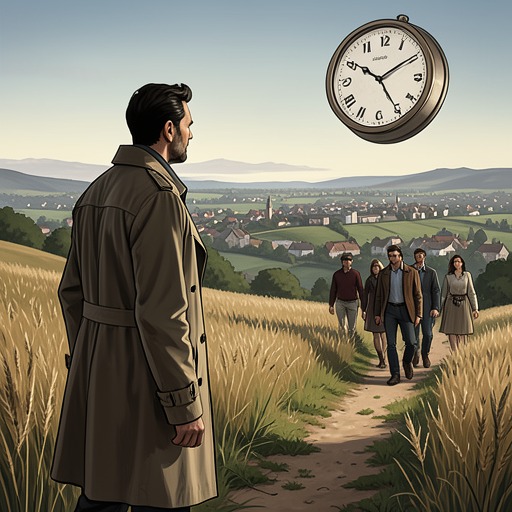
The search brought in the Boy Scouts, whose first troop in the United States had been organized in Pawhuska in 1909, as well as bloodhounds tracking Vaughan’s scent. Thirty-six hours later, his body was found beside the railroad tracks, thirty miles north of Oklahoma City, Oklahoma. He had been thrown from the train; his neck was broken, and he had been stripped almost naked, as Barney McBride had been. The documents Bigheart had given him were missing. When Vaughan’s widow went to the hiding place, it too had been cleared out. Asked by a prosecutor whether Vaughan had known too much, the justice of the peace agreed that he had, and that he had valuable papers with him.
Family, Evidence, and Unresolved Suspicion
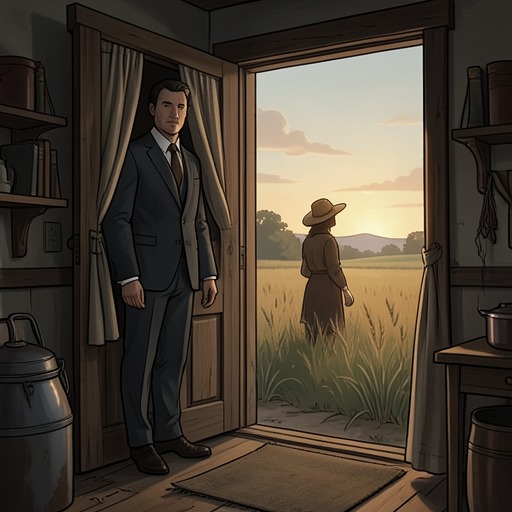
Vaughan’s murder left his widow, Rosa, to raise ten children without income. The family lost its two-story house and moved into a storage garage; members of the Osage community helped feed them, and some of the children, including Martha’s father, went to live with Osage families. There they grew up speaking Osage and learning traditional dances. Martha later recalled that her father felt safe among the people who had helped the family after Vaughan’s death.
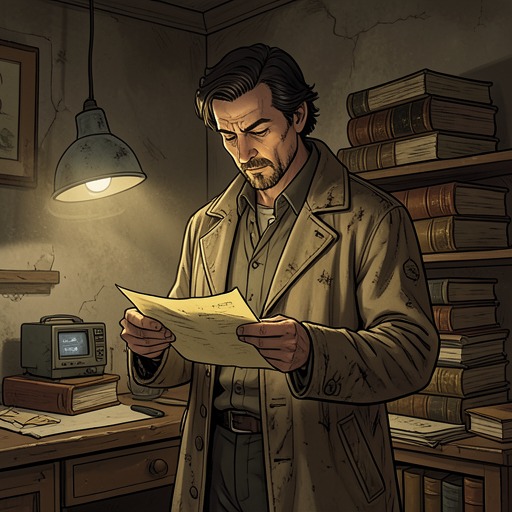
The family also preserved a record of the killing. Decades later, Vaughan’s grandson Melville brought two thick binders of collected research to a meeting with Martha and the book’s narrator. They held faded newspaper clippings, Vaughan’s death certificate, and an informant’s statement that Vaughan had said shortly before his death that he had gathered enough evidence to send William K. Hale to the electric chair. The family believed Hale wanted Vaughan silenced, but also continued to ask who had carried out the killing and whether Vaughan was already dead when he was thrown from the train. The inquest offered little resolution: the cause of death was recorded as unknown, and the family suspected that someone influential had ensured the inquiry was a sham.
Later archival research sharpened suspicion around H. G. Burt without settling the case. A grand-jury record showed that the insurance agent who arranged the policy on Henry Roan had testified Burt recommended another Indigenous person as a target for an insurance scheme. Bureau records described Burt and Hale as close associates and reported that they had shared money obtained from Bigheart. Burt also became guardian to Bigheart’s daughter, giving him control over her inheritance; other records placed him among the people who visited Bigheart shortly before his suspected poisoning. Court records further showed that Burt took money Bigheart had intended for Vaughan, despite presenting himself as Vaughan’s close friend.
The connection to the train was more direct, though still not conclusive. A newspaper account of Vaughan’s funeral said Burt had boarded the train with him in Oklahoma City and was aboard when Vaughan disappeared from his berth; another report said Burt had reported the disappearance. An informant close to Hale told investigators that he thought Burt had carried out the killing. Notes from an unpublished interview with the Fairfax town marshal also implicated Burt and said a local tough had helped throw Vaughan from the train. The marshal’s account added that Burt, frightened during the federal investigation in 1925, considered fleeing and then abruptly moved to Kansas that year.
These accounts made Burt a substantial suspect, not a proven killer. The evidence linking him to Vaughan’s death remained circumstantial, and Vaughan’s missing documents left a crucial gap: the contents that might have clarified whom he meant to expose could no longer be examined. The book’s return to Vaughan’s case therefore complicates the apparent closure of the Osage murder investigations. It recovers a trail of associations, financial dealings, and reported movements, while keeping the distinction between a compelling suspicion and an established conclusion intact.
The Limits of the Record
The later account does not convert the suspicion surrounding Vaughan’s death into a proven case. The narrator explicitly recognized the unfairness of accusing a dead man who could neither answer questions nor defend himself, and emphasized the limits of what the surviving evidence could establish when presenting the findings to Martha Vaughan. The marshal’s account offered a possible accomplice and a possible method, but it remained an unpublished interview note rather than a conclusive resolution. After hearing the accumulated details, Martha fell silent and sobbed softly.
That uncertainty belongs to the larger failure of closure. Officials treated the life sentences imposed on William K. Hale and his conspirators as the end of the matter, although the investigation had not connected Hale to all twenty-four Osage victims. The unresolved questions about Vaughan—alongside the killing of Barney McBride—show how the apparent conclusion left some murders without an established perpetrator. Vaughan’s case thus remains both a record of evidence lost and a measure of what the investigation could not prove.