William Smith
Killers of the Flower MoonWilliam Smith was both an investigator of suspicious deaths and a man whose own conduct drew suspicion. After questioning the unexplained illnesses and deaths around Mollie Burkhart’s family, he believed that poisoning connected several of them to the oil wealth beneath Osage land. His effort to find the killers ended in the bombing of his home: Rita Smith died there, and William died four days later from his injuries, without identifying the perpetrators to authorities.
Background and Family Ties
Before becoming attached to an Osage fortune through marriage, William had been a horse thief. He first married Minnie, Mollie Burkhart’s sister. Minnie died in 1918 after a mysterious wasting illness; only months later, William married another of Mollie Burkhart’s sisters, Rita Smith. By the time his suspicions about the deaths took shape, he was both Mollie Burkhart’s brother-in-law and a man whose marriages had brought him close to the family’s wealth.
William’s relationship with Rita was marked by violence. When he drank, he sometimes struck her. A servant remembered seeing Rita bruised after one quarrel and reported that William treated violence as his way of getting along with Osage women. Rita threatened to leave him, but did not. Those close to her considered her judgment clouded by her love for him. The marriage thus sits uneasily beside William’s later role as a grieving husband: his devotion to Rita’s safety does not erase the abuse reported within their home.
A Private Investigation
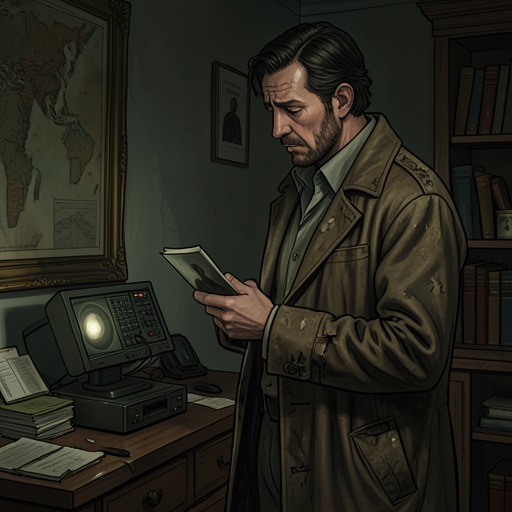
William was among the first to question whether Lizzie’s death was natural. Her sickness had no clearly identified cause, and no one had established a natural explanation for her death. Like Mollie Burkhart, William was struck by the vagueness surrounding the illness. He consulted doctors and local investigators, and came to believe that Lizzie had been poisoned. He also concluded that her death was connected to the murders of Anna Brown and Charles Whitehorn, and that all three deaths somehow led back to the Osage oil wealth.
His investigation unfolded amid frustration with the authorities’ handling of the cases. William had begun looking into the deaths himself, and private detectives shared information with him while their own inquiries continued. After Henry Roan’s death, William confided to several people that his detective work was getting close to an answer. The account gives no proof that he had identified a culprit; his confidence instead records how urgently he believed the pattern of deaths could be pursued.
His position in that inquiry was complicated. Mollie Burkhart wondered whether William might have been involved in Minnie’s death, and William K. Hale made clear that he did not trust him. A local attorney also suspected that William was exploiting marriage for financial gain. These were suspicions, not established findings, but they placed the self-appointed investigator under the same shadow that fell on those he was trying to investigate.
Fear at Home
William and Rita lived in an isolated house outside Fairfax. One night they thought they heard movement around its perimeter; a few nights later, they heard objects being rattled outside again. William told a friend that Rita was frightened, and he seemed to have lost the confidence others associated with his forceful manner. Less than a month after Henry Roan’s death, the couple left the house with most of their belongings behind and moved into a two-story home near the center of Fairfax. They hoped that the move, and the watchdogs kept by neighbors, would deter whoever had been outside.
A man later appeared at their door claiming to have heard that William was selling farmland. William denied it. He noticed the stranger looking around the house as if surveying it, and thought he looked like an outlaw. The man’s identity and purpose are not established, but the encounter gives the move a grim uncertainty: the Smiths had left one exposed home, yet their new address did not place them beyond danger.
The Bombing and Death
Just before three in the morning, an explosion tore through the Smiths’ house. The blast shattered nearby windows, damaged neighboring homes, and sent people from their beds toward the wreckage. William and Rita had bought furniture from the Big Hill Trading Company only days earlier; it was reduced to debris, as was their Studebaker. The house itself was gone, and the destruction made clear that a bomb had been planted beneath it and detonated.
James Shoun knew where the main bedroom had been because he had once owned the house. While searchers worked through the smoking rubble, they heard a faint call for help and located William beneath a smoldering mound. His legs, back, and hands were severely burned. Rita lay beside him in her nightgown. Her face appeared unmarked, but the back of her head had been crushed, and she was dead. William realized she was gone and cried out in grief.
In his delirium, William told a friend that the people who had taken Rita appeared to have come for him as well. He survived the initial blast and, after nearly two days, regained consciousness. He asked about Rita and wanted to know where she had been buried. David Shoun believed William might be preparing to disclose what he knew about the bombing, and questioned him directly about whether he had any idea who was responsible. William did not give authorities relevant information about the killers. On March 14, four days after the bombing, he died.
Significance
William’s story brings together two positions that the surrounding violence made difficult to separate: investigator and suspect, family member and possible beneficiary, survivor and victim. He pursued a connection between unexplained deaths and oil wealth while people close to him questioned his own part in the family’s losses. The evidence does not resolve those doubts. Instead, the bombing cuts off the inquiry in the most literal way: William’s belief that the deaths were connected survives in the account, but he dies without naming those who destroyed his home. His death, alongside Rita’s, became another in the Osage Reign of Terror.