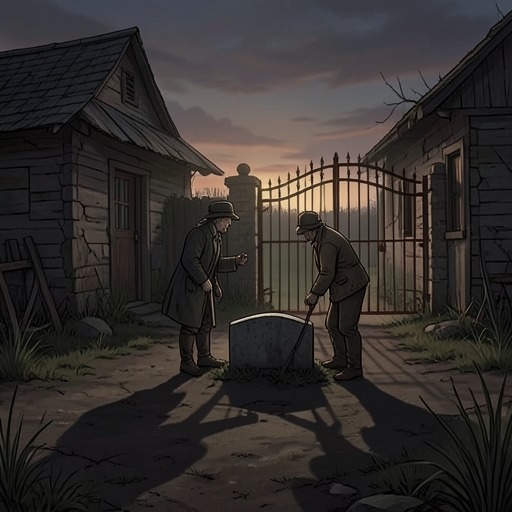
William Stepson
Killers of the Flower MoonWilliam Stepson was a steer-roping champion whose suspected poisoning in 1922 became part of the recorded toll of the Reign of Terror. No one was prosecuted for his death, but investigators came to believe that Kelsie Morrison killed him to marry his widow, Tillie Stepson, and gain control of her estate. The consequences reached beyond William’s death: his children were left exposed to a scheme that, years later, still threatened their lives and inheritance.
Identity and Death
William Stepson’s public distinction as a steer-roping champion contrasts with the unresolved circumstances of his death. Authorities suspected poisoning, but the case never resulted in a prosecution. His murder nevertheless entered the official tally of deaths associated with the Reign of Terror, where a recorded count could suggest closure even as responsibility remained untried in court.
The investigative account pointed to a specific financial and marital sequence. Morrison had divorced his Osage wife by 1922; after William died, he married Tillie, William’s widow, and became guardian of her two children. An associate told the Bureau of Investigation that Morrison had admitted killing William so he could marry Tillie and obtain control of her valuable estate. The account connected William’s death not simply to a suspected killing, but to the transfer of authority over a family’s property and children.
Family and Inheritance
William’s death formed the first known part of a continuing assault on his family. Tillie later grew suspicious of Morrison, particularly after he was overheard discussing the effects of strychnine. She confided to her lawyer that she wanted to keep Morrison from inheriting her estate and revoke his guardianship of her children. Before she could make those changes, she died of suspected poisoning in July 1923. Her death was never investigated, and Morrison stole much of her fortune.
Letters written by Morrison indicated that he planned to sell part of the estate he had swindled to H. G. Burt, a banker who appeared to be involved in the killing of W. W. Vaughan. The planned sale links the dispossession of William’s family to a wider network of suspected crimes, though the evidence presented does not establish that the proposed transaction was completed.
The Children as Targets
After William and Tillie died, their three-year-old son and his nine-year-old half sister became the next targets. In 1926, while imprisoned for killing Anna Brown, Morrison sent William K. Hale a note asking how he could obtain possession or control of the children’s money when released. He referred to having the children adopted and proposed taking them out of state, believing that authorities could not charge him with kidnapping. Guards intercepted the note. The passage reports that people feared he intended to kill both children; it does not say that he carried out that threat.
William’s death therefore had consequences that stretched well beyond 1922. The danger to his young son and stepdaughter persisted years afterward, and the children’s anticipated inheritance remained a stated object of Morrison’s plans. William’s grandson, Marvin Stepson, later described Morrison as having murdered both William and Tillie and leaving Marvin’s father an orphan. His account makes the family cost of the suspected crimes explicit: the deaths did not end with their immediate victims.
Narrative Significance
William’s case illustrates how an unresolved death could still shape a family’s fate. The suspected motive joined marriage, guardianship, and inheritance; the consequences included Tillie’s death, the loss of her estate, and a later threat against the children. Although William’s murder remained unprosecuted, its place in the official tally and the testimony and documents recounted decades later keep it within the history of the Reign of Terror. The account’s emphasis on what happened to William’s descendants also reveals the limits of a murder count: each entry could mark the beginning, not the end, of a family’s exposure to violence.