Gendered division of unpaid domestic and care work
Kim Ji-young, Born 1982Gendered division of unpaid domestic and care work is a recurring structure in Kim Jiyoung’s life: women are expected to maintain homes, care for children and relatives, and absorb the costs of those responsibilities, while that labor is treated as ordinary or invisible. Across generations, siblings, workplaces, and decisions about parenthood, the novel shows not only who performs the work but how its presumed availability shapes women’s time, health, and career choices.
Work Across Generations
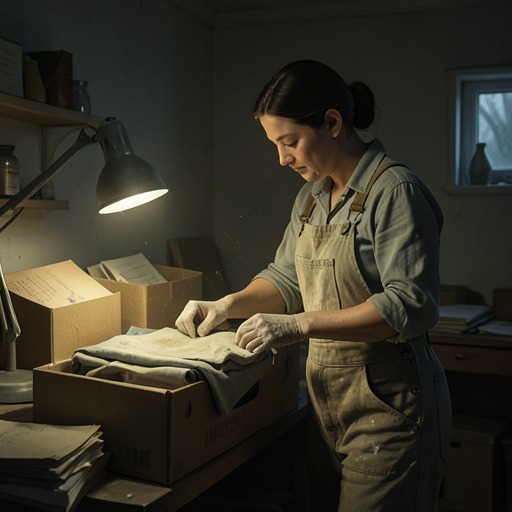
Kim Jiyoung’s mother combines household and care responsibilities with income-producing work. While raising three children and living with an elderly mother-in-law, she takes on jobs that can be done at home rather than commuting to paid employment. These include assembling boxes, folding envelopes, peeling garlic, and rolling weather strips. The work brings in money, but it also occupies domestic space and extends the mother’s working day. Kim Jiyoung helps with cleanup and counting, making the household’s productive labor visible to her even as it remains a sideline performed around childcare and chores.
The family’s arrangement also shows that sharing a home does not necessarily mean sharing domestic responsibility. Kim Jiyoung’s grandmother looks after the youngest child when the mother leaves for hairdressing work, but does not take on routine childcare or household tasks. The mother cooks, washes clothes, and cleans, while the grandmother benefits from that labor without being praised for supporting her daughter-in-law. The contrast with later public admiration for a household in which a mother cares for a working woman’s child reveals how women’s domestic contributions are selectively recognized.
Unequal expectations appear among the children as well. Kim Eunyoung points out that she does much of the washing and cleaning, with Kim Jiyoung also helping, while their brother does not take on household tasks. Their mother answers by treating him as too young to be responsible. The scene makes the division concrete: daughters are already participating in the maintenance of the household, while the son is excused from it.
Gendered Expectations at Work
The novel connects domestic expectations with women’s tendency to assume minor service tasks in professional settings. At her first job, Kim Jiyoung makes colleagues coffee, sets out tableware, takes orders, and clears dishes. Her team leader, Kim Eunsil, notices that female newcomers take on these tasks without being asked, whereas male newcomers do not. Kim Eunsil tells Kim Jiyoung that this work is not part of her job and encourages her to stop doing it. Kim Jiyoung does so without complaint from the team, suggesting that the tasks had been sustained by expectation rather than by any formal requirement.
Kim Eunsil’s own history complicates the issue. She had tried to be accepted as one of the men in her field by staying late, attending business dinners, traveling for work, and returning soon after childbirth. At first she felt proud of meeting those demands, but later regretted the precedent they set for women working under her. As a manager, she removes unnecessary dinners and work events and guarantees maternity and paternity leave. Her change in practice recognizes that individual endurance cannot substitute for workplace conditions that allow employees to care for children without being forced out.
The limits of those changes are evident in the experience of a subordinate whose evenings and weekends at work leave her struggling to arrange childcare. Most of her paycheck goes to a babysitter, and the difficulty of securing care continues until she brings her baby to work one weekend and quits. The episode shows how a job can depend on employees’ availability outside standard hours while the practical cost of childcare falls heavily on the worker responsible for it.
Parenthood and Unequal Costs
When Kim Jiyoung and Jung Daehyun consider having a child, Jung Daehyun offers to change diapers, feed the baby, and wash its clothes. Kim Jiyoung, however, is anxious about whether she can continue her career and feels guilty even contemplating care by someone else. She asks what Jung Daehyun stands to give up. Her own potential losses include her health, employment, colleagues, social networks, and career plans; his anticipated changes chiefly concern seeing friends less often, coming home earlier, and feeling obliged to help with chores. The difference between their lists gives the division of labor a personal measure: parenthood may be shared in principle, but its expected disruption is not evenly distributed.
As the due date approaches, they write out three options: an immediate return to work, a return after a year of maternity leave, or not returning. They consider who would care for the child and the cost of each arrangement. Sending the baby to Jung Daehyun’s parents in Busan is not practical because they are elderly and his mother has had back surgery; a live-in nanny would be expensive and would share the household’s everyday life. They conclude that one parent must stay home. Jung Daehyun’s job is more stable and better paid, and the customary arrangement of husbands working while wives raise children helps determine that Kim Jiyoung will leave her job. She knows the outcome is coming, but that knowledge does not make it less painful.
Jung Daehyun proposes a sitter and daycare later, describing the time as an opportunity for Kim Jiyoung to study or look for work. Her objection is to the framing of his contribution as help: childcare and household maintenance are responsibilities within their shared home and family, not another person’s work to which he occasionally volunteers assistance. The exchange exposes how apparently supportive language can leave the underlying allocation intact, with Kim Jiyoung still treated as the person chiefly accountable.
Care After Birth
After Jung Jiwon is born, the daily demands of care become physical and continuous. Kim Jiyoung breastfeeds every two hours, sleeps in short intervals, carries the baby while doing chores, washes the baby’s clothes and fabrics, and prepares food for herself as well as the child. Her wrists become inflamed. When she explains that she cannot rest because she must care for the baby and do the washing and cleaning, an orthopedist dismisses the burden by comparing modern housework with earlier, more physically demanding methods. Kim Jiyoung recognizes what that comparison leaves out: appliances do not independently sort, wash, hang, gather, or finish the work. Technological assistance changes how chores are done, but does not eliminate the labor or the time they require.
The mother’s circumstances offer little relief. Kim Jiyoung’s mother is occupied with the porridge shop, where business has declined and fewer workers mean longer hours for her. She brings leftovers when she can, but cannot take over her daughter’s recovery or childcare. Her own history of raising three children with little help from Kim Jiyoung’s father and with the grandmother’s household needs illustrates the persistence of unequal care across generations.
Praise can also conceal the burden. Kim Jiyoung’s mother describes her daughter’s determination to raise a baby as an expression of maternal love, but Kim Jiyoung does not want admiration to replace an honest account of exhaustion. She has rarely heard women around her speak in detail about the difficulty of caring for infants; familiar portrayals instead make mothers appear beautiful and noble. In this setting, praise risks turning sacrifice into a moral expectation and makes it harder for a mother to say that the work is wearing her down.
Time, Recognition, and Shared Care
When Jung Jiwon begins daycare a little after her first birthday, she adjusts well and attends for part of the morning. The schedule gives Kim Jiyoung roughly three hours to herself, but much of that time goes to laundry, dishes, tidying, and preparing food for the baby. Statistics cited in the novel put the daily time available to a stay-at-home mother with a child under two at four hours and ten minutes, compared with four hours and twenty-five minutes for a mother whose child attends daycare. The fifteen-minute difference underscores that daycare does not simply convert a mother’s time into leisure: housework remains, whether the child is beside her or elsewhere. Even so, the respite from doing chores with the baby present gives Kim Jiyoung a chance to consider beginning something new.
The novel also depicts a modestly different form of participation when Kang Hyesu visits. While Kim Jiyoung breastfeeds, feeds Jung Jiwon, changes her diaper, comforts her, and settles her for a nap, Kang Hyesu warms baby food, fetches clean diapers, and does the dishes. The visit does not erase the broader imbalance, but it shows care and household tasks being noticed and shared in practice rather than left entirely to the mother.
The value of this labor remains unsettled. Since becoming a full-time homemaker, Kim Jiyoung encounters attitudes that either belittle domestic work or elevate it as life-sustaining, without calculating its monetary worth. The novel links that refusal to count household labor with the career interruption, reduced rest, and financial pressure surrounding childcare. Its central contrast is between the ordinary language of family support and the unequal distribution of the work that makes family life possible.