Jiyoung’s “Mom-Roach” Incident
Kim Ji-young, Born 1982Jiyoung’s “Mom-Roach” Incident makes an abstract contempt for stay-at-home mothers suddenly personal: in a neighborhood park, Kim Jiyoung hears men her own age describe women like her as idle dependents. The encounter sends her home in shock and leaves her struggling to explain what has been taken from her. Its force lies not only in the insult, but in the ordinary scene around it: a mother, a sleeping child, an inexpensive coffee, and a small interval of time that does not feel like rest at all.
Background and Setting
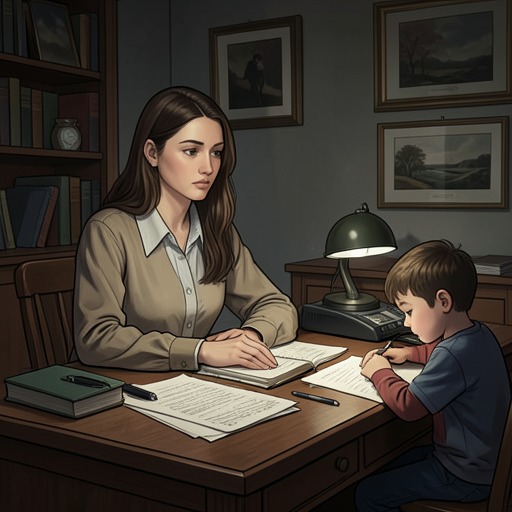
The encounter comes after Jiyoung has left paid work to care for her daughter, Jung Jiwon. Before having a child, she had worried about whether she could combine childcare with her career. Daycare and babysitters seemed insufficient for a couple who regularly worked late and on weekends, while neither set of parents was available to provide sustained help. She was also uneasy about the prospect of relying on someone else to care for a child they had chosen to have. Jung Daehyun listened as she tried to explain these fears and offered to take on tasks such as changing diapers and feeding the baby.
When Jiyoung asked what he would give up, his anticipated losses included seeing friends less often, coming home earlier, and finding it difficult to help with chores after work. He also described financial support as a major responsibility. Jiyoung, by contrast, saw her youth, health, job, colleagues, social connections, career plans, and future at stake. The later insult meets this unequal accounting at street level: others see the household arrangement as an easy life for Jiyoung, while she experiences it as a profound interruption of her own.
By the time of the park scene, Jiwon has started daycare and is adjusting well. Her routine gives Jiyoung roughly three hours between drop-off and collection, but most of that time goes to laundry, dishes, tidying, and preparing food. She scarcely has time to sit with a cup of coffee. Statistical comparisons in the narrative sharpen the point: mothers of children under two who stay home have an average of four hours and ten minutes to themselves, while those who send a child to daycare have four hours and twenty-five minutes. The fifteen-minute difference suggests that daycare changes where a mother does the housework more than whether she gets to rest.
The Park Encounter
After a heatwave gives way to autumn weather, Jiyoung collects Jiwon from daycare and takes her in a stroller to a nearby park. Jiwon falls asleep on the way. Rather than turn back, Jiyoung continues because the weather is pleasant, buys an Americano from a newly opened café across the street, and sits on a bench. For the first time in a long while, she drinks coffee in the park while her daughter sleeps nearby.
Office workers at the next bench are drinking coffee from the same café. They appear to be around Jiyoung’s age. One man glances over and whispers to his colleagues. Jiyoung cannot make out every word, but catches remarks depicting her as someone living off her husband’s wages, idling over coffee, and enjoying an easy life. Their comments also connect this judgment to a broader rejection of marrying Korean women. The men turn a brief, quiet pause into a public verdict on Jiyoung’s worth and on women who care for children at home.
Jiyoung rushes out of the park, spilling her coffee as she pushes the stroller home. Jiwon wakes and cries, but Jiyoung does not notice. The shock continues through the afternoon: she feeds the baby cold soup, forgets a diaper, and has to change Jiwon’s soiled clothes. Later, after putting her daughter to bed, she realizes that she forgot a load of laundry and hangs the wrinkled clothes to dry. These lapses show how sharply the encounter has unsettled her; the insult does not remain a painful thought but disrupts the practical sequence of care that fills her day.
Telling Daehyun and Its Consequences
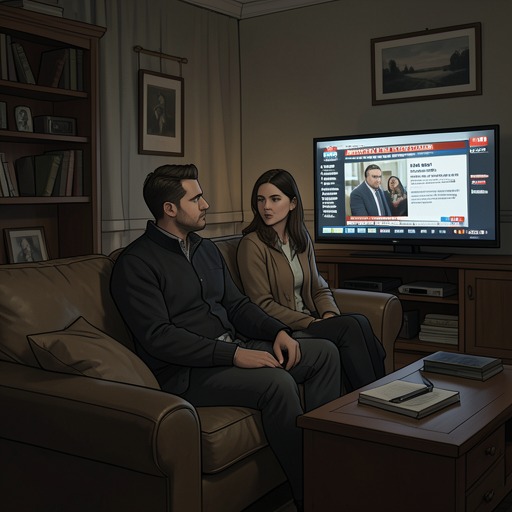
Jung Daehyun returns after midnight from a business dinner carrying red-bean-filled goldfish cakes. Jiyoung realizes she has eaten neither lunch nor dinner and tells him that people called her a Mom-Roach. He initially assumes the term belongs to online comments written by foolish teenagers and doubts that anyone would use it face to face. Jiyoung corrects him: she heard it herself from suited office workers in their thirties at the park across the street.
As she recounts what happened, Jiyoung flushes and her hands shake. She points to the coffee’s price—1,500 won—and rejects the idea that her choice to spend money earned by her husband is anybody else’s concern. Her account reaches beyond the price of a drink. She connects the insult to the pain of giving birth and to the routine, career, dreams, and sense of self she believes she has surrendered to raise their child. The gap between a modest purchase and the scale of that perceived sacrifice gives the incident its emotional weight: even a small pleasure has been recast as evidence against her.
Daehyun draws her toward him, puts an arm around her shoulders, and pats her back, repeating that the insult is not true and urging her not to think that way. His response offers immediate comfort, but the scene has already revealed the distance between his earlier assumption—that the term belongs to online chatter—and Jiyoung’s firsthand experience of it. The incident makes visible a form of contempt that is not merely digital or distant. It is spoken by men in public, directed at a mother they do not know, and absorbed by someone whose daily labor they cannot see.
Significance
The park episode echoes Jiyoung’s earlier encounters with sexist remarks in professional settings. At a client lunch, a senior male client used a misogynistic label after she ordered soybean-paste sauce with rice. Unsure whether he meant to joke or mock her, Jiyoung and a colleague smiled awkwardly and changed the subject. In another business setting, she was steered toward a male client’s seat and subjected to unwanted attention while her male colleague could do little beyond watching nervously. Those workplace scenes required her to manage other people’s discomfort and keep business moving. At the park, the speakers are strangers, and the insult lands without the institutional decorum that had previously required her to smile.
The episode also complicates the praise and idealization surrounding motherhood. Jiyoung has been made to feel that exhaustion should be answered with pride in her maternal devotion, even though the work is demanding and often invisible. The men at the park dismiss that labor in one stroke, treating a mother’s moment with coffee as proof that she has it easy. Their judgment erases both the work itself and the career and social life left behind. Jiyoung’s flight, the disrupted afternoon, and her effort to make Daehyun understand show how a casual public insult can expose the larger conflict between the appearance of leisure and the lived burden of care.