Jiyoung’s dissociative impersonations
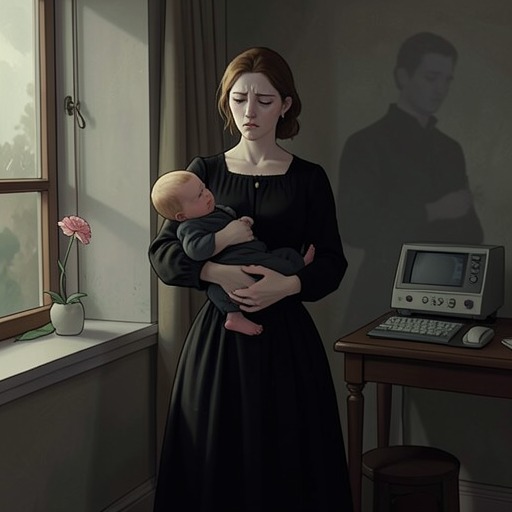
Kim Ji-young, Born 1982Jiyoung’s dissociative impersonations are a series of unsettling episodes in which, while living with her husband Jung Daehyun and their young daughter in 2015, she speaks and behaves as if she were someone close to her. What begins as a precise imitation of her mother, Oh Misook, turns into an apparent assumption of the identity of her dead friend Cha Seungyeon. The episodes unsettle Daehyun and make familiar domestic gestures newly strange; they also bring into view the exhaustion and grief that Jiyoung has struggled to manage. Their cause is not explained in these scenes, and Jiyoung does not seem fully aware of what has happened.
First episode and imitation of her mother
Daehyun dates the first abnormal behavior to September 8, the morning of Baengno (White Dew), which he remembers as the first night of autumn when temperatures fall below the dew point. Over breakfast, while he is eating toast and drinking milk, Jiyoung goes to the veranda and opens the window. Although the day is sunny, cold air reaches the kitchen table. The domestic scene is interrupted not by an argument or an explanation but by the chill entering their shared space.
Jiyoung returns hunched against the cold and recites a playful rhyme about the morning air and Baengno. Daehyun laughs and tells her that she sounds like her mother. Jiyoung answers in Oh Misook’s familiar manner, advising him to take a light jacket because mornings and evenings are chilly. Her imitation includes a right-eye wink that Oh Misook uses when asking a favor and the drawn-out final syllable of her address to Daehyun. The specificity makes the performance convincing, but Daehyun initially reads it as another joke from a wife known for doing impressions of celebrities.
That easy explanation sits beside signs he has already noticed: Jiyoung staring into space and crying over sad songs. He attributes them to the fatigue of caring for the baby, and his familiar picture of her as cheerful and quick to laugh supports that interpretation. He hugs her and leaves for work rather than treating the imitation as a warning. When he returns, she is asleep beside their daughter. Both are sucking their thumbs; he pulls Jiyoung’s thumb from her mouth, but she briefly sticks out her tongue, smacks her lips, and settles back to sleep. The image is at once affectionate and disconcerting, extending the episode’s blurring of adult and child behavior into an apparently ordinary family moment.
Speaking as Cha Seungyeon
A few days later, the impersonation takes on a more consequential identity. Jiyoung says she is Cha Seungyeon, her college friend, who died the previous year. Seungyeon and Daehyun entered university in the same year, while Jiyoung was three years behind them. All three belonged to the same hiking club, though Jiyoung and Daehyun did not know each other during their university years. Jiyoung and Seungyeon became friends because Seungyeon was kind to the other women in the club and the two shared a dislike of hiking; they stayed in touch and met frequently after Seungyeon graduated.
Their history is also bound to Jiyoung and Daehyun’s own. The first occasion on which the future couple met was Seungyeon’s wedding reception. Seungyeon later died while giving birth to her second child, from an amniotic fluid embolism. Jiyoung was experiencing postpartum depression when she learned of the death. The news compounded her existing distress and made ordinary tasks difficult. By supplying this history alongside the impersonation, the narrative makes Seungyeon more than a borrowed voice: she is a friend whose death joined childbirth, loss, and Jiyoung’s own difficult transition into motherhood.
The beer conversation and its aftermath
The most extended episode occurs after Jiwon has gone to sleep. Daehyun and Jiyoung share beers, a small return to a pleasure they have not enjoyed together for some time. Near the end of her can, Jiyoung taps Daehyun on the shoulder and speaks about Jiyoung in the third person, urging him to reassure her that she is doing well and working hard, and to tell her that he appreciates her. Daehyun responds affectionately, addressing his wife by name and saying that he appreciates and loves her. Jiyoung pinches his cheek only to swat his hand away, irritated; the exchange shifts abruptly from tenderness to estrangement.
She then challenges him for still seeing her as the lovestruck twenty-year-old Seungyeon who once shook while confessing her feelings. Daehyun can only repeat Jiyoung’s name. She tells him to stop calling her by Seungyeon’s name and jokes that she understands he is a model husband. The phrase echoes something Seungyeon used to say repeatedly when drunk. Recognizing it, Daehyun feels his hair stand on end and an electric sensation spread over his scalp. He insists that she stop kidding around, but Jiyoung leaves the empty can, lies down beside their daughter without brushing her teeth, and falls asleep almost immediately. Daehyun drinks another beer and wonders whether she is joking, drunk, or possessed, unable to make sense of what he has witnessed.
The next morning, Jiyoung massages her temples and appears not to remember the conversation. Daehyun is relieved at the possibility that she had simply been drunk, but doubts that explanation because she had consumed only one can. The uncertainty continues in less dramatic forms: she sends him messages filled with cute emoticons she does not normally use and makes ox-bone soup or glass noodles, dishes she neither likes nor prepares well. These details do not settle what the episodes mean. Instead, their recurrence makes the change harder for Daehyun to dismiss as a single strange evening, while his sense of the wife he knows gives way to the feeling that she has become a stranger.
Recognition and treatment
Daehyun eventually visits a psychiatrist alone to discuss Jiyoung’s symptoms and possible treatment. He tells her he has booked a therapy session, describing it as help for her poor sleep and stress; Jiyoung thanks him and says she has been feeling blue and enervated, and suspects maternity blues. The exchange preserves an important difference between their understandings: Daehyun has observed behavior he cannot explain, while Jiyoung names her low mood without appearing to recognize the impersonations as a pattern.
The scenes leave the episodes unresolved rather than confirming a supernatural cause or a specific diagnosis. Their narrative force comes from that gap between what Daehyun witnesses and what Jiyoung remembers. The mother’s wink and the friend’s repeated phrase are intimate, recognizable details, yet their accuracy makes the ordinary harder to trust. Against the repetitive demands of caring for a young child, the impersonations give form to a crisis that neither spouse initially knows how to name; arranging psychiatric help marks Daehyun’s move from dismissal toward concern, not a completed explanation.