
Kim Jiyoung’s Constrained Becoming
Kim Ji-young, Born 1982Kim Jiyoung’s path from a capable child to a working woman and mother traces how repeated gendered limits reshape her choices and culminate in dissociative episodes.
increasing Bearing strength in each event
 decreasing
Bearing strength in each eventdecreasingA Daughter in the Household

Growing Up as a Daughter
Unequal Beginnings
Kim Jiyoung grows up in a crowded household where her brother receives the best portions and new belongings while the girls are expected to share. At first, she treats this arrangement as ordinary and learns to quiet her sense of unfairness by telling herself that sharing is what good sisters do.
Her mother, Oh Misook, praises the girls for caring for their younger brother. That approval makes protest harder: Jiyoung learns early that being agreeable earns affection, while asking for equal treatment risks appearing selfish.
A Capacity That Persists
Even within these limits, Jiyoung shows attentiveness, curiosity, and an ability to learn. Her sister Kim Eunyoung helps her prepare for school, and Jiyoung gradually develops the habits of a capable student.
The household’s unequal rules do not determine every choice she will make, but they establish an early pattern: Jiyoung is expected to adapt to what others need. That pattern will recur in school, work, marriage, and motherhood.
Learning to Speak Up

Finding a Voice
The Desk-Mate’s Harassment
At school, Jiyoung’s male desk-mate hits her, takes her belongings, and hides her schoolbag. Adults initially frame his conduct as ordinary mischief, leaving her to feel that her distress is excessive or difficult to explain.
When he kicks her shoe across the classroom, the teacher first scolds Jiyoung for not answering promptly. A classmate then tells the truth, and the teacher recognizes her mistake and apologizes to Jiyoung.
Refusing the Expected Reconciliation
The teacher nevertheless insists that the boy’s cruelty means he likes Jiyoung and encourages her to become friends with him. Jiyoung rejects that explanation and asks for a different desk-mate, trusting her own judgment over an adult’s familiar excuse.
The incident gives her an early, limited experience of asserting what she does not want. It also shows how easily girls’ discomfort is reinterpreted to preserve boys’ behavior as harmless.
Entering the Working World

Claiming a Professional Future
The Search for a First Job
Jiyoung studies at a Seoul university and works toward a career in marketing. As graduation approaches, she and her friend Yun Hyejin discover how little access women have to informal recruitment networks and how employers can treat competent female applicants as undesirable.
Jiyoung faces repeated rejection and interviews that include invasive, gendered questions. She eventually receives an offer from a marketing agency, and the news restores some hope after a long period of uncertainty.
Work as Independence
At the agency, Jiyoung finds capable colleagues and meaningful tasks. A successful early report gives her confidence, while her own income and professional identity provide a sense that she is managing her life for herself.
Her work is not free of sexism: she encounters harassment from clients and learns that advancement opportunities favor men. Yet employment remains a valued part of her life, making the prospect of leaving it consequential rather than incidental.
Motherhood and Career Loss
The Cost of Becoming a Mother
A Decision Shaped by Care
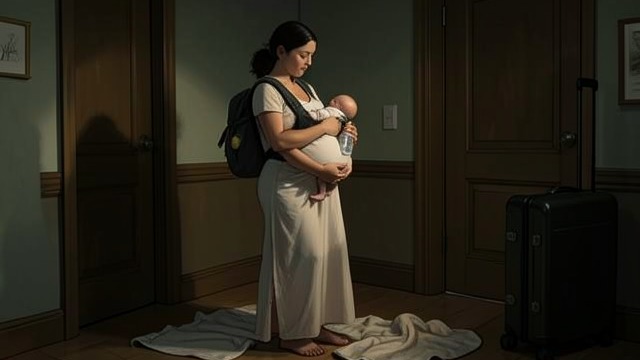
After marrying Jung Daehyun, Jiyoung is pressed by relatives to become pregnant before the couple has fully discussed what parenthood would require. She worries about bodily change, childcare, and whether she can keep her career; the eventual practical plan assigns her the daily care because Daehyun’s job is more secure and better paid.
During pregnancy, she encounters judgment both for using workplace accommodations and for continuing to travel to work. These experiences make clear that even a reasonable choice can be recast as evidence that she is asking for too much.
Leaving the Agency
Jiyoung gives birth to Jiwon and bears the physical strain and repetitive labor of infant care. After considering the available childcare arrangements, she leaves her marketing job, grieving the loss of the workplace that had offered income, colleagues, and a sense of achievement.
Daycare later gives her only a small window for chores rather than substantial leisure. When she considers a part-time job and a return to reporting, the schedules and costs of childcare narrow her possibilities again.
A Self Divided

Symptoms and Reassessment
Other Women’s Voices
In autumn 2015, Jiyoung begins speaking as women she knows, including her deceased friend Cha Seungyeon and her own mother. At first, Jung Daehyun suspects joking or drunkenness, but the episodes become difficult to dismiss as she speaks with knowledge and mannerisms belonging to other people.
Her family life and the accumulated strain of care, isolation, and lost work form the immediate setting for the episodes. The narrative does not present them as a simple resolution to those pressures; they are a sign that her condition needs attention.
A Diagnosis Reconsidered
A psychiatrist initially understands Jiyoung’s symptoms as postnatal depression that has developed into childcare depression, and prescribes medication for depression and insomnia. As treatment continues, he questions whether he diagnosed her too quickly and recognizes that he had failed to see much of the world shaping her experience.
The reassessment changes the meaning of her story without supplying an easy recovery. Jiyoung’s episodes remain, and her future is uncertain; what shifts is the clinician’s understanding of the conditions surrounding her distress.
Childhood, from 1982
Elementary school, approximately 1990–1994
College and first employment, 2001–2006
Pregnancy through Jiwon’s first year, 2014–2015
Autumn 2015 through the psychiatrist’s account in 2016
