Gendered Division of Domestic and Care Work
Kim Ji-young, Born 1982Gendered Division of Domestic and Care Work is the expectation that women and girls will take responsibility for household labor and care, while men and boys receive more of the benefits and fewer of the obligations. In Kim Jiyoung’s life, the norm appears first as an unremarked pattern of unequal treatment between siblings, then as an explicit family dispute, and later as the assumption that she will leave paid work to raise a child. The novel also shows how care remains labor even when appliances make it less physically demanding, and how calling a husband’s share “help” can preserve the idea that domestic responsibility belongs chiefly to his wife.
Childhood: Unequal Shares and Unnoticed Work
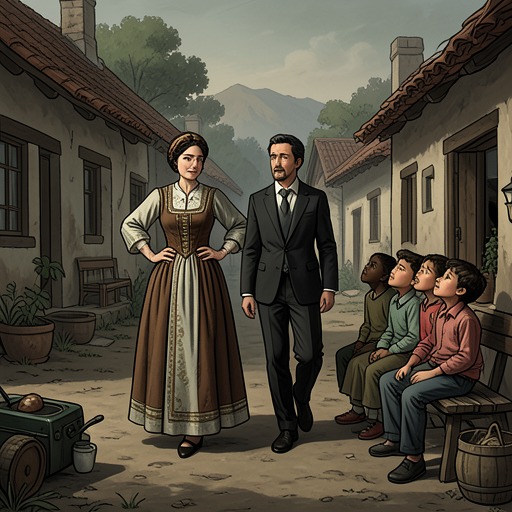
In Jiyoung’s childhood home, meals and possessions followed a consistent order. Fresh rice went first to her father, brother, and grandmother; the brother received the intact pieces of tofu, dumplings, and patties, while Jiyoung and her sister, Kim Eunyoung, ate the pieces that had fallen apart. His chopsticks, socks, long underwear, and school and lunch bags matched. When there were two umbrellas, blankets, or treats, the girls shared them. Jiyoung did not initially understand this as favoritism. The arrangement had always been so, and she explained the girls’ sharing to herself as a natural consequence of being sisters.
Their mother reinforced that interpretation by praising the girls for looking after their brother and not competing for her love. Praise made protest harder: Jiyoung came to think of sharing not as a choice imposed on the girls, but as evidence that they were generous older sisters. The domestic pattern thus taught a lesson as well as distributing objects. The girls were expected to accommodate their brother, while his status as the son made his needs seem deserving of priority.
The preference also appeared in the grandmother’s attitude toward the girls and their brother. When the girls wanted his formula, Jiyoung understood from her grandmother’s response that the formula belonged to the cherished grandson and that they were not entitled to it. This helped make the hierarchy legible to Jiyoung as a child: household resources and care were not simply shared according to need.
Chores Become an Open Dispute
A dispute over dinner brought the allocation of labor into the open. After Jiyoung’s first period, their father was expected home late and there was not enough rice for everyone. As the family prepared ramen, Jiyoung’s younger brother filled his bowl, prompting Eunyoung to insist that their mother be served before him. Eunyoung divided the food, but their mother then transferred her noodles to her son. The exchange made the distribution of food inseparable from the distribution of authority and care.
Eunyoung challenged the family’s excuses for her brother. She pointed out that she did washing and cleaning, put away laundry, and that Jiyoung helped her; she described their brother as the one person in the household who did no chores. When their mother defended him as still a baby and then as the youngest, Eunyoung contrasted his treatment with what she and Jiyoung had done at his age: caring for Jiyoung’s school things and homework, mopping, hanging laundry, and preparing simple food. Her accusation was that his exemption rested not only on age but on being a boy.
The argument did not lead to a new household arrangement. Eunyoung left the table, their mother did not follow to comfort her or scold her, and Jiyoung hesitated over her cooling food. The brother invoked their grandmother’s likely disapproval of a girl striking a boy, while their mother served Jiyoung more soup. These reactions show how an unfair pattern could be acknowledged in a moment without being changed: the girls’ work was visible enough to be named, but the family’s ordinary justifications continued to protect the boy from it.
Paid Work and the Assumption of Women’s Care
The novel places these household expectations beside women’s unequal prospects at work. Kim Jiyoung’s friend Yun Hyejin describes unofficial recruitment recommendations in which male students were selected, and a high-achieving woman who challenged her exclusion was given reasons tied to employers’ preference for men and their expected role as future household heads. The department head treated her objection as evidence that she would be difficult. Though she later found work through open recruitment, she left after realizing that women were absent above a certain pay grade and that company managers had little knowledge of maternity leave. Her boss treated her departure as proof that women should not be hired; she understood it as a consequence of conditions that made it difficult for women to remain.
Jiyoung also experienced gendered exclusion within her company. When management formed a new planning team, she expressed interest and was told she would be good at the work, but the positions went to managers and two male colleagues who had started alongside her. Jiyoung and Kim Eunsil’s colleague Kang Hyesu had built good reputations, yet the women were left out of a team regarded as an elite opportunity. This episode concerns advancement rather than household chores directly, but it belongs to the same pressure surrounding care: women’s work and prospects are shaped by assumptions about their place, while the expectation that they will eventually take on family responsibilities narrows their room to choose.
Parenthood, Negotiation, and the Meaning of Help
When Jung Daehyun raised having a child, the suggestion sounded casual to him, but Jiyoung experienced the decision as consequential. She worried about bodily change, whether she could maintain her career, and how the couple could care for a child while both worked late and on weekends. Daycare and babysitting did not resolve the problem in her mind, and their parents were not available to provide dependable care. She also felt guilty at the thought of arranging for someone else to look after a child they had not yet had.
Daehyun listened and offered to change diapers, feed the baby, and wash its clothes. He encouraged Jiyoung to think about the meaning of parenthood as well as what she might give up, and said that if childcare could not be arranged she need not continue working because he could support the household. His reassurance was sincere, but it did not answer Jiyoung’s question about what he would give up. The exchange exposed an imbalance within a conversation that both partners were trying to conduct in good faith: his proposal treated her career as the one that could be set aside.
The couple later wrote three possibilities on a large sheet of paper: Jiyoung returning to work immediately, returning after a year of maternity leave, or not returning. They considered who would care for the child and the costs and drawbacks of each arrangement. Sending the child to Daehyun’s parents in Busan was not feasible because they were elderly and his mother had recently had back surgery. A live-in nanny raised concerns about expense, privacy, and how long such an arrangement could last. They concluded that one parent would have to stay home, and that it would be Jiyoung. Daehyun’s job was more stable and paid more; the convention that husbands worked while wives raised children further shaped the decision.
Daehyun suggested that they could hire a sitter occasionally and send the child to daycare, giving Jiyoung time to study or look for other work. Jiyoung objected to the language of helping out: chores, childcare, and support for her future job were being framed as assistance with her responsibilities, although the home and child belonged to both of them. She apologized after the outburst, and he accepted the apology. The disagreement nevertheless clarifies the norm’s operation. A husband may offer real help while still treating care as a task principally assigned to his wife, rather than as his own responsibility too.
The Work of Care and Its Invisibility
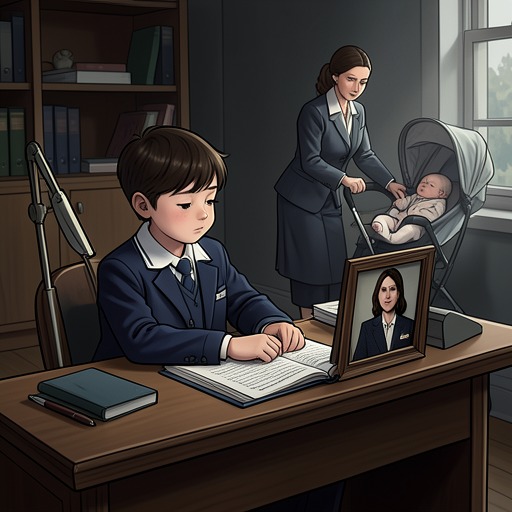
After Jiyoung gave birth to Jung Jiwon, care occupied her day and disrupted her rest. Jiwon cried often and needed to be held; Jiyoung breastfed her every two hours, did household chores, washed the baby’s clothes and fabrics, and tried to eat well while sleeping only in short intervals. Her wrists became painful enough that she sought medical care. When she explained that she could not rest because she had to care for the baby and do the washing and cleaning, the doctor dismissed her difficulty by comparing modern housework with more laborious methods used in the past.
Jiyoung’s response in thought distinguishes machinery from the work around it. A washing machine does not sort, load, and hang the clothes, and a vacuum does not complete every task involved in cleaning. The novel notes that technology reduces some physical effort, while the labor of managing the household remains. Domestic work is variously dismissed as idleness or praised as life-sustaining, but its monetary value is rarely calculated. That omission helps keep the labor outside the measures used to recognize and reward work.
Support was constrained by other women’s work as well. Jiyoung’s mother could not help her recover because she was working longer hours at her porridge shop. Business had slowed as more restaurants opened in the building, and fewer employees meant more work for her; the shop nevertheless helped support Jiyoung’s younger brother, who was extending his education. Her mother brought leftovers when she could and praised Jiyoung’s ability to raise the baby without her help, describing it as maternal strength. The praise registers Jiyoung’s effort while also risking its presentation as a natural female capacity rather than demanding, shared labor.
A visit from Kang Hyesu offers a more practical picture of assistance. While Jiyoung breastfed and fed Jiwon, changed her diaper, comforted her, and put her down for a nap, Hyesu warmed baby food, fetched clean diapers, and did the dishes. Their conversation and visit unfolded alongside care tasks, rather than replacing them. Hyesu’s participation shows that support can be concrete and useful without making motherhood a simple, uninterrupted role.
When Jiwon began daycare shortly after turning twelve months old, she adjusted well and attended for a few hours each morning. Jiyoung had about three hours without her, but spent most of that time doing laundry, dishes, tidying, and preparing food and snacks. Statistics cited in the novel put the daily time available to a mother with a child under two at four hours and ten minutes if she stayed home, and four hours and twenty-five minutes if the child attended daycare—a difference of only fifteen minutes. Daycare changed whether the housework happened with the child beside her, not whether the work remained. The account makes clear why Jiyoung’s small opening of time could feel like relief even when it was largely absorbed by chores.
That opening also carried economic weight. After the couple’s lease ended, the landlord raised the deposit by 60 million won, forcing them to borrow again. They could not afford a home for three people on Daehyun’s income alone, and future kindergarten and after-school costs promised further pressure. Jiyoung began to feel the need to earn money and became interested in starting something new as daycare allowed more time. The domestic division is therefore not only a matter of who performs particular tasks: it shapes women’s rest, earnings, and possible return to work, while the cost of sustaining family life continues to press on the choices made within the household.