Son Preference Norm
Kim Ji-young, Born 1982The Son Preference Norm is the belief that sons are more valuable than daughters, expressed in the novel through unequal treatment at home, pressure on women to bear boys, and gender discrimination in education and employment. It is not presented as a private prejudice alone: ordinary family routines and wider institutional practices reinforce one another, while women carry much of the physical, emotional, and economic cost.
Definition and Family Practice
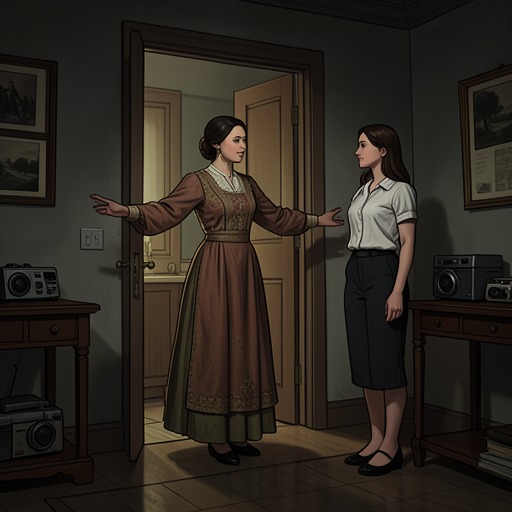
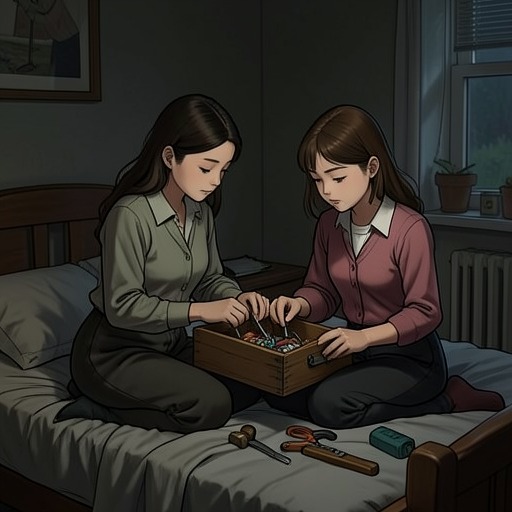
In Kim Jiyoung’s childhood home, the norm appears in the distribution of food and belongings. Fresh rice is served first to her father, brother, and grandmother; the brother receives the intact portions of shared dishes, while the girls take those that have fallen apart. His school supplies and clothing match, whereas his sisters make do with what is available. The girls share umbrellas, blankets, and treats. Kim Jiyoung does not initially understand this as special treatment for her brother. She has learned to explain the disparity as ordinary family life and to regard sharing with her sister as a virtue. Their mother praises them for caring for their brother and not competing for her affection, making complaint harder to voice.
The same hierarchy shapes access to the baby’s formula. When the girls reach for it, their grandmother’s response communicates that the formula belongs to her precious grandson and that the girls rank below those entitled to his things. The significance lies not only in the resource itself, but in the girls’ early lesson about who may claim what. Privilege is enacted through familiar household gestures, and its repetition makes an unequal arrangement seem natural.
Kim Jiyoung’s grandmother, Koh Boonsoon, also expresses the norm as a lesson drawn from her own life. She believes that having four sons ensured warm meals and a place to sleep in old age, although it is her daughter-in-law, Oh Misook, who prepares the food and bedding. Despite being comparatively caring toward Oh Misook, Koh Boonsoon urges her to have sons, even more than one. Her own experience thus passes the expectation to the next generation, while obscuring the daughter-in-law’s labor that actually provides her care.
Reproduction Across Generations
When Oh Misook gives birth to Kim Eunyoung and then Kim Jiyoung, she apologizes after each daughter’s birth. Koh Boonsoon reassures her by anticipating that a later child will be a boy. These responses place responsibility for producing a son on the mother, even as they frame the girls’ births as occasions requiring consolation. The pressure continues when Oh Misook becomes pregnant again less than a year after Kim Jiyoung’s birth. A scan indicates that the fetus is female, and Oh Misook ends the pregnancy at a clinic by herself. The account situates this decision in a period when sex-selective abortion was common and the birth ratio for third children and later was more than two boys for every girl at the imbalance’s peak. After several years, Oh Misook gives birth to a son, five years younger than Kim Jiyoung.
The norm therefore operates through more than explicit demands. It makes a daughter’s birth a disappointment for which her mother apologizes, and it treats a later son as the anticipated resolution. The novel also records the isolation surrounding Oh Misook’s experience: she receives no family support at the clinic or through the aftermath. The consequences of a social preference are borne privately, by the woman expected to fulfill it.
That hierarchy remains visible as the children grow. When Kim Eunyoung objects to the younger brother’s treatment by listing the work she and Kim Jiyoung did for him and the chores they had already performed at his age, their mother answers that he is the youngest. Kim Eunyoung identifies the more consequential distinction: he is the son. Her protest breaks the family’s usual explanation of the unequal arrangement into words. The brother, meanwhile, repeats the grandmother’s expectation that a girl should not strike a man, showing how the hierarchy is transmitted not only through benefits but also through assumptions about gendered conduct.
Education and Employment
The novel connects family preference for sons to discrimination beyond the household. During Kim Jiyoung’s job search, her friend Yun Hyejin points out that the alumni appearing at job fairs are men. The observation changes how Kim Jiyoung understands the opportunities she has seen: she had attended many such events without encountering a female alumnus. In the year Kim Jiyoung graduated, women made up 29.6 percent of new employees at one hundred companies, a figure reported as an improvement. In a separate survey, 44 percent of recruiting managers at fifty large corporations said they would rather hire a man when candidates had equivalent qualifications; none said they would rather hire a woman.
The imbalance also enters recruitment channels that are less visible than formal hiring. Yun Hyejin describes unofficial recommendations made through departments and professors in which male students were selected. One highly accomplished woman learned that four male students had been recommended for interviews at a company she wanted to join. When she challenged the decision, the explanations invoked the company’s apparent preference for men, compensation for men’s years of military service, and men’s assumed future role as household heads. The department head’s response treated her objection itself as a reason she was difficult. She later obtained work through open recruitment, but that outcome does not undo the exclusion from the recommendation process. Son preference thus converges with institutional assumptions that men are more suitable candidates and future providers.
Motherhood, Care, and Unequal Costs
Kim Jiyoung encounters the norm again while deciding whether to have a child. Her husband, Jung Daehyun, initially presents parenthood as a natural next step and says he will help with diapers, feeding, and laundry. Kim Jiyoung explains that she fears losing her career and feels guilty at the prospect of someone else caring for a child she has not yet had. Their conversations acknowledge those concerns, but the couple’s later planning shows how limited their alternatives are. They compare returning to work immediately, returning after a year of leave, and leaving work. Sending the child to Jung Daehyun’s parents in Busan is not practical because they are elderly and his mother has had back surgery; a live-in caregiver would be costly and would share the household’s everyday life. They conclude that one parent must stay home. Jung Daehyun’s job is more stable and better paid, and the more customary arrangement is for the wife to care for the child. Kim Jiyoung leaves her job.
During pregnancy, comments from older relatives and other women reinforce the expectation that a boy is preferable. When an obstetrician indicates that the baby is a girl, Kim Jiyoung anticipates the elders’ reaction. Her mother responds by looking ahead to a possible boy in a future pregnancy; Jung Daehyun’s mother says she does not mind. Women Kim Jiyoung knows describe having felt anxious until learning that a second child was male, or say that having a boy improved their standing with in-laws. Kim Jiyoung restrains her own response rather than risk being seen as bitter. The norm therefore persists even among women of her generation, shaping how they assess family approval and their own status.
After Kim Jiyoung gives birth to Jung Jiwon, childcare and housework become an intensive daily responsibility. She feeds and carries the baby, attends to household tasks, and struggles to find uninterrupted rest. Her mother cannot provide regular recovery support because she is working longer hours at a porridge shop; the income helps support her younger son, who is extending his education. When she does visit, she brings leftovers from the shop and praises Kim Jiyoung for raising a baby without her mother’s help, describing this as maternal strength. The scene places practical care beside the idealization of maternal self-sacrifice: the praise does not remove the shortage of support or redistribute the work.
Continuing Effects and Significance
When Jung Jiwon begins daycare, the time Kim Jiyoung gains is limited: statistics cited in the novel show only a fifteen-minute difference in daily time to oneself between mothers of children under two who use daycare and those who do not. Daycare can make it possible to consider work, but it does not erase domestic responsibilities. At the same time, rising housing and education expenses increase the pressure for Kim Jiyoung to earn. A rent-deposit increase of 60 million won forces the couple to borrow again, while buying a home or meeting future education costs on Jung Daehyun’s income alone seems difficult.
The options available to mothers returning to work are also shaped by the interruption itself. More than half of women who leave jobs are unable to find new work for over five years; those who return commonly enter less senior or lower-paid work than before childbirth. The share of women working in establishments with four or fewer employees doubles relative to their pre-childbirth employment, while employment shifts away from manufacturing and office work toward restaurants, hotels, and sales. The book also notes the gap between public criticism of mothers who use daycare and the more common reality of mothers doing paid service work for low wages. The Son Preference Norm belongs to this wider gender order: it privileges sons in family resources and expectations, while women are assigned the care work and career sacrifices that sustain family life.