The psychiatrist diagnoses and treats Jiyoung
Kim Ji-young, Born 1982The psychiatrist diagnoses and treats Jiyoung through a course of care that shifts from an initially confident clinical label toward a more unsettled recognition of the social conditions surrounding her distress. The sessions address her depression and insomnia, but her memories also expose how gendered expectations at work and at home shape what can be mistaken for a purely personal disorder.
Arranging Care and Beginning Treatment
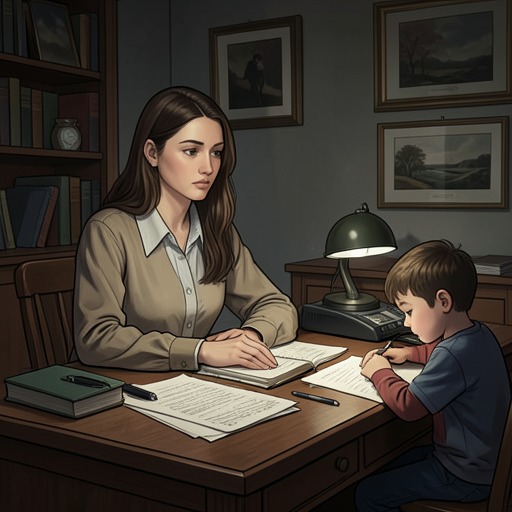
Jung Daehyun first visits the psychiatrist alone to discuss Jiyoung’s symptoms and possible treatment. He has booked her a therapy session because she has not been sleeping well and seems stressed, but presents the appointment to her in those terms rather than as a response to a psychiatric condition. Jiyoung thanks him, says she has indeed felt blue and enervated, and suspects she may have Maternity Blues. Her own explanation is tentative, while the appointment has already been set in motion by her husband’s concern.
In the psychiatrist’s later account, Jiyoung attends 45-minute sessions twice a week. Her symptoms become less frequent but do not disappear, and he prescribes antidepressants and sleeping pills to alleviate her depression and insomnia. The treatment therefore brings partial improvement, not a clean resolution: the symptoms remain present even as their frequency declines.
A Diagnosis That Begins to Shift
When Jung Daehyun first describes Jiyoung’s episodes, the psychiatrist suspects Dissociative disorder, a condition he has previously encountered only in case studies. After meeting Jiyoung, however, he interprets her presentation as a typical case of Postnatal depression that has progressed to childcare depression. That early conclusion offers a familiar clinical frame for her distress, but it does not remain secure as treatment continues.
Jiyoung is not guarded or antagonistic in the sessions. She does not spontaneously complain about the suffering and injustice of her present circumstances, nor does she repeatedly return to childhood trauma. She needs encouragement to begin speaking, but once she does, she brings up long-buried memories herself and describes them calmly, logically, and articulately. The psychiatrist’s attention turns from the apparent neatness of a diagnosis to the selection and substance of the scenes she recounts. He comes to recognize that he may have diagnosed her hastily, without claiming that his first judgment was simply wrong.
The Life Around the Symptoms
The memories that enter the clinical account include Jiyoung’s first job at a marketing agency. She finds the work itself enjoyable, likes her colleagues, and adjusts better than she had feared. Her dealings with reporters, clients, and the marketing teams of client companies are different. Older male clients repeatedly make jokes whose intent she cannot read; laughing seems to invite more, while refusing to laugh prompts questions about what is wrong. At a business lunch, a client head calls her a doenjangnyeo after she orders soybean paste sauce with rice. The term belongs to a wider wave of misogynistic labels for women, and the room’s laughter leaves Jiyoung and a senior colleague smiling awkwardly and changing the subject.
A business dinner makes the imbalance more coercive. After Jiyoung and her team have overseen a client’s anniversary event, the client’s male managers steer her toward the seat beside their division head despite her repeated insistence that she wants to sit with her colleagues. Her male colleague can only watch nervously. The division head forces several beers on her and delivers unsolicited remarks about her appearance, her boyfriend, and women, while insisting that men can escort her home when she says she has reached her limit. Jiyoung furtively empties her drink into other cups and bowls. These incidents help establish the pressure surrounding her working life: she must manage not only the work but also the discomfort of clients’ behavior and the social performance expected of her in response.
The account also records that Jiyoung’s first job is not uniformly demoralizing. She has good colleagues and is adjusting relatively well, but work leaves little room in her mind for the relationship she once sustained through time and attention. Her boyfriend waits for her schedule, calls, and messages; she feels guilty that she cannot support him as he once supported her. They have already begun drifting apart when a convenience-store incident sparks a major fight. The treatment narrative thus places emotional strain alongside the workplace pressures without presenting any single episode as a sufficient explanation for her condition.
Motherhood brings another set of expectations into view. Jiyoung’s mother cannot help with her recovery because the porridge shop has lost business to new restaurants in the commercial building, and fewer workers mean longer hours for her. She still brings Jiyoung leftovers when she can. When the mother praises Jiyoung for breastfeeding and raising the baby without help as an expression of maternal love, Jiyoung asks whether raising three children had been difficult for her too. Her mother recounts exhaustion, pain, a baby who cried day and night, a husband who never changed a diaper, and a grandmother who expected three meals each day. The story had not previously been shared with Jiyoung in such detail. She resists praise that casts her exhaustion as nobility, because being told how admirable she is makes her feel guilty for finding care work difficult.
The narrative sharpens this point through Jiyoung’s encounter with a doctor who dismisses her complaint that she cannot rest her wrists while caring for the baby, doing laundry, and cleaning. He compares her unfavorably with women who once washed clothes by hand, swept on their knees, and boiled baby clothes over fires. Jiyoung’s unspoken response distinguishes machines from the labor they do not eliminate: laundry still has to be sorted, moved, and hung up, and floors do not clean themselves. A separate passage describes a doctor checking her records and prescribing medication safe for breastfeeding, then contrasts technological advances in paid occupations with the reluctance to recognize domestic labor as work made easier, but not abolished, by appliances.
Jiyoung observes that domestic labor is alternately dismissed as idleness or praised as work that sustains life, while its monetary value goes uncalculated. In the same account, public enthusiasm for natural birth is set against the guilt produced by reports that speculate about possible harms from medical treatment and medication. Jiyoung chose hospital delivery with expert help because she considered it safer for both lives. The judgment imposed on that decision, and the moral demand that women endure pain as proof of maternal love, form part of the larger context in which her exhaustion is interpreted.
The Psychiatrist’s Recognition and Its Limits
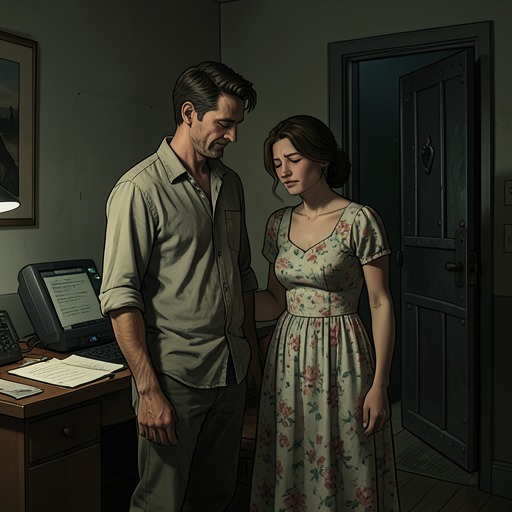
The psychiatrist’s reassessment is also connected to his life outside the consulting room. He reflects that, as an average man in his forties, he might have gone through life without understanding what women experience in Korea, particularly as mothers. He credits the compromises made by his wife, a fellow medical-school student who was a better student than he was, with changing his understanding: she moved from pursuing a tenured professorship in ophthalmology to contract work and eventually relinquished her career. He recognizes that men are not the principal participants in childbirth and childcare, and that his own awareness depended on encountering circumstances that made those experiences visible to him.
His account of his son’s school difficulties makes the limits of that recognition concrete. After years of relying on nannies, then arranging an after-school program and a dojo so his wife could work, the family is called to the school before summer vacation. Their son has stuck a pencil into a classmate’s hand, walked around during class, spat in and eaten his soup, and kicked and cursed at other children and teachers. The teacher suspects ADHD. The psychiatrist initially disagrees, but his wife challenges his confidence: he spends perhaps ten minutes a day with the boy, and even then remains absorbed in his phone. He concedes that her criticism is true. When the teacher recommends a stay-at-home mother for at least the first half of elementary school, his wife suspends work, takes on the boy’s daily routines, and eventually cancels a possible return-to-work arrangement because he is not improving.
The psychiatrist’s closing account does not resolve Jiyoung’s diagnosis so much as expose the conditions under which diagnosis is made. He recognizes that her calm, orderly account of remembered scenes has made him revise his earlier certainty, and that he had not understood a world he had previously overlooked. Yet the same account ends by revealing a contradiction in his own workplace. Lee Suyeon, a valued employee, has been working at his clinic after its director recommended her. Following years of trying to conceive, she becomes pregnant after six years of marriage, is warned that her pregnancy is unstable, and leaves her job after several miscarriage scares. The psychiatrist first resents her departure, then regards it as convenient because maternity leave and future sick days might disrupt the clinic. When patients leave rather than transfer to another counselor, he counts the loss to the clinic’s bottom line and decides her replacement should be unmarried. His clinical recognition of gendered care burdens has widened, but it has not erased the assumptions governing his own employment decisions.