Architect
Kiss of the Spider WomanThe Architect is a working architect whose marriage to Irena draws him into a conflict between ordinary explanations for her fear and the film’s increasingly literal panther legend. He seeks her out, marries her, and repeatedly tries to comfort her; when the legend proves deadly, he is left beside the place where their connection began, walking away with the assistant who has loved him in silence.
Identity and Introduction
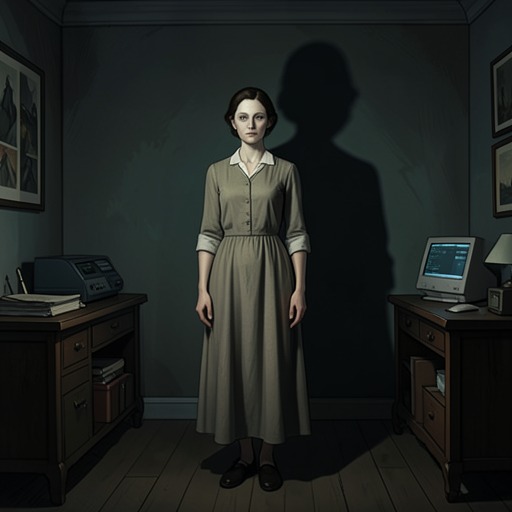
The Architect appears first in professional surroundings. He works in a studio with colleagues and a young woman who is both his assistant and an architect. As afternoon light dwindles, he puts aside his compass and ruler and goes to the zoo, almost directly across from the studio. His eagerness to leave prompts the assistant to ask where he is going and why he seems so happy. Although he treats her as a friend, the narration makes clear that she is in love with him and conceals it.
His journey is to see Irena, a refugee who studied fine arts in Budapest before leaving for New York when war began. She has described herself as coming not from a city but from the Carpathian Mountains, a place associated in her account with forests, hungry wild animals, and villagers’ protective customs. The Architect’s growing interest in her brings those remote fears into his New York life. The film’s geography makes the zoo more than a passing destination: it stands near his work and becomes a repeated point of contact between the couple and the animal presence that haunts Irena.
Courtship and Marriage
The Architect wants to see Irena again after their first meeting. She says she will return to draw in the park the following afternoon, as she has on many recent sunny days, and he goes to the zoo. Their courtship develops into marriage, but marriage does not settle the question of intimacy. On their wedding night, Irena sleeps in the bed while the Architect sleeps on the sofa. The narration presents this separation plainly, making the wedding a union that begins with physical distance rather than conventional closeness.
A brief exchange in the telling turns his sleeping arrangement into a joke about protecting his mother’s furniture. Elsewhere, the conversation considers the house’s preserved furnishings and proposes that the Architect may have kept his mother’s belongings in place because he wants to remain a child in his mother’s home. In that interpretation, he has brought home a playmate rather than a wife. This is an interpretation voiced within the discussion of the film, not a confirmed explanation of his motives. It nevertheless draws attention to the tension between his role as husband and the sheltered, almost childlike arrangement suggested by the home and the separate sleeping places.
Care and Conflict
The Architect’s response to Irena’s distress is marked by patience and tenderness. After she returns home disheveled, with muddy shoes, he tells her that he went to the doctor’s office to meet her and learned that she had not been there for a long time. Irena breaks down, fearing that she is insane, suffering hallucinations, or truly a panther woman. He calms her, holds her, strokes her hair, and urges her to have faith that things will work out. The scene gives his affection a protective quality: faced with a fear he cannot yet verify, he responds to her vulnerability rather than dismissing her.
That care is also bound to uncertainty. The Architect has reason to question what Irena believes about herself, but the film’s events ultimately confirm that the danger is not only imagined. When he and the assistant try to warn the psychiatrist, there is no answer; the psychiatrist is dead. The Architect then goes with the assistant and police toward the zoo, the place Irena has repeatedly visited. His movement from home to the zoo carries the story from attempted reassurance into recognition that reassurance cannot contain the threat.
Ending and Narrative Significance
At the zoo, Irena uses a key taken from the keeper to open the panther’s cage. The animal escapes, is struck by a police car, and dies. The Architect finds Irena on the cobblestones where they first met; she too is dead. The ending closes the geography of their relationship in a circle, returning him to the site of their beginning but replacing the promise of courtship with loss.
The assistant comes to stand beside him, and they leave arm in arm, trying to put the terrible scene behind them. The gesture changes the meaning of her earlier presence: the woman who had hidden her love and remained the Architect’s friend is now his companion in the immediate aftermath of Irena’s death. The story does not establish what their future will be, and their walk away is not presented as a new romance. Instead, the final image leaves the Architect between two forms of attachment: the marriage that has ended in tragedy and the unspoken affection that has accompanied him from the studio. His efforts to protect Irena have been sincere, but they cannot overcome the film’s transformation of her fear into fact.